

WARNING: 3 Rate Hikes Coming — Your Mortgage Is Cooked | APS147
Have you ever seen all four major Australian banks agree on a rate hike — while one of the biggest investment banks in the world stands on the other side of the room and says they should actually cut?
I haven’t. Not once in my career.
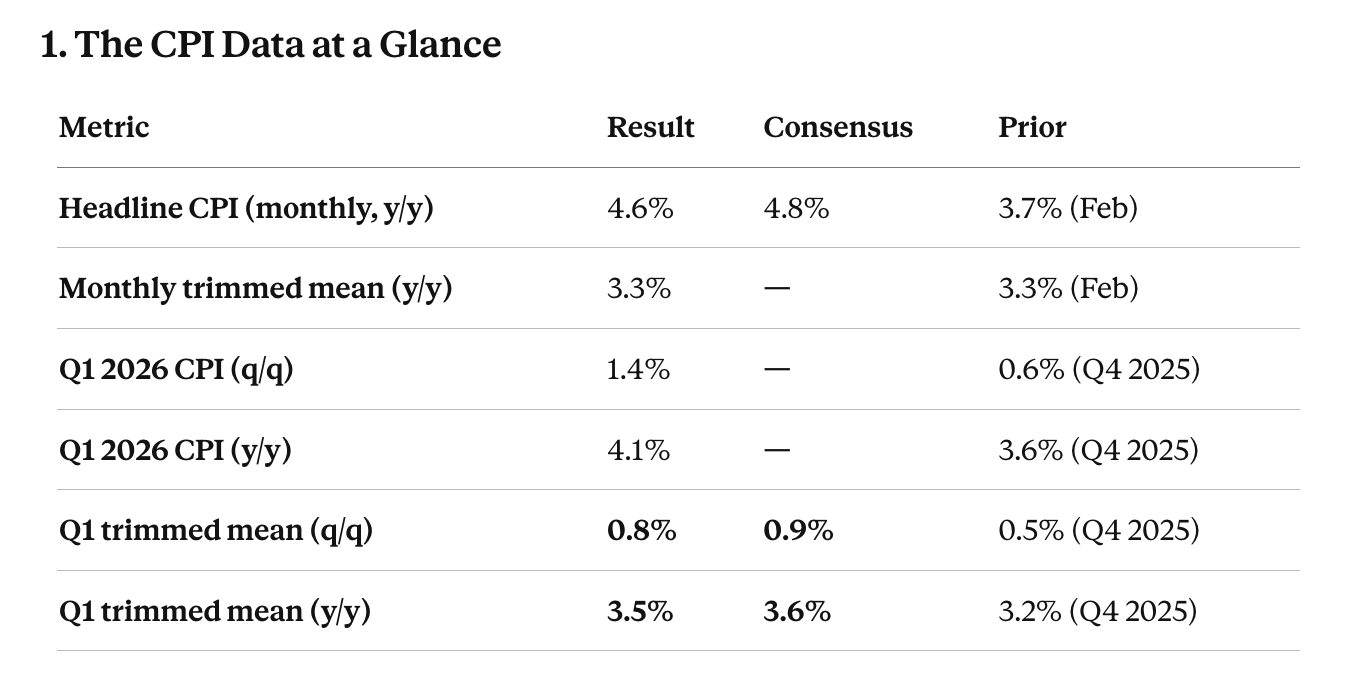
This week, the ABS released Q1 2026 inflation data. CPI came in at 4.6% — the highest reading since September 2023. Petrol jumped 33% in a single month. All four major banks — Westpac, CBA, NAB, ANZ — are calling for a rate hike on May 5th. The ASX futures market is pricing in a 76% chance it happens. But Morgan Stanley, a top-five global investment bank, dropped a report on April 7th that used a word you basically never see in institutional research. And that word has everything to do with your money.
Today I’m pulling apart both sides of this fight — the hike camp and the hold camp. And here’s what makes it unusual: both sides actually have a point. The question is which one ends up being right. But regardless of who wins that debate, what you should be doing right now with your mortgage, your pre-approval, and your next property move — that’s what we’re getting into today.
What’s actually hiding inside the CPI number
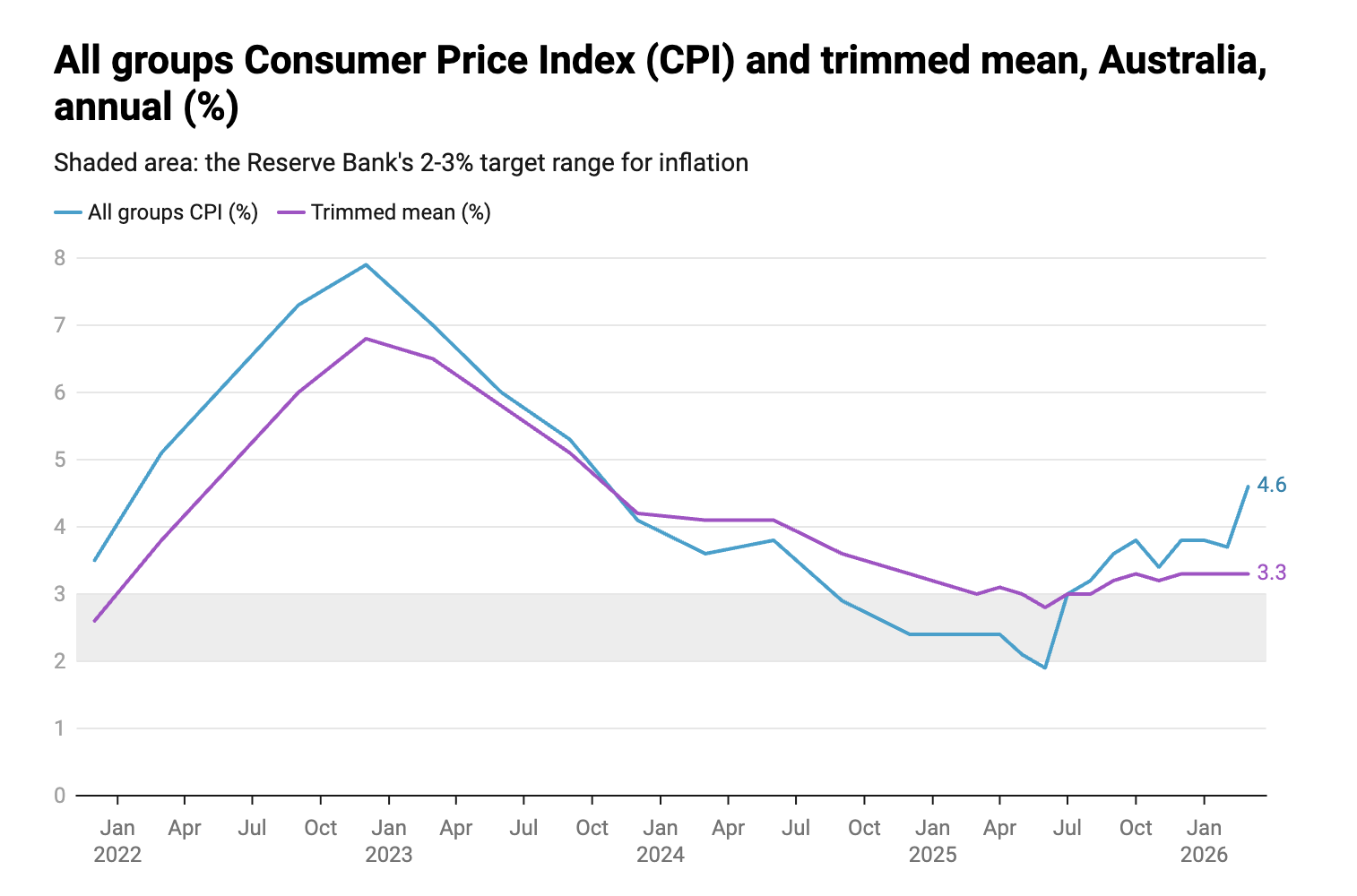
At first glance, 4.6% looks scary. It jumped from 3.7% in February to 4.6% in March — a two-and-a-half-year high. But when you look under the surface, this number got dragged up almost entirely by one thing: petrol.
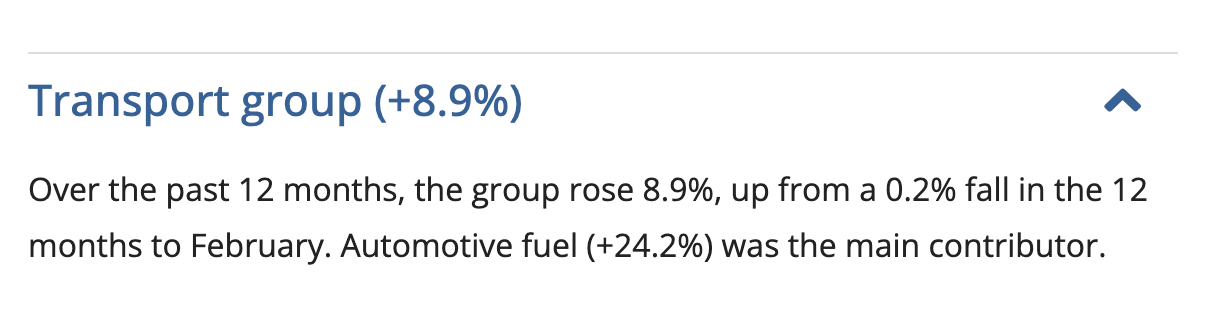
Regular unleaded went from $1.71 per litre in February to $2.28 in March. That’s a 33% jump in a single month. Diesel was even worse — $1.81 to $2.56, up 41%. Transport costs alone pushed annual inflation up by nearly a full percentage point.
Why did fuel spike so hard? The Strait of Hormuz has been effectively shut down since the military operation on February 28th. Before the conflict, roughly 100 ships passed through every day. That number has dropped by more than 95%. Brent crude is sitting at $111 a barrel. And here's the part that should worry you — all of this happened before the government cut the fuel excise in half on April 1st. The March numbers caught the full force of the oil shock with zero government relief baked in.
So the real question isn’t whether 4.6% sounds alarming. The real question is whether this is a one-time supply shock that fades, or whether underlying inflation has actually lost control. And to figure that out, you need to look at the one number the RBA cares about.
The one number that actually matters
The RBA doesn’t set policy based on headline CPI. They watch something called Trimmed Mean CPI — core inflation. The way it works is simple: you take all the price data, cut off the 15% that rose the most, cut off the 15% that fell the most, and look at what’s left in the middle. That middle 70% tells you the real trend, without all the noise from things like petrol or one-off government rebates.
Q1 trimmed mean came in at 0.8% quarter-on-quarter. Year-on-year, the March number is sitting at 3.3% — the same as February, meaning it hasn’t accelerated. The RBA’s own February forecast predicted core inflation would peak at 3.7% by mid-2026, so 3.3% is actually running below what they expected. The market had been bracing for a quarterly reading of 0.9%. It came in at 0.8%.
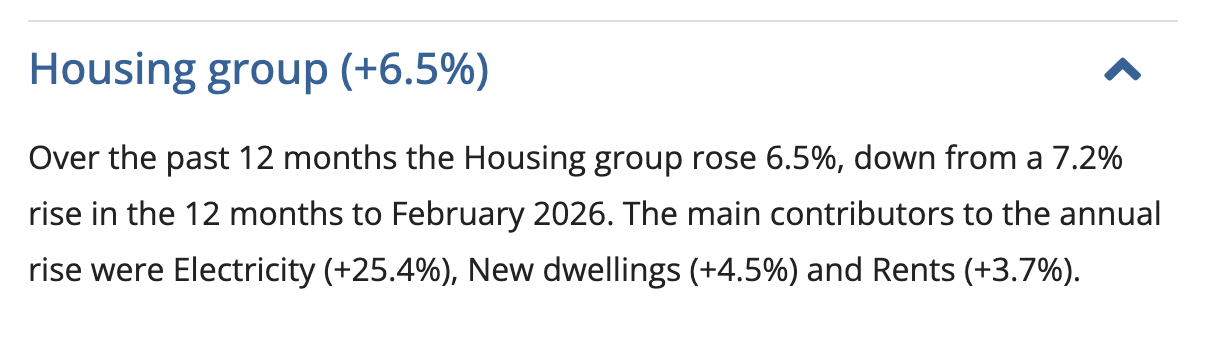
Now let me walk you through what’s moving prices across the different categories, because the details tell a very different story depending on where you look. Housing is up 6.5%, with electricity surging 25.4% and rents climbing 3.7% — and those are sticky costs, not one-offs. Transport is up 8.9%, driven mostly by petrol. Goods inflation jumped from 3.5% to 5.5%, which tells you the oil price is already feeding through to the broader economy. But services inflation actually dropped from 3.9% to 3.6%. That’s the only good news in the entire report — it means wage and rent-driven inflation, the kind that really sticks around, is starting to ease up.
Alright, so the headline number is hot, but the core is holding. Now let’s see what the four biggest banks did with these exact same numbers — and then I’ll show you why one of the world’s largest investment banks read the same data and came to a completely different conclusion.
The Big Four go all-in on a hike.
The banks didn’t wait around. On the same day the inflation numbers came out, all four had their positions locked in.
Westpac went the furthest. Their forecast looks like a staircase: 4.10% up to 4.35% on May 5th, then 4.60% in June, then 4.85% in August, with no rate cuts until 2028. Think about that for a second — 4.85% is a level Australia hasn’t seen since before the GFC in 2008. That’s 50 basis points higher than the 2023 peak. And Westpac also raised its Q2 core inflation forecast to 1.0% quarter-on-quarter, which tells you they believe the oil price hasn’t fully hit the numbers yet, and the next CPI report is going to look even worse.
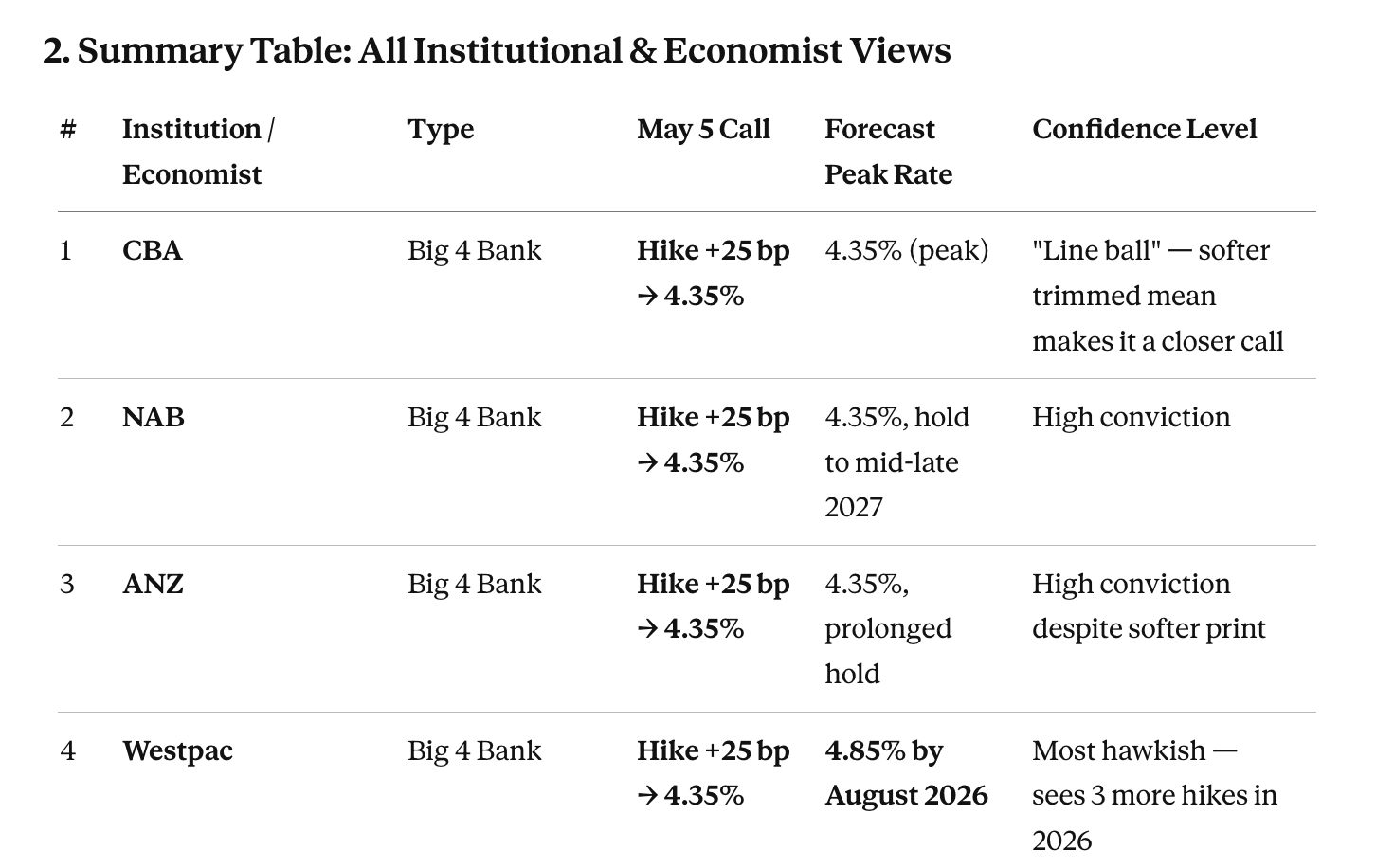
CBA said a hike is the most likely outcome, but they left themselves a back door — they only see one increase to 4.35%, with rate cuts starting in 2027. That’s gentler than Westpac, but the direction is the same.
NAB and ANZ both pointed out that if you strip out petrol, inflation is actually running slightly below the RBA’s own forecasts. That’s a lifeline for anyone hoping the RBA might hold. But even so, their conclusion was still to hike — raise first, then wait and see what happens.
Four out of four banks are calling for a rate hike. That kind of consensus hasn’t happened in the past three years.
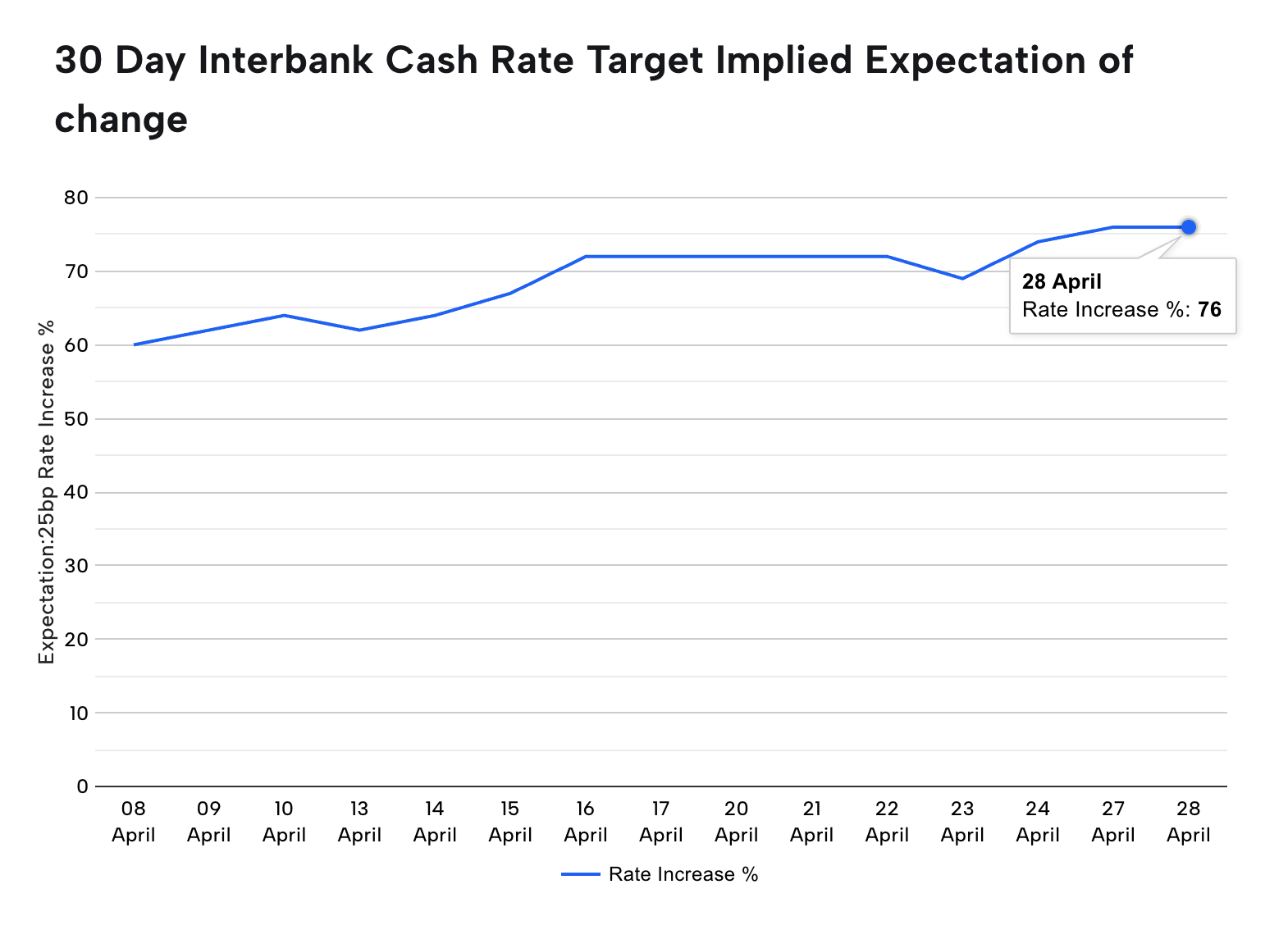
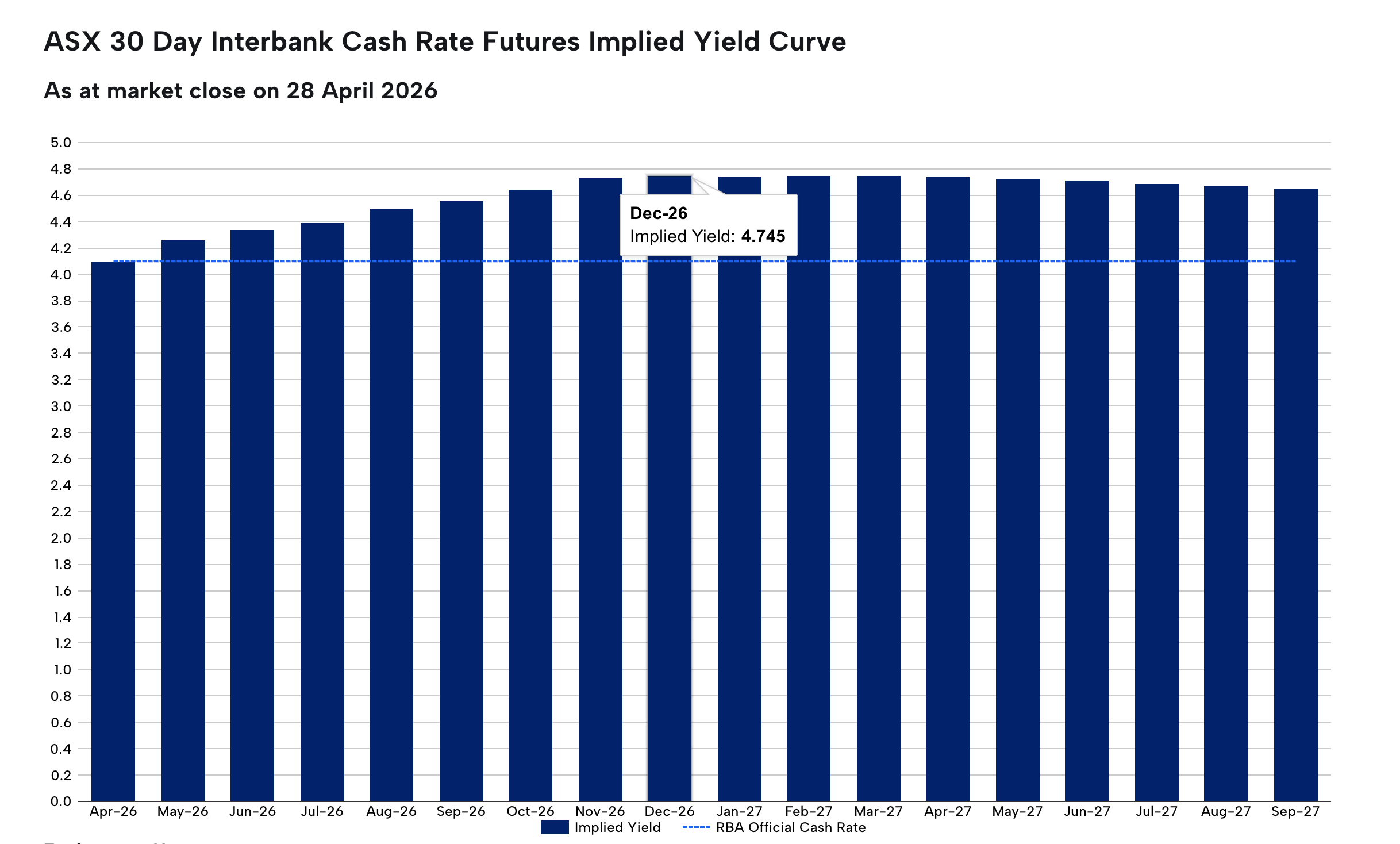
The ASX Rate Tracker puts the probability of a hike at 76%. In plain terms, three out of every four traders are putting real money on it. And they’re not just betting on whether it happens — they’re betting on how many times it happens. The terminal rate is priced around 4.60% by the end of 2026, and traders are already pricing in Westpac’s full 4.85% path.
Now, all of these numbers might feel abstract until you see what they actually do to a mortgage.
According to Canstar, every 25 basis point rate increase cuts borrowing capacity by roughly $12,000 for a single-income household and about $24,000 for a dual-income household. If Westpac’s 4.85% scenario plays out — three consecutive hikes adding up to 75 basis points — a dual-income household would lose around $73,000 in borrowing power.
On a $600,000 mortgage, those three hikes add roughly $457 to your monthly repayment. That’s $5,500 more per year coming out of your household budget. Not a rounding error.
But before you assume that’s the settled view, it isn’t. Morgan Stanley is standing on the opposite side of the table from virtually every other institution. And when you hear why, you’ll understand why so many people are genuinely torn about what happens next.
Want to know exactly where you stand and what your next property move should be? Book a VISION Blueprint Session — in 45 minutes, you'll walk away with a personalised Property Investment Blueprint built around your numbers, your goals, and your timeline. And if you want ongoing support from a team that handles everything from strategy to settlement, VISION Gold Membership is your next step. Link in the description below.
The lone dissenter
Morgan Stanley’s report landed on April 7th. That same day, the ASX hike probability dropped from 72% straight to 64%. One report from one bank moved the entire market.
The author is Chris Read, Morgan Stanley’s chief economist for Australia. He used a phrase you almost never see in mainstream research from a bank this size: wrecking-ball impact. His argument is that the Strait of Hormuz crisis isn’t producing a gradual slowdown for the Australian economy — it’s triggering a full-blown collapse in demand. His thesis boils down to one sentence: recession is going to arrive before inflation becomes the real problem.
Three data points back him up. First, consumer confidence is sitting at 67.8 — that’s the latest ANZ-Roy Morgan reading from April 28th. In 53 years of tracking this number, it’s been lower only 6 times. It’s worse than the GFC. Worse than early COVID. The only week that came in lower was the March 2020 lockdown. Second, business confidence at negative 29 — the NAB March survey recorded a single-month plunge of 29 points, which is the second-biggest monthly drop in the survey’s entire history. The only larger one was during the GFC, and the third-largest was COVID. Third, household inflation expectations are at 6.6%. That has come down from 7.1%, but it’s still more than double the RBA’s target band — the kind of number that keeps a central bank governor up at night.
Read’s path forward is clear: hold in May, stay on hold through the rest of the year, start cutting in 2027, and bring rates down to just above 3%. Backing him up are Bendigo Bank, Jarden, and Deutsche Bank. His logic, stripped to the core: raising rates right now is like kicking a wall that already has cracks running through it. Consumers are already on their knees, and business confidence has collapsed. Another hike isn't putting out the fire — it's pouring petrol on it.
So both sides have now made their case. The Big Four say hike, Morgan Stanley says hold. Same data, completely opposite conclusions. Here’s where I think this actually lands — and more importantly, what you should be doing about it, no matter which side turns out to be right.
Where I think this lands
My call: on May 5th, the RBA raises by 25 basis points to 4.35%. I’d put the probability above 80%. Here’s my reasoning.
First, the RBA is not the Fed. Governor Bullock said something on March 17th that many people overlooked: “The disagreement is not about direction — only about timing.” All nine board members agreed that rates should go up. The four who wanted to wait in March were waiting for one thing — CPI data. That data is now in. Core inflation at 3.3% didn’t blow up, but headline CPI at 4.6% hit a new high. They have run out of reasons to keep holding.
Second, inflation expectations are turning into a problem of their own. With household expectations at 6.6%, the RBA is staring at a number that’s way above where it should be. If they don’t hike now, the market will read it as the central bank blinking. And once you lose control of expectations, it takes three times the effort to drag them back down. Bullock can’t afford to let that happen.
Third, I’m not dismissing Morgan Stanley’s wrecking-ball argument — I just don’t think it has arrived yet. Unemployment is still at 4.1%. Full-time jobs were still growing in March. Household spending is weak, but it hasn’t fallen off a cliff. The recession is getting closer, no question, but it hasn’t hit yet. The RBA will most likely choose to put out the fire that’s burning right now and deal with the recession risk in the second half of the year.
As for whether we end up on Westpac’s 4.85% path or CBA’s one-and-done at 4.35%, that depends entirely on Q2 data. It’s too early to make that call.
Alright, so we’ve covered the data, the bank forecasts, the dissenting view, and where I think the decision falls. But knowing the odds is only half the job. What matters now is what you actually do with this information — and that’s what these last four action items are all about.
Four things you need to do right now
There are four things you need to do right now.
Number one: on May 5th, watch the Governor’s statement — not just the rate. The decision comes out at 2:30 PM. Most people will focus entirely on whether it’s 4.35% or 4.10%. But the sentence that actually determines what happens in June and August is buried near the end of the statement. You’re looking for one specific phrase: “further tightening may be required.” If those words are in there, you’re on Westpac’s 4.85% track, and you need to prepare for the worst case. If the statement only says “dependent on the data,” it’s most likely one hike and done, and the pressure eases. The wording of that statement matters more than the rate itself.
Number two: call your mortgage broker this week, not next week. There are three things you need to find out. First, whether your current pre-approval would still cover the same amount if rates hit 4.85%. Second, what the lowest available one-year and three-year fixed rates are right now. And third, what your DTI looks like — your debt-to-income ratio — and whether you’ve crossed APRA’s six-times limit, which took effect on February 1st. The 3% serviceability buffer is unchanged, but all 63 lenders nationally have already raised their fixed rates since the March hike. There isn’t a single fixed-rate product left on the market starting with a five. Every day you sit on this, your options narrow
Number three: run the 4.85% stress test yourself. Pull up a borrowing calculator and set the rate at 6.85% — that’s the 4.85% cash rate plus the two-point margin banks add on top. On a $600,000 loan over 30 years, your monthly repayment goes from roughly $3,800 to over $4,300. That’s an extra $6,000 per year. The question you need to answer honestly is whether your household budget can handle that. If it can’t, locking in a fixed rate is something you should seriously look at.
Number four: figure out where your target city actually sits in the cycle. Cotality just released March Home Value Index data, and it paints a clear picture. Sydney is running at negative 0.1% monthly and Melbourne at negative 0.2%. The two biggest East Coast markets are starting to turn. For the first time in three years, you’re looking at lower clearance rates, motivated sellers, and genuine room to negotiate. Meanwhile, Perth is still posting positive 2.5% monthly growth, and Brisbane is at positive 1.8% — but those 7% quarterly gains are not going to last, and a slowdown is on its way.
In our VISION All-Weather Investment framework, we talk about investing across all of Australia and across all cycles. The point is simple: don't bet everything on one city in one phase of the market. Adding to your portfolio across different markets is smart. Going all-in on a single bet is not.
The bigger picture
I've been in this industry long enough to watch 2008 play out in real time, live through the 2017 APRA squeeze, and steer clients' portfolios through COVID in 2020. Every one of those cycles taught me the same thing, and it always comes back to what we call the 541 Rule: 50% of your outcome comes down to location, 40% to how long you hold, and only 10% to when you buy.
CPI at 4.6%, a possible recession on the doorstep, and rates potentially climbing to 4.85% — none of that changes the one truth that has held up through every cycle I’ve seen: quality assets in the right locations don’t lose their scarcity. Over the long run, without a natural disaster or a fundamental change to the system, property prices only keep rising. The headlines are loud right now, but the fundamentals underneath them haven’t changed.
Watch the video version of the blog on YouTube.
15 Minutes Free Consultation (Limited-Time Free Offer)
If you have any questions about Australian real estate, we invite you to use our 15 Minutes Free Consultation service. Once you have filled in the form, a professional property investment strategist will be in touch with you. They will assess your needs and provide fundamental advice. This service is designed to help answer general property-related queries. BOOK NOW.
VISION Membership
Our Flagship Service: VISION Membership. Your One-Stop Property Investment Manager – Build a Tailored Portfolio and Achieve Financial Freedom
Whether you're an employee, a professional, a business owner or even a new migrant, everyone has a financial goal for the future. The VISION Membership is designed to solve all the pain points in your Australian property investment journey through one single, comprehensive service.
By analysing your current financial situation and long-term goals, we'll tailor a property investment plan just for you. Our team will match you with the ideal mortgage structure, tax strategies, wealth planning, and legal support, empowering you to go further, faster, and smarter on your path to financial freedom.
VISION Membership is perfect for busy individuals who want a professional team to create, expand and manage their Australian investment portfolio. If you're looking for a dedicated team, including real estate investment experts, mortgage brokers, accountants, financial planners, and property solicitors, VISION Membership is your ideal solution.
Start with an obligation-free 30-minute discovery session on Zoom. BOOK NOW.
VISION Buyer’s Agent
No time for inspections? Tired of dealing with pushy selling agents? Unsure how much to offer or feeling nervous about auctions? Worried about buying the wrong property? If any of these sound like you, AusPropertyStrategy's Australia-wide VISION Buyer's Agent Service is here to help.
We provide end-to-end support to help you build an optimised property portfolio and achieve your financial goals—whether you're investing interstate, refinancing, or planning post-settlement leasing or resale. Our services cover everything from suburb research and property selection, to price negotiation, auction bidding, and post-settlement support.
Start with an obligation-free 30-minute discovery session on Zoom. BOOK NOW.
real estate australia,real estate investing,australian property,australian housing market,australian economy,australian property investment,australian property market,buying property,australian real estate,mortgage brokers brisbane,first home buyer,Australian Real Estate,Australian Real Estate Investment,Australian Property Investment,Real Estate Investment,Property Investment,Property Investment Australia,Passive Income,Positive Cash Flow,Australia Real Estate Investing,Australian Real Estate Investors,Australian Property Investors,Vision Wealth Mentors,Vision Real Estate Investors Australia,financial freedom, freedom through property investment,real estate investors,property investment,passive income,positive cash flow,real estate course,real estate courses,real estate training,australian property market,property investment brisbane,property investment sydney,melbourne property market,investing in brisbane,investing in melbourne,how to invest in property,buying properties,start investing in property,property investment strategy,how to buy investment property,property investing tips,best suburbs to invest in sydney,locations real estate,prime location,property growth by suburb,capital growth suburbs


