

The Second Wave No One Saw Coming — The RBA Just Reset the Clock and Nobody's Ready for What Comes Next |APS148
You know that feeling when you finally see a bit of light at the end of the tunnel, and then someone pulls you right back to the start? Last year, the RBA cut rates three times, bringing the cash rate from 4.35% down to 3.6%. Repayments finally eased up a little. Then, in February this year, they hiked. In March, they hiked again. And on May 5th, they hiked one more time. The cash rate is now back at 4.35%, meaning the past year of relief counted for nothing. All those savings you enjoyed for a few months have been clawed back in a single quarter. But when you pull up the latest data across all eight capital cities, you see something very strange. Sydney and Melbourne are falling. And Perth is still going up, even while rates are climbing. That kind of split makes no sense on the surface, so what’s really going on?
Behind these rate hikes, there’s a second wave of inflation that most people haven’t picked up on yet, and it’s coming in fast. Whether rates keep climbing from here is an open question, and the big four banks can’t even agree among themselves. Whether property prices are about to crash is something that history actually has a very surprising answer to. And the most important part is what you should be doing right now, because the playbook for owner-occupiers and investors looks completely different.
The Forces Behind the Rate Hikes
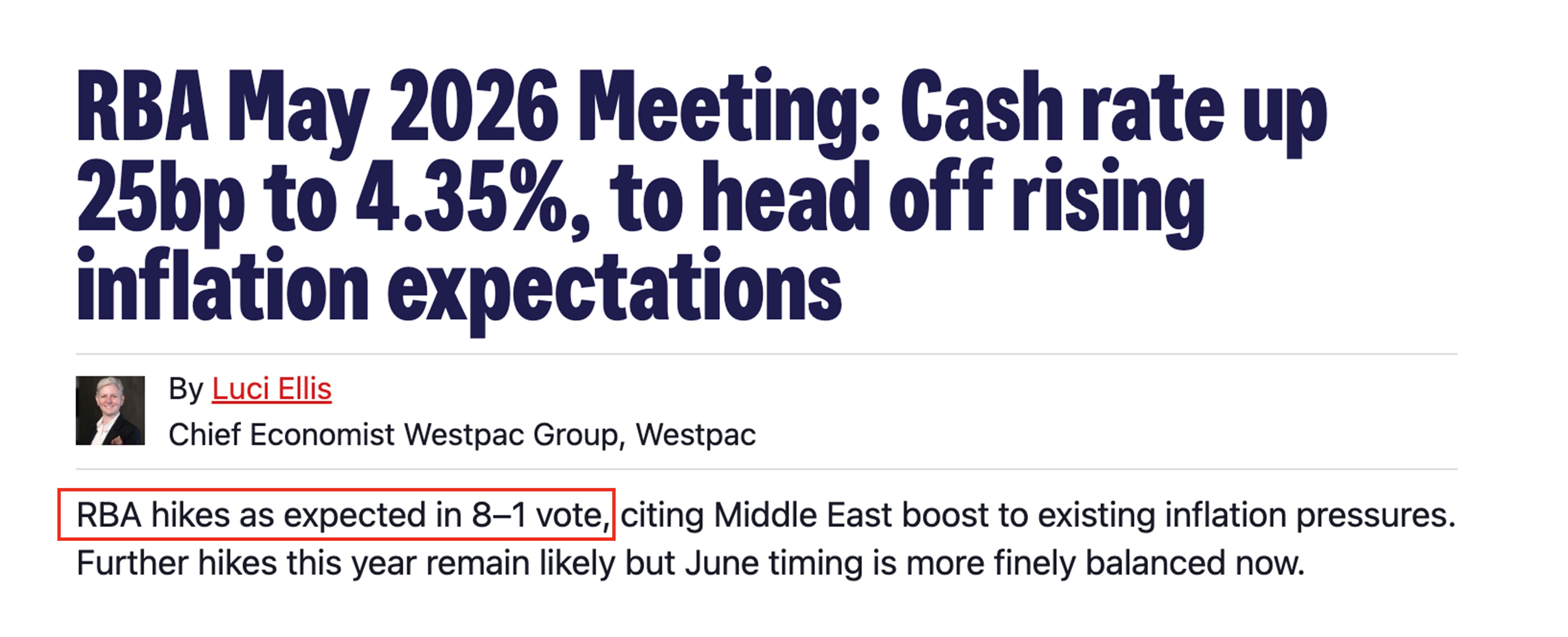
The RBA board voted 8 to 1 in favour of this hike, which, under Governor Bullock, is a rare level of disagreement. The cash rate rose from 4.10% to 4.35%, marking the third consecutive increase following hikes in February and March. It puts rates right back to where they were in November 2023. Think of it like training for a year, losing five kilos, then gaining it all back over the holidays.
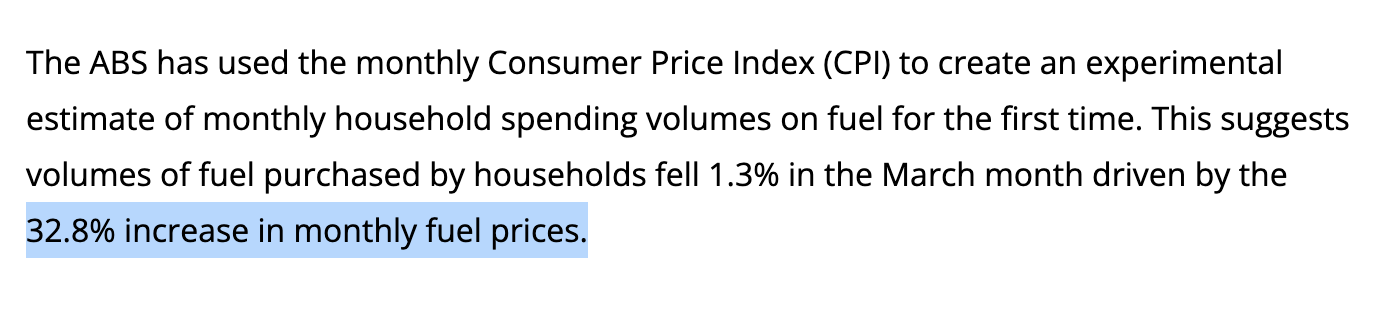
So why did the RBA feel they had no choice but to hike? It comes down to oil. The Strait of Hormuz carries about 20% of the world’s oil supply. When that route got choked off, Brent crude shot up from around $70 before the conflict to over $110. That flowed through to Australia fast. Petrol prices jumped 32.8% in March alone, according to the ABS, which is the biggest single-month spike since monthly CPI reporting began. As a result, March CPI came in at 4.6% year-on-year, the highest reading since September 2023.
When oil prices go up, everything follows. Groceries, freight, food delivery. But what the RBA is really worried about isn’t the oil price itself. It’s the second-round effects. Oil price increases don’t stop at the bowser. They seep into transport costs, food, and services across the board. Once businesses start thinking “well, everyone else is putting prices up, so I will too,” that kind of pricing behaviour becomes very hard to stop.
Bullock was upfront at the press conference. She acknowledged that rate hikes are painful, but said the central bank simply can’t control oil prices. She called it “a real income shock for Australia.”
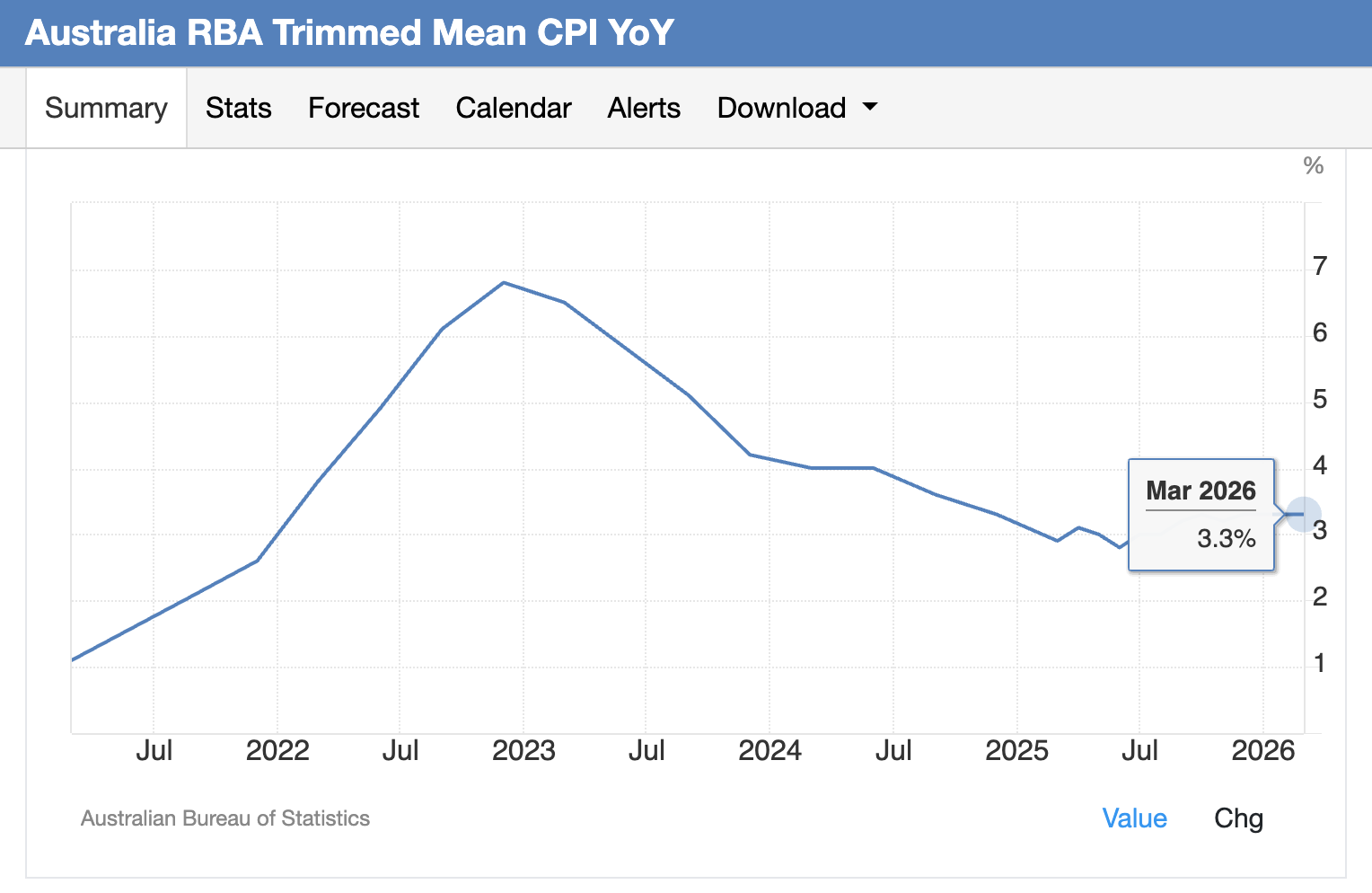
The economic picture is already showing the strain. Underlying inflation, the Trimmed Mean, is sitting at 3.3% and hasn’t changed. Consumer confidence is worse. The ANZ-Roy Morgan index hit 67.8, which is the seventh lowest in over 50 years of records. Business confidence dropped to 76.5, a new all-time low that’s actually worse than the month the pandemic started. GDP is tracking at 2.6%, which looks reasonable, but the RBA actually wants to slow the economy down further. Unemployment has held at 4.3%, although March only added 18,000 jobs compared to 50,000 the month before. And wages? CBA data shows nominal wages grew 3.1%, but once you factor in inflation, real wages actually went backwards.
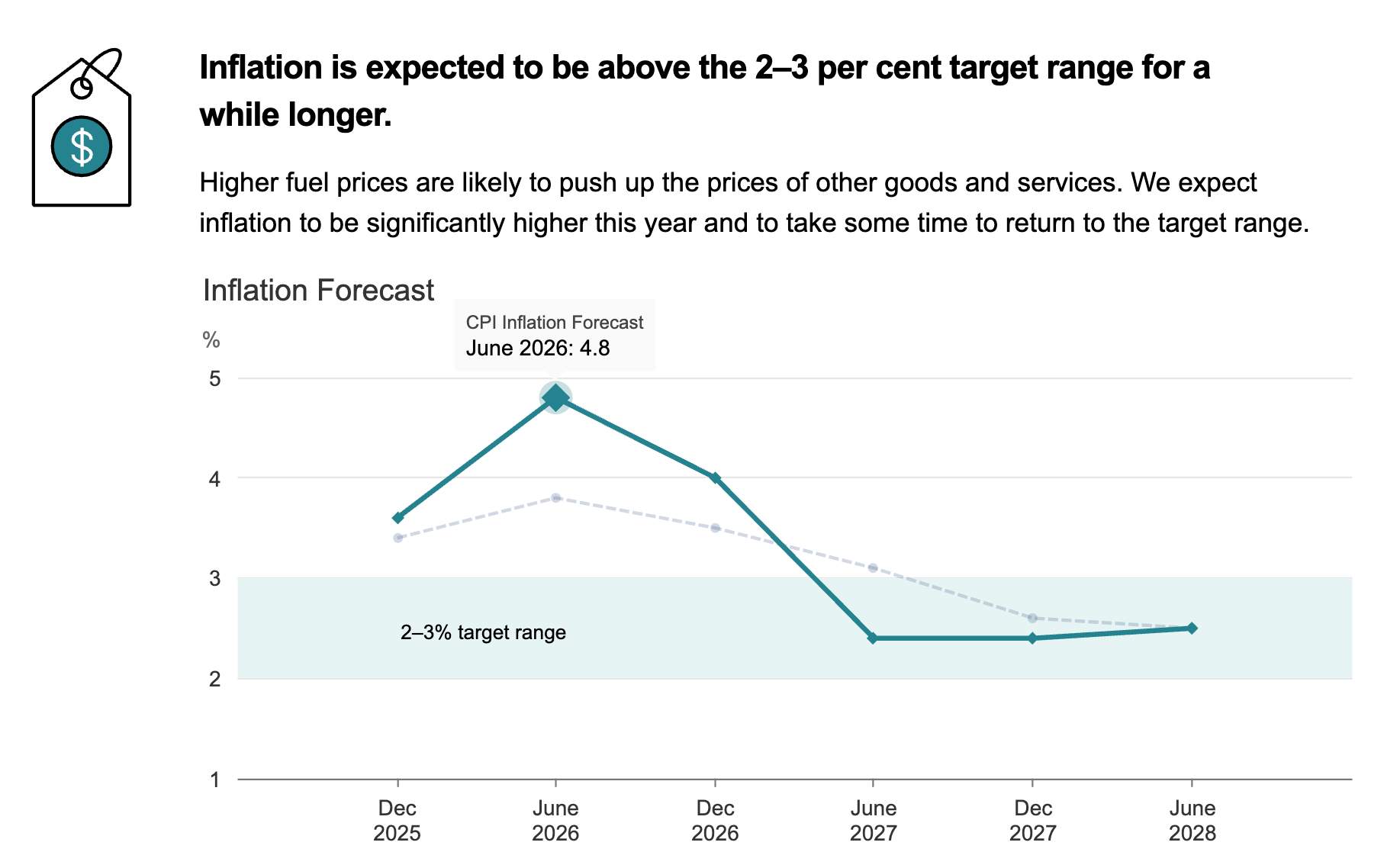
In its latest Statement on Monetary Policy, the RBA laid out its forecasts. Inflation is expected to peak at 4.8% in June before gradually easing, but underlying inflation won’t come back to the 2.5% target until mid-2028. GDP growth is forecast to slow to 1.3% by year-end, and unemployment is projected to drift up to 4.7%. The RBA’s position is clear: they’d rather see the economy slow down and unemployment tick up than let inflation run unchecked. The cost falls on the economy and on your mortgage. But what’s even more concerning is that nobody knows whether rates will keep climbing from here.
The Banks Are Rattled
Macquarie Bank moved the fastest, announcing a full pass-through of the 25 basis point hike on the same day, effective May 22nd. The big four are expected to follow within two weeks.
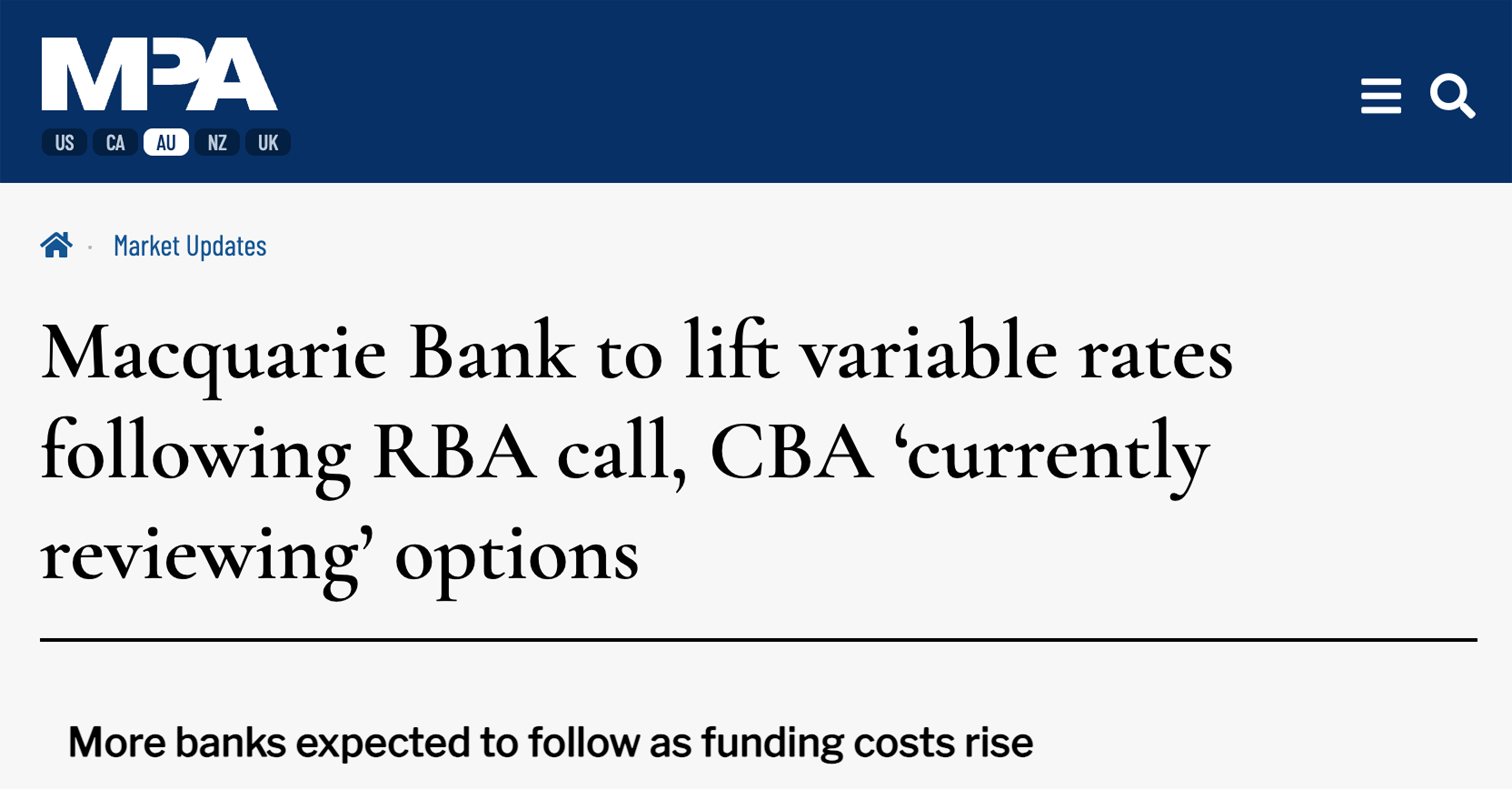
Now let’s do the maths. If you’ve borrowed a million dollars, this 25 basis point hike adds about $151 to your monthly repayments. Across the three hikes since January, that’s 75 basis points in total, which adds up to an extra $453 per month or about $5,400 a year. That holiday to Bali you were saving for at the start of the year? That money’s going to the bank now.
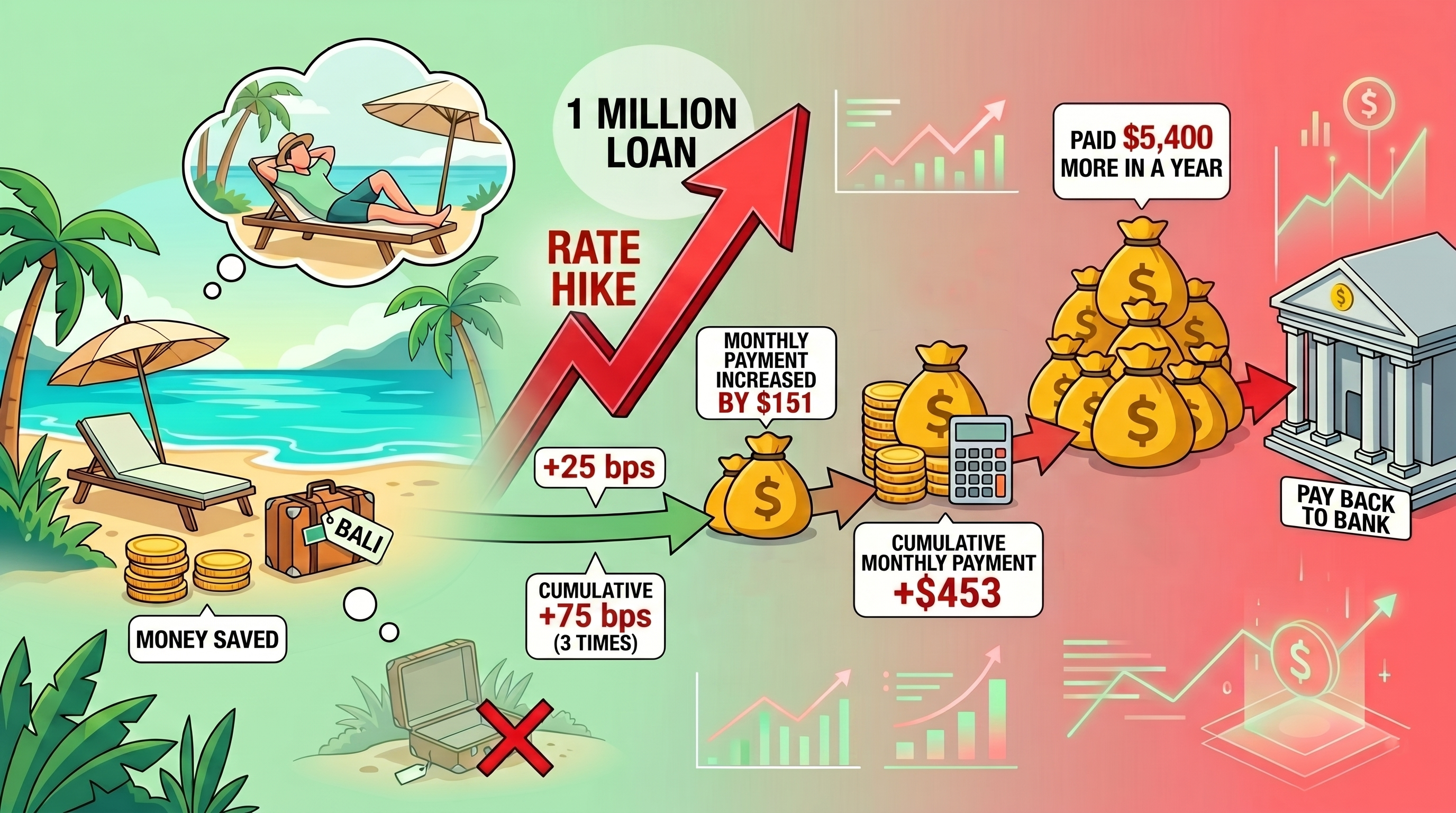
Then there’s borrowing capacity. As a rough industry rule, every 25 basis point increase cuts a couple’s borrowing power by about $24,000. Three hikes together means your borrowing capacity has dropped by somewhere between $72,000 and $80,000 compared to January. If you could borrow a million dollars at the start of the year, now you’re looking at around $920,000. That $80,000 gap might be exactly what turns the property you had your eye on from “just within reach” to “just out of reach.”
But here’s where it gets really interesting. The chief economists at the big four banks are actually fighting among themselves. CBA, NAB, and ANZ all agree that 4.35% is the peak for this cycle. They’re saying rates stay on hold for the rest of the year, with cuts starting in early 2027. Westpac disagrees. They’re the most hawkish of the four, predicting another hike in June, another in August, and a cash rate of 4.85% by year-end. The last time rates were that high was before the 2008 Global Financial Crisis.
So what does the market think? ASX interest rate futures are pricing in a year-end cash rate of around 4.70%, which sits right between the two camps but leans more towards Westpac’s view. Now the question is, with rate hikes this aggressive, are property prices about to crash?
425 Basis Points of Hikes and Prices Only Fell By…
From May 2022 to November 2023, the RBA took rates from 0.10% all the way up to 4.35%. That’s 425 basis points in the fastest, most aggressive tightening cycle in Australian history. So how far did national property prices fall from peak to trough? Just 7.5%.
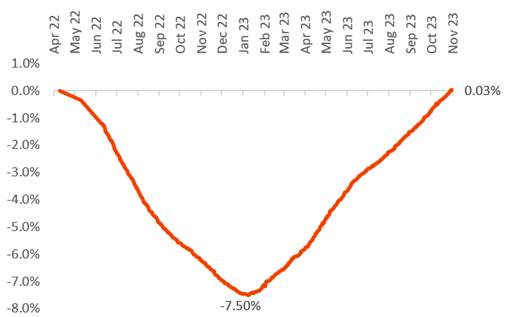
Four hundred and twenty-five basis points of rate hikes produced a 7.5% price drop. Sydney copped it the worst, falling about 12%. Melbourne dropped around 8%. But Perth barely moved at all. And here’s something even more surprising: prices started bouncing back in 2023 while the RBA was still hiking. They hadn’t even finished falling before they started going back up. So the idea that “rate hikes equal a crash” makes sense in theory, but the data tells a completely different story.
Why? It comes down to supply and demand. Mass immigration, housing undersupply, and a buffer of household savings all worked together to offset the impact of higher rates. And not one of those three factors has gone away. Supply is even tighter than it was in 2022 because new housing starts still can’t get off the ground. Immigration has slowed, but it’s still running at over 300,000 people a year. Construction costs have jumped more than 40% since before the pandemic, which means new homes simply aren’t getting built fast enough.
I’m not saying rates don’t matter. What I am saying is that most people massively overestimate how much power interest rates have over property prices. The thing that really drives prices up or down has always been the balance between supply and demand. You’ll see that play out even more clearly in the city-by-city numbers coming up. But don’t relax just yet, because this rate hike cycle has one variable that 2022 didn’t have at all.
Want to know exactly where you stand and what your next property move should be? Book a VISION Blueprint Session — in 45 minutes, you'll walk away with a personalised Property Investment Blueprint built around your numbers, your goals, and your timeline. And if you want ongoing support from a team that handles everything from strategy to settlement, VISION Gold Membership is your next step. Link in the description below.
The Oil Shock Isn’t Over
The Middle East conflict has been running for over nine weeks now. Shipping through the Strait of Hormuz is still at just 5-10% of pre-war volumes. The International Energy Agency has described this as the largest supply disruption in the history of global oil markets.
The flow-on effect is straightforward. The conflict has choked off the strait, crude oil has spiked to $110, Australian petrol prices have followed, and from there transport costs have jumped 8.9%, food is up 3.1%, and businesses are adjusting their prices upward. When consumers see everything going up, inflation expectations start building, and that kills confidence.
The way I see it, there are two paths from here.
The first path is that tensions in the Middle East ease up, oil drops back to the $80-90 range, and the CBA-NAB-ANZ camp turns out to be right. Rates have peaked at 4.35%, and cuts start in early 2027. But you’d still need to ride out 18 months of high rates.
The second path is that the conflict drags on, oil stays above $100, and Westpac is right. Rates go up again in June and August, hitting 4.85% by December. Under that scenario, you’re looking at 30 months of elevated rates, and your repayments climb by another $300 or more each month.
But regardless of which path unfolds, there’s one thing both scenarios have in common. The RBA’s own forecast says inflation won’t come back to the 2.5% target until mid-2028. That means rates are staying high for at least 18 to 24 months. Every decision you make right now, whether it’s buying, selling, or switching properties, needs to be planned around that time frame. Don’t bank on getting lucky.
Two Different Plays for Owners and Investors
So what should you actually do? Let’s start with owner-occupiers.
I know you’ve got two voices in your head right now. One is saying “rates are going up, better wait.” The other is saying “I can’t wait, what if it gets more expensive?” Here’s my advice. Instead of trying to guess what happens next, do three practical things.
First, go and get a pre-approval. At today’s variable rates of around 6.85% to 6.90%, work out exactly how much the bank will actually lend you.
Second, run your own stress test. If rates really do hit 4.85%, which is Westpac’s worst-case prediction, can you still cover the repayments? If you can’t, drop your budget by one level. That’s not giving up. That’s being smart.
Third, think about your loan structure. If you’ve got the time and don’t mind some extra admin, consider a split loan, where half is variable and half is fixed. The variable portion keeps the flexibility of an offset account, and the fixed portion locks in part of your cost. You’re hedging both ways instead of putting everything on one bet.
If you’re looking in Sydney or Melbourne, a clearance rate of 50% gives you the best negotiating window you’ve had in nearly two years. But don’t gamble on waiting for “the absolute bottom.” The lesson from the 2022 rate hike cycle was clear: by the time everyone agreed prices had finished falling, they’d already been climbing again for three months. This has happened in Sydney more than once.
Now for investors. The core principle at this stage is don’t compete on leverage, compete on selection.
Start by defending your current position. Check the rate on every loan you’ve got and compare it with at least two other lenders to see if refinancing could save you 0.30 to 0.50 of a percentage point. Then stress-test the cash flow on every property against a 4.85% rate. If any property can’t survive 18 months at that level, you need to act. That doesn’t necessarily mean selling. You could switch to interest-only, adjust the rent, or move spare cash into your offset account. Every $100,000 sitting in an offset saves you roughly $6,900 in interest per year.
Then it’s time to attack. If your cash flow still allows you to buy, getting the location right matters ten times more than getting the timing right. Focus on markets with tight supply and strong rental yields, which right now means Perth, Brisbane, and Adelaide. Sydney’s lower end has some support, but the broader market is under pressure. In the short term, stay away from high-end houses in Sydney and Melbourne, and avoid oversupplied CBD apartments. If you’re an experienced investor with three or more properties already, hold off until after the Federal Budget on May 12th, because there are several policy decisions coming that could directly affect your returns going forward.
When you’re buying property, 50% of the equation is location. Another 40% is your holding period, so be prepared to ride out at least 18 to 24 months of high rates. That last 10%, the entry timing? Honestly, I don’t think picking the exact bottom of the market is a matter of skill. If someone gets it exactly right, that’s just luck. But the negotiating window right now has clearly opened up in Sydney and Melbourne.
Rate Hikes Are a Cycle, Not the End of the World
I’ve been doing this for more than a decade. I’ve been through several rate hike cycles. Every single time, a wave of people jump up and starts screaming that the market is about to crash.
But when you pull up 60 years of Australian residential property prices, the chart tells you everything. Prices have pushed through the 1987 stock market crash, the 1997 Asian Financial Crisis, the 2008 Global Financial Crisis, the 2020 pandemic, and the fastest rate hike cycle in history in 2022. Every single time, after every crisis, prices came back and set new highs.
Why? Because the three fundamentals that drive property prices have never changed. The population keeps growing, land is limited, and construction will never keep up with demand. Today is no different.
Is 4.35% uncomfortable? Of course it is. Repayments are up $453, and borrowing capacity has shrunk by $80,000. But think about this: the last time rates were at 4.35% was in November 2023. What happened after that? Prices hit new highs.
Every time I go through a rate hike cycle, I sit down and review my entire investment portfolio. And every single time, I arrive at the same conclusion. Short-term prices go up and down, but the long-term trend has always been up. The question was never about how high rates go. It’s about whether you’re prepared before the next move comes.
Watch the video version of the blog on YouTube.
15 Minutes Free Consultation (Limited-Time Free Offer)
If you have any questions about Australian real estate, we invite you to use our 15 Minutes Free Consultation service. Once you have filled in the form, a professional property investment strategist will be in touch with you. They will assess your needs and provide fundamental advice. This service is designed to help answer general property-related queries. BOOK NOW.
VISION Membership
Our Flagship Service: VISION Membership. Your One-Stop Property Investment Manager – Build a Tailored Portfolio and Achieve Financial Freedom
Whether you're an employee, a professional, a business owner or even a new migrant, everyone has a financial goal for the future. The VISION Membership is designed to solve all the pain points in your Australian property investment journey through one single, comprehensive service.
By analysing your current financial situation and long-term goals, we'll tailor a property investment plan just for you. Our team will match you with the ideal mortgage structure, tax strategies, wealth planning, and legal support, empowering you to go further, faster, and smarter on your path to financial freedom.
VISION Membership is perfect for busy individuals who want a professional team to create, expand and manage their Australian investment portfolio. If you're looking for a dedicated team, including real estate investment experts, mortgage brokers, accountants, financial planners, and property solicitors, VISION Membership is your ideal solution.
Start with an obligation-free 30-minute discovery session on Zoom. BOOK NOW.
VISION Buyer’s Agent
No time for inspections? Tired of dealing with pushy selling agents? Unsure how much to offer or feeling nervous about auctions? Worried about buying the wrong property? If any of these sound like you, AusPropertyStrategy's Australia-wide VISION Buyer's Agent Service is here to help.
We provide end-to-end support to help you build an optimised property portfolio and achieve your financial goals—whether you're investing interstate, refinancing, or planning post-settlement leasing or resale. Our services cover everything from suburb research and property selection, to price negotiation, auction bidding, and post-settlement support.
Start with an obligation-free 30-minute discovery session on Zoom. BOOK NOW.
real estate australia,real estate investing,australian property,australian housing market,australian economy,australian property investment,australian property market,buying property,australian real estate,mortgage brokers brisbane,first home buyer,Australian Real Estate,Australian Real Estate Investment,Australian Property Investment,Real Estate Investment,Property Investment,Property Investment Australia,Passive Income,Positive Cash Flow,Australia Real Estate Investing,Australian Real Estate Investors,Australian Property Investors,Vision Wealth Mentors,Vision Real Estate Investors Australia,financial freedom, freedom through property investment,real estate investors,property investment,passive income,positive cash flow,real estate course,real estate courses,real estate training,australian property market,property investment brisbane,property investment sydney,melbourne property market,investing in brisbane,investing in melbourne,how to invest in property,buying properties,start investing in property,property investment strategy,how to buy investment property,property investing tips,best suburbs to invest in sydney,locations real estate,prime location,property growth by suburb,capital growth suburbs


