

Rate Hike + CGT Reform + APRA Crackdown: Is KPMG’s Forecast Still Valid? | APS131
KPMG says Australian property prices will rise 7.7% in 2026. Perth up 12.8%. Brisbane up 10.9%. Sounds pretty great, right? A lot of people read that report and started planning which city to jump into. But that report had been out for barely a week before the RBA raised rates. We'd just had three cuts in 2025. Everyone was breathing again. Then suddenly, they hiked — the first major central bank in the world to reverse course. The market didn't see it coming.
And it gets worse. APRA's new lending rules kicked in on February 1st. CGT discount reform is being debated in the Senate right now, and could be announced in the May budget. Three ticking time bombs — any one goes off, the whole game changes.
So who do you believe? Today, I'm pulling the 2026 Australian property market apart piece by piece. And at the end, I'll dig into KPMG's track record over the last decade — their forecasts have a pattern most people have never noticed.
Six Major Institutions — All Bullish
Big picture first. It's not just KPMG. Six major institutions, including banks, are calling for growth in 2026. Not one predicts a nationwide decline.
KPMG's report stands out as the most detailed. Chief economist Brendan Rynne used a very heavy phrase in his January 28th report — "massively undersupplied." And he stressed this isn't a recent problem. It's been building for decades.
Their ECM model — the Error Correction Model — compares the population to the housing stock to find a long-term price balance, then adjusts for interest rates, jobs, and migration. They say this ratio explains nearly 80% of rental movements. The logic is dead simple: not enough homes, prices go up.
Nationally, houses up 7.7%, apartments up 7.1%. But city by city, the gap is huge — Perth: 12.8%, Darwin: 10.5%, Brisbane: 10.9%. Sydney just 5.8%, Melbourne 6.8%.


The other five? Westpac says 6%, PropTrack 6 to 8%, SQM Research 6 to 10%. Even ANZ — most conservative after the hike — still gives 4.8%.


But here's the catch. KPMG's report dropped on January 28th. The RBA hiked on February 3rd. That 7.7% doesn't include the rate rise at all.
All 6 institutions agree: not enough houses. But the good news only tells half the story. The next three headwinds will actually decide where the market goes this year.
Headwind One: The Rate Reversal
On February 3rd, the RBA voted unanimously to raise rates by 25 basis points. Cash rate: 3.6% to 3.85%.
In 2025, it was all about cuts — February, May, August, from 4.35% down to 3.6%. Everyone thought the easing cycle was locked in. Then the December quarter CPI landed: 3.8%, core inflation 3.4%. Governor Michele Bullock said — Inflation is too strong, and we can't let it run away again.

A 25-basis-point hike adds about $90 a month to a $600,000 loan. Doesn't sound like much. But the issue isn't the ninety bucks — it's the U-turn. You've just merged onto the highway, about to speed up, and there's roadworks ahead. Tapping the brakes is one thing. Turning around is a completely different story.
CBA and NAB predict another hike in May, taking us to 4.1%. ASX futures price in a year-end rate of 4.41%. If we hit 4.1%, add APRA's 3% buffer, and banks test your repayment ability at 9.1%. Borrowing power drops nearly 8% from late last year. A month ago, 43 lenders offered fixed rates under 5%. Now only 29 are left.

Rates are squeezed from one side. And APRA is squeezing from the other side.
Headwind Two: APRA's New Rules
February 1st, APRA's DTI limits kicked in. DTI is your Debt-to-Income ratio — it caps how much you can borrow relative to your income. New rule: across a bank's new loans, no more than 20% can have a DTI above 6.
Six times income sounds OK, and right now it is — only 6% of new loans cross that line. Fitch called it a "safety net," not an "emergency brake."

But the real signal came from the APRA chair: "If investor lending risk keeps climbing, we'll bring in investor-specific restrictions." That's the line that matters. Six times is the opening move — they can still tighten the screws later.
There's also a smart design feature: new-build loans are exempt from the DTI cap. The regulator is saying — borrow all you want, just buy new, not existing stock.
Short-term damage? Limited. But the signal is massive. APRA has shifted from watching to acting. That's a big deal.
Now, rates and APRA — you can at least put a number on the impact. What really keeps me up at night is the next one.
Headwind Three: The CGT Sword
This is the single biggest policy uncertainty for property investors in 2026. Nothing else comes close.
Current rules: hold an investment property for over 12 months, and only half your profit is taxable. That's the 50% CGT discount — in place since 1999, costing the government about $23 billion a year.
What's changed? Last November, the Greens pushed the Senate to set up a CGT inquiry. In January, the OECD recommended removing favourable tax treatment for housing investors, including the CGT discount and Negative Gearing. The AFR reported the government is "actively considering" reform. Several senior ministers were asked directly — not one said "we won't touch it."
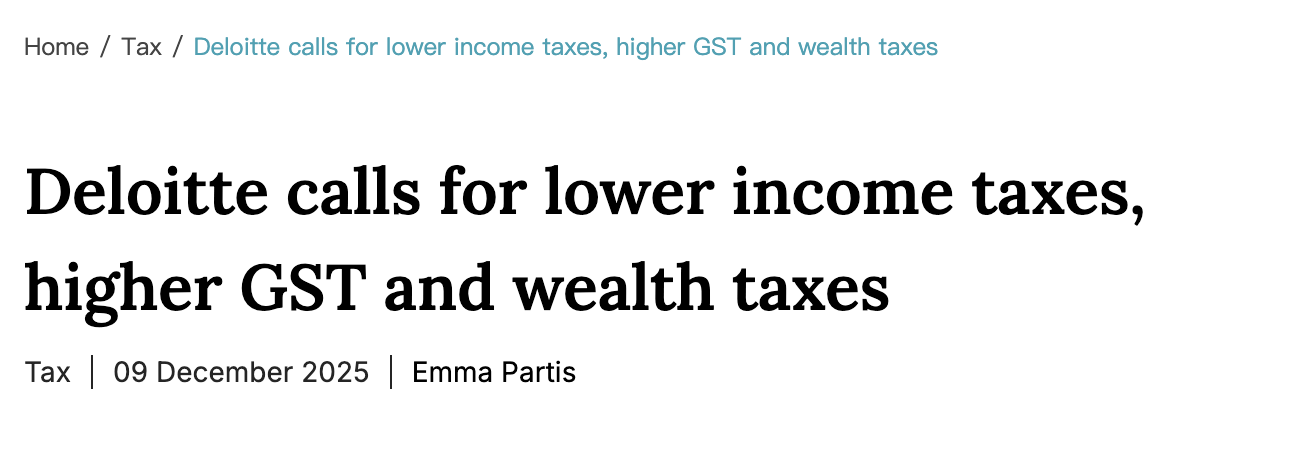
In politics, "not ruling it out" is code for "we're working on it." The ACTU wants the discount cut from 50% to 25%. Deloitte suggests 33%. NSW Treasury said it "no longer aligns with its original purpose."


The dollars: sell with $300,000 profit — today you're taxed on $150,000. If the discount drops to 25%, you're taxed on $225,000. At a 39% marginal rate, that's about $30,000 more. On $500,000 profit? Over $50,000 extra.
Key dates: March 17th, Senate inquiry deadline. May 12th, federal budget. If reform is coming, that's when.
Three headwinds covered. How do we figure out where the market is actually heading? I'm going through our APS Golden 11 Rules — every rule, with the latest data.
If you have any questions about property investment, please book a free discovery call on our website. If you want a team offering one-stop service to help you build a property investment portfolio, achieve financial freedom and retire early, join our VISION Gold Membership starting with a 30-minute discovery session. Or to keep it simple, our data-driven buyer's agency service can help. We buy and manage properties for our clients anywhere in Australia. If you have an international view, talk to us about the UAE VISION Gold Membership. We help you invest in the UAE property market, plan your tax residency, reduce your taxes to almost 0 and handle CRS/AML auditing. Links to the service are in the description below.
The Golden 11 Rules
Rule 1 — Population. Still growing, just slower. Net overseas migration last year was 306,000 — well down from the 538,000 peak in 2023, but still 37% above pre-pandemic levels. New anti-"visa hopping" rules should cut about 85,000 temporary holders over 12 months. But 2.32 million will remain — a new record. AHURI research says a third of rental growth over 20 years ties directly to migration.
Rule 2 — Building Approvals. Shrinking. In December, there were just 15,500 approvals, down 14.9% year-on-year. Apartments collapsed by nearly 30%. The Housing Accord target is to build 1.2 million homes over five years. At this rate, it won’t be done.

Rule 3 — Completions. That’s the real pain point. Only 177,000 homes were completed in 2024, against demand of 223,000 — 46,000 short every year. CSQ forecasts a labour shortfall averaging 18,200 over eight years, peaking at 50,000 in 2026–27. We just can't build without builders.
Rule 4 — RBA Cash Rate. At 3.85% and going the wrong way. CBA and NAB expect 4.1% by May. ASX futures imply 4.41% by December.
Rule 5 — Mortgage Rates. Rising. Westpac is at 5.49%, CBA at 5.59%, ANZ at 5.75%, and NAB at 5.94%. Every 25 basis points cuts borrowing power by about 4%.

Rule 6 — Debt-to-Income. APRA's limit is live. Plus the 3% buffer, banks test at 8.49% to 8.94%. Another hike will push it pas 9.1%. And your borrowing capacity will shrink by 8%.
Rule 7 — Real Income. Wages up 3.4%, but CPI is 3.8% — real wages are still going backwards. Unemployment is at 4.1%, so there is no recession. Just inflation is making everyone's paycheck feel smaller.

Rule 8 — Government Incentives. It’s getting bigger. Help to Buy launched in December — the government contributes up to 40%, and the buyer needs 2% deposit. The Home Guarantee Scheme dropped its income cap. NSW stamp duty exemption up to $800K, VIC $600K, QLD unlimited for new homes, SA promises to scrap stamp duty. Notice the pattern? Almost every incentive points to new builds.
Rule 9 — Existing Homes. Completely split. The national median hit $912,000 in January — up 10.2%. But the city gap is enormous: Darwin up 18.9%, Perth 17%, Adelaide 13.8%, while Sydney managed 6.4% and Melbourne 4.8%. Auction clearance in Sydney hit 79.6% — the highest since August, meaning the rich are still buying. Melbourne is 69.6% and softening. Westpac Consumer Confidence fell to 90.5, marking three months of consecutive declines, with 80% expecting more rate rises. One end of the market is fighting over property. The other end is pulling back and watching.

Rule 10 — Politics. Maximum uncertainty. Labour is pushing CGT reform; the May budget is the moment. The two parties are drifting further apart on housing — Labour wants to cut investor concessions, The coalition wants the status quo.
Rule 11 — International forces. Stable but uneasy. Global inflation keeps bouncing back. The US Fed paused after December 2025. Trump tariffs add trade uncertainty. China's stimulus supports commodity demand, but overall, the world outside isn't doing us any favours.
We've analysed the 11 rules and the picture is clear — the structural home shortage is rock-solid, but rates and policy are squeezing demand from both sides. So the big question: can you trust KPMG's forecast of 7.7%? This next part might be the most valuable thing in today's video.
How Accurate Is KPMG
I went through every verifiable KPMG forecast from 2017 to 2025 and cross-checked them against actual results. What I found is a pattern that's almost too consistent .
1 Do they get the direction right? Out of 11 forecasts, they nailed the direction 10 times — 91%. The one miss: 2017, when they said Sydney would keep rising. It had already peaked and fell 15%. So if KPMG says up, it's almost certainly going up. But calling the turning point? Not their strength.

2 In a Bull market, is the forecast an overshoot or undershoot? Undershoot. Every. Single. Time. Nationally, they've missed by an average of 3.7 percent. At the city level, it's wild — in 2025, they said Perth would grow 4%. It grew 16.4%. Darwin? 2.5% forecast, 18.9% actual. Why? Their model is a mean-reversion machine — it assumes that when prices get expensive, people stop buying. But in Australia, FOMO, government handouts, and borrowers who'd rather eat rice for a year than sell their investment — those forces slap the model every time.

3.What about in a Bear market? Also off. They always call it a "soft landing." Reality is usually two to three times worse. In 2017, they said Sydney would dip 3 to 5%. It fell 15%. When KPMG says "cooling," pack a winter coat.

4.When are they spot on? When nothing interesting is happening. In 2024, the RBA held rates steady all year, no shocks, and the market followed fundamentals. KPMG predicted houses up 5.3%. Actual: 5.1%. Apartments: 4.5% forecast, 4.5% actual. Dead accurate.

The pattern: underestimate in bull markets, underestimate in bear markets, and only hit the target when the market is boring. So it's a moderation machine.
KPMG says the market will deliver a 7.7% return in 2026. If there is no major shock, the real number could be 8 to 10% — they always lowball a rising market. But if the RBA pushes to 4.1% or higher, this could be one of those rare times their number runs too hot. Rate reversals are what the model handles worst, because it assumes rates will keep falling.
What This Means for You
The 2026 market is a tug-of-war. On one side, structural tailwinds — nearly 50,000 homes short every year, record builder insolvencies, a labour shortage as deep as it's ever been, and the Accord target looking close to impossible. That's why even ANZ still says 4.8%. Nobody is calling for a crash.
On the other side, three real sources of pressure. The rate reversal is the biggest wild card — if May takes us to 4.1%, borrowing power and confidence both take a hit. CGT reform is the biggest tail risk. If it is confirmed in the May budget, it’ll rewrite investor maths overnight.
KPMG's 7.7%? If rates are on hold, the real number is probably higher. If rates keep climbing, it could be one of the few times they've overshot.
And here is what I think about the situation, and what you should do this year.
First, pick the right city before you pick the right time. Perth and smaller capitals with extreme supply shortages should still deliver double-digit growth, even with higher rates. Sydney and Melbourne face the most headwinds — single-digit territory.
Second, watch March 17th and May 12th like a hawk. The policy picture won't be clear until after the budget.
Third, buying new properties gives you two extra layers of protection. APRA's DTI limits don't apply to new builds. Any future CGT reform will almost certainly target only existing homes. The policy points you to investing in new homes.
Watch the video version of the blog on YouTube.
15 Minutes Free Consultation (Limited-Time Free Offer)
If you have any questions about Australian real estate, we invite you to use our 15 Minutes Free Consultation service. Once you have filled in the form, a professional property investment strategist will be in touch with you. They will assess your needs and provide fundamental advice. This service is designed to help answer general property-related queries. BOOK NOW.
VISION Membership
Our Flagship Service: VISION Membership. Your One-Stop Property Investment Manager – Build a Tailored Portfolio and Achieve Financial Freedom
Whether you're an employee, a professional, a business owner or even a new migrant, everyone has a financial goal for the future. The VISION Membership is designed to solve all the pain points in your Australian property investment journey through one single, comprehensive service.
By analysing your current financial situation and long-term goals, we'll tailor a property investment plan just for you. Our team will match you with the ideal mortgage structure, tax strategies, wealth planning, and legal support, empowering you to go further, faster, and smarter on your path to financial freedom.
VISION Membership is perfect for busy individuals who want a professional team to create, expand and manage their Australian investment portfolio. If you're looking for a dedicated team, including real estate investment experts, mortgage brokers, accountants, financial planners, and property solicitors, VISION Membership is your ideal solution.
Start with an obligation-free 30-minute discovery session on Zoom. BOOK NOW.
VISION Buyer’s Agent
No time for inspections? Tired of dealing with pushy selling agents? Unsure how much to offer or feeling nervous about auctions? Worried about buying the wrong property? If any of these sound like you, AusPropertyStrategy's Australia-wide VISION Buyer's Agent Service is here to help.
We provide end-to-end support to help you build an optimised property portfolio and achieve your financial goals—whether you're investing interstate, refinancing, or planning post-settlement leasing or resale. Our services cover everything from suburb research and property selection, to price negotiation, auction bidding, and post-settlement support.
Start with an obligation-free 30-minute discovery session on Zoom. BOOK NOW.
real estate australia,real estate investing,australian property,australian housing market,australian economy,australian property investment,australian property market,buying property,australian real estate,mortgage brokers brisbane,first home buyer,Australian Real Estate,Australian Real Estate Investment,Australian Property Investment,Real Estate Investment,Property Investment,Property Investment Australia,Passive Income,Positive Cash Flow,Australia Real Estate Investing,Australian Real Estate Investors,Australian Property Investors,Vision Wealth Mentors,Vision Real Estate Investors Australia,financial freedom, freedom through property investment,real estate investors,property investment,passive income,positive cash flow,real estate course,real estate courses,real estate training,australian property market,property investment brisbane,property investment sydney,melbourne property market,investing in brisbane,investing in melbourne,how to invest in property,buying properties,start investing in property,property investment strategy,how to buy investment property,property investing tips,best suburbs to invest in sydney,locations real estate,prime location,property growth by suburb,capital growth suburbs


