

Australia’s $3.4 Billion Developer Crisis: 6 Facts Most Buyers Miss | APS175
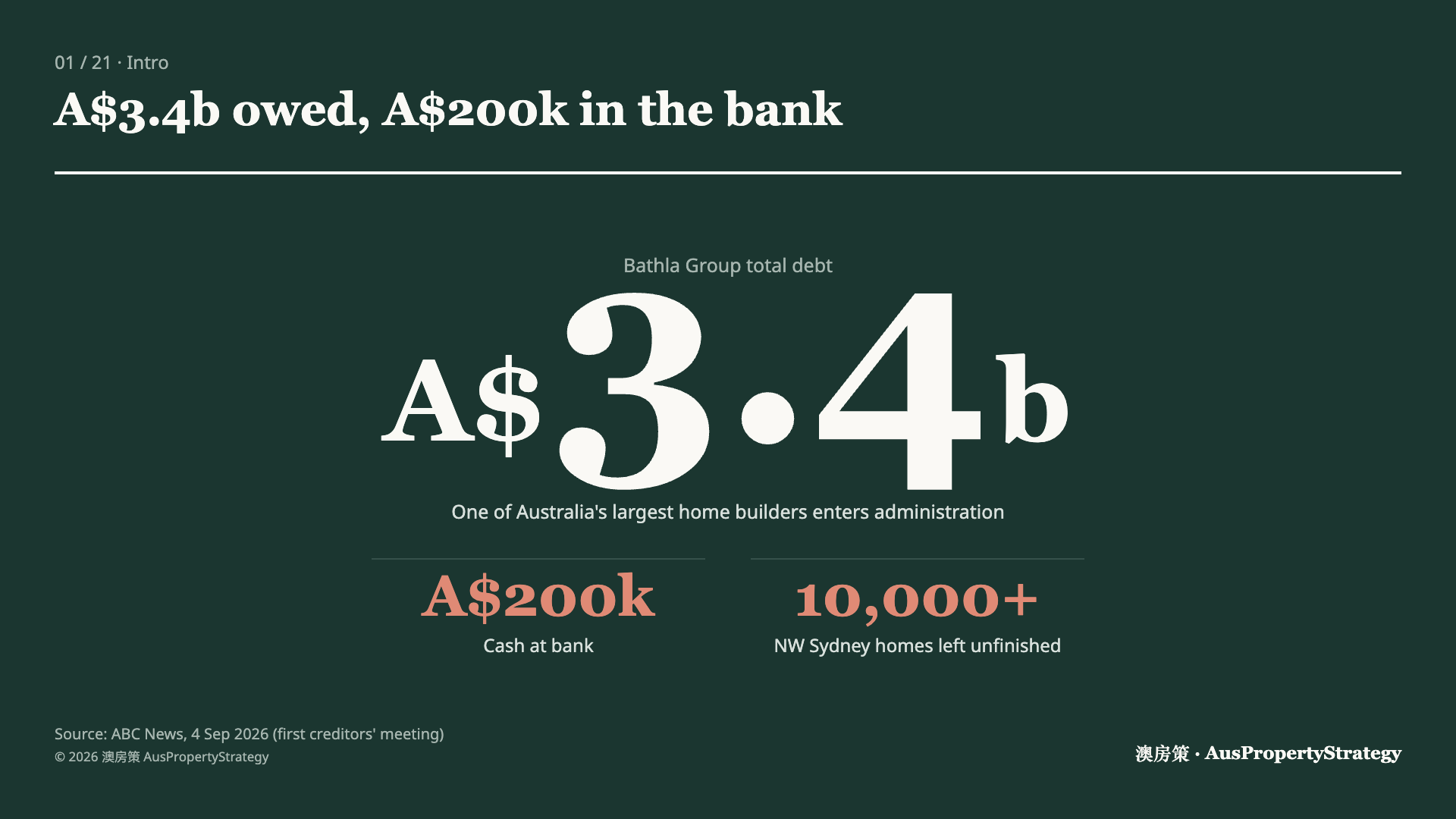
Bathla Group, one of Australia’s biggest residential developers, owes $3.4 billion and has just $200,000 left in the bank. It’s in administration, so more than 10,000 homes in Sydney’s north-west may never be finished, and buyers may not get their money back. Once the news broke, buyer’s agents were all over social media with the same message: stop buying new, stay away from house and land packages, and buy an established home through them. So how did Bathla go under, who’s losing the most, and how much of what these buyer’s agents are saying holds up? There are six facts they’re leaving out, and not knowing them could cost you hundreds of thousands of dollars.
The Developer Collapse
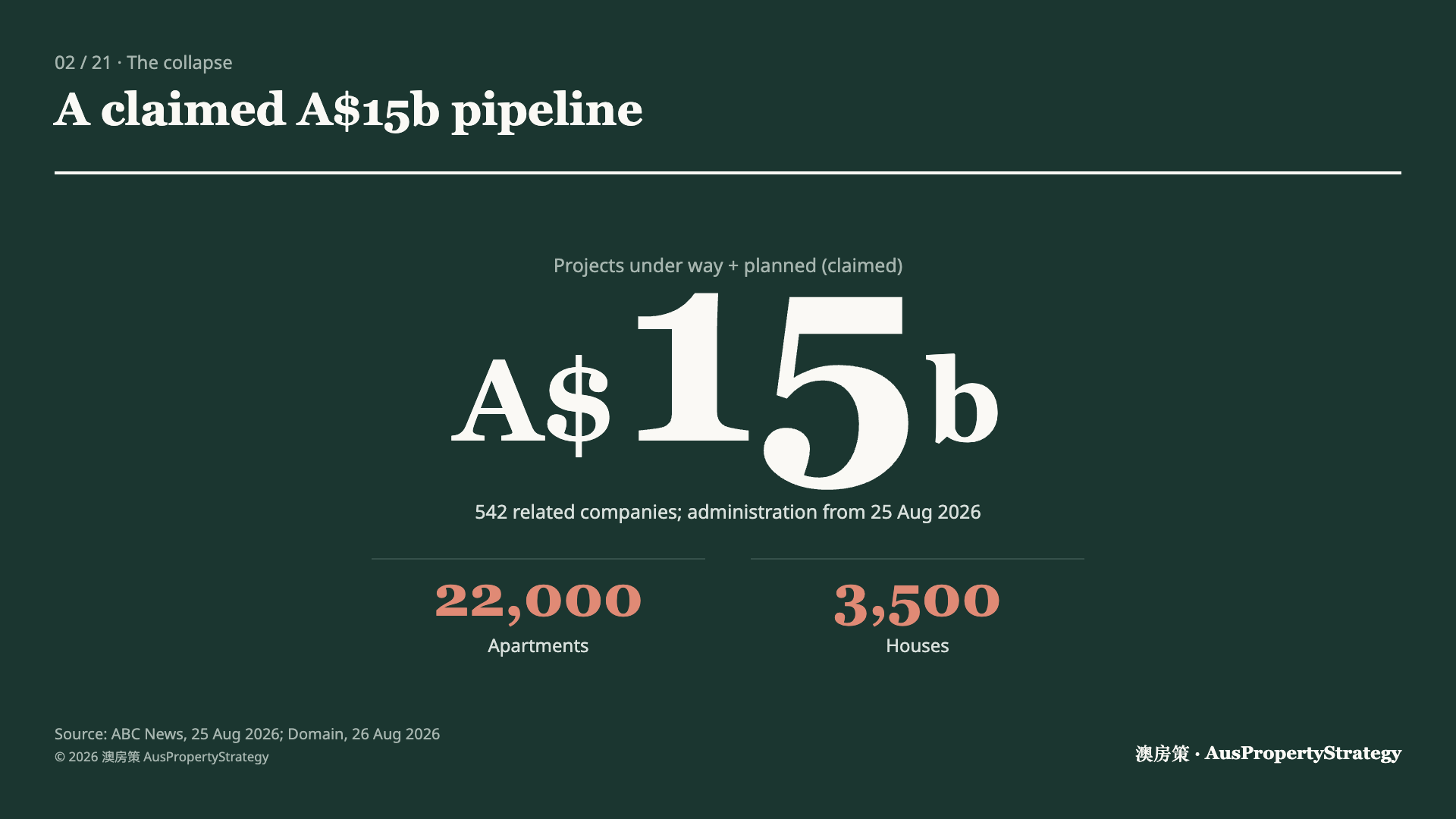
How big was Bathla, and what did the administrators find when they opened the books? Bathla Group entered voluntary administration on August 25th. It had 542 related companies, a claimed $15 billion pipeline, and building sites across Box Hill, Schofields, and Marsden Park.
The first creditors’ meeting on September 4th showed how bad things are. The tax office alone is owed $145 million, land tax adds another $42 million, and staff haven’t been paid in 8 weeks. The administrators say there’s effectively no cash left, so a company turning over $1.2 billion a year may have less in the bank than you do.
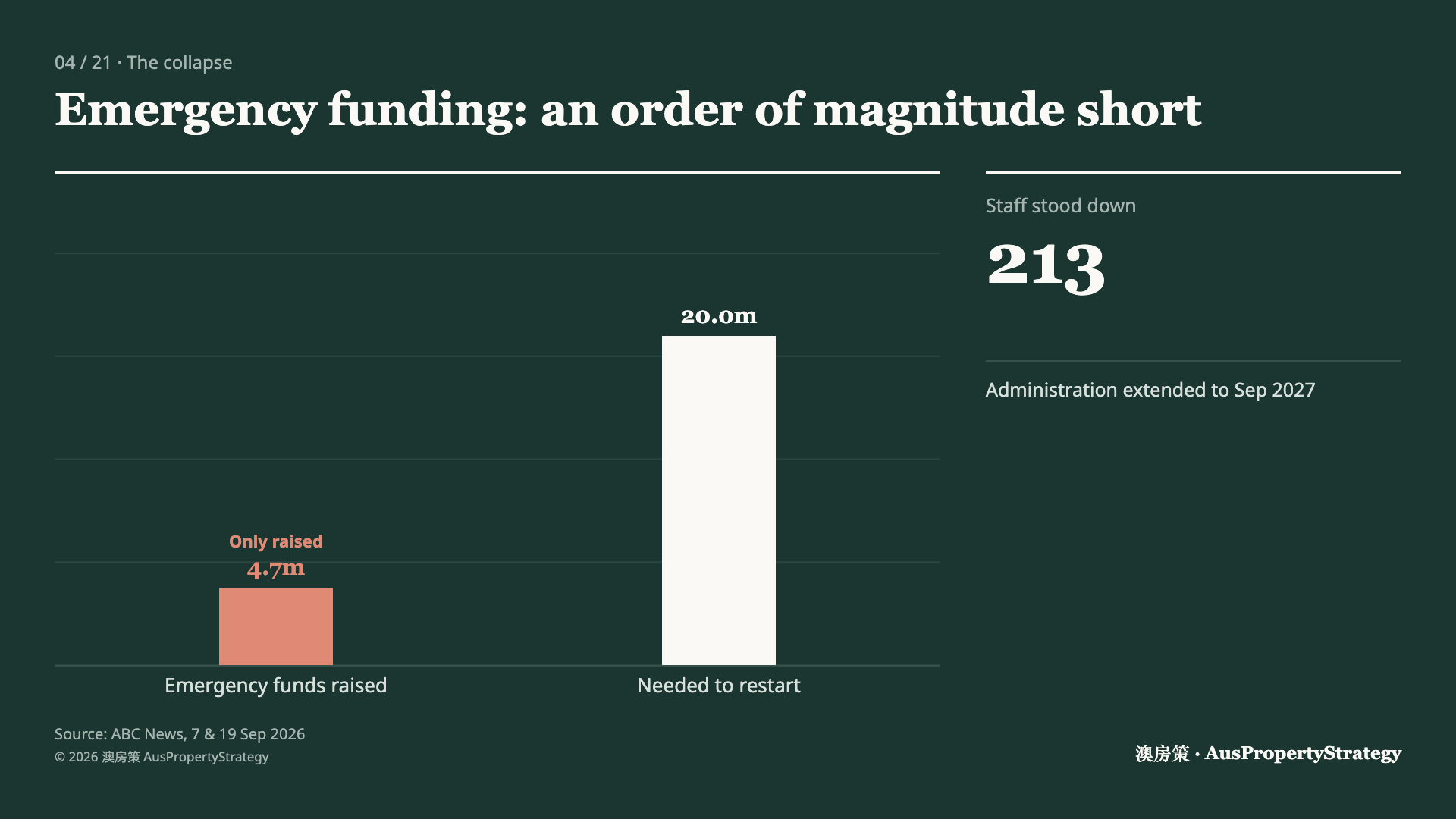
For now, the court has given the administrators until September 2027 to go through the books, raise money, and try to revive the business. So far they’ve raised just $4.7 million in emergency funding, less than a quarter of the $20 million needed to restart it. Only about a dozen of Bathla’s 45 building sites are still active, and 213 staff have been stood down without pay.
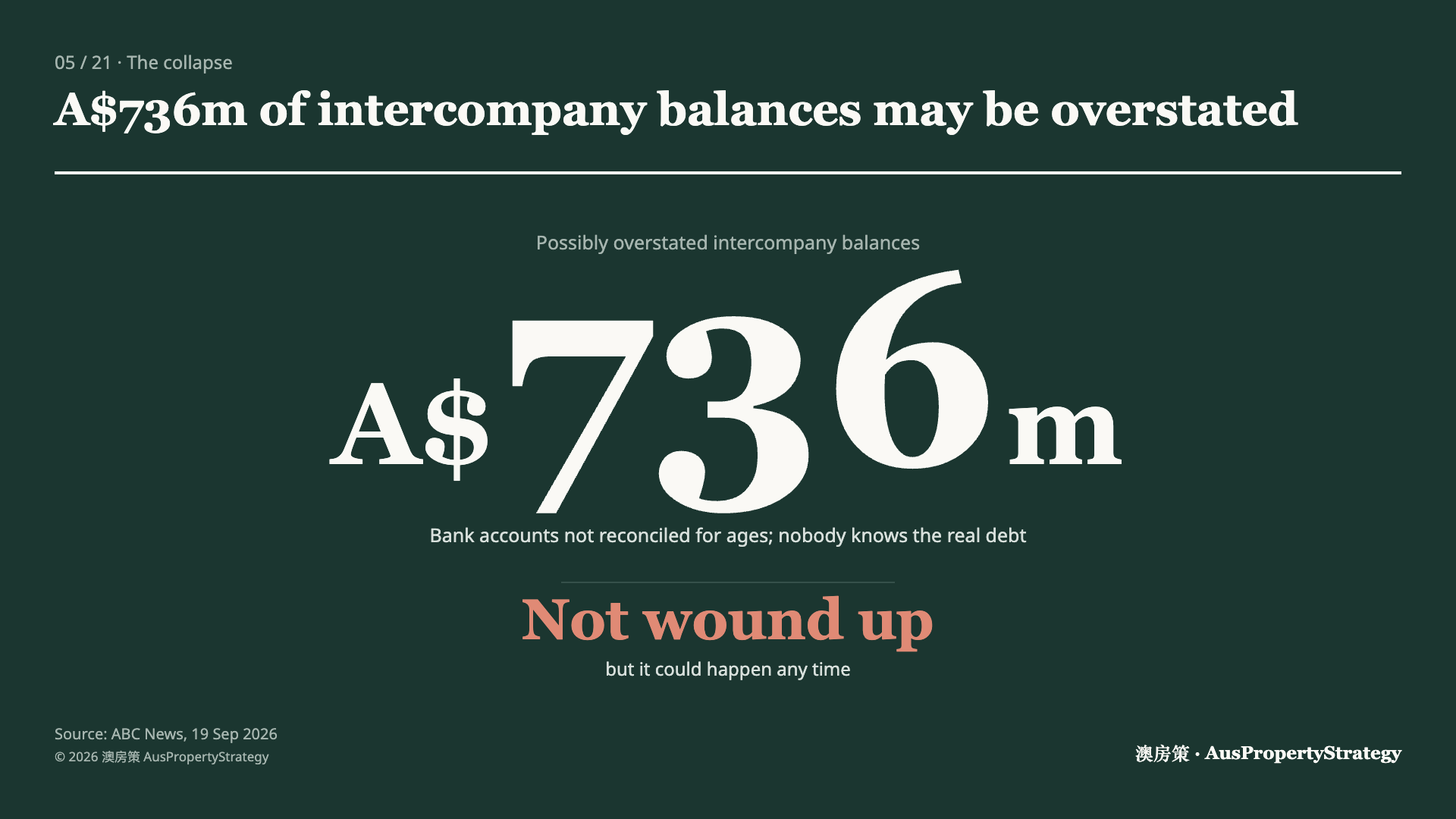
It gets worse. The administrators found that $736 million owed between Bathla’s own companies may have been overstated, so nobody knows for sure what the group owes. It isn’t in liquidation yet, but that could happen at any time.
OK, so that’s where things stand. The next part matters more.
Three Fatal Blows
What actually brought Bathla down?
Blow One: The Funding Model
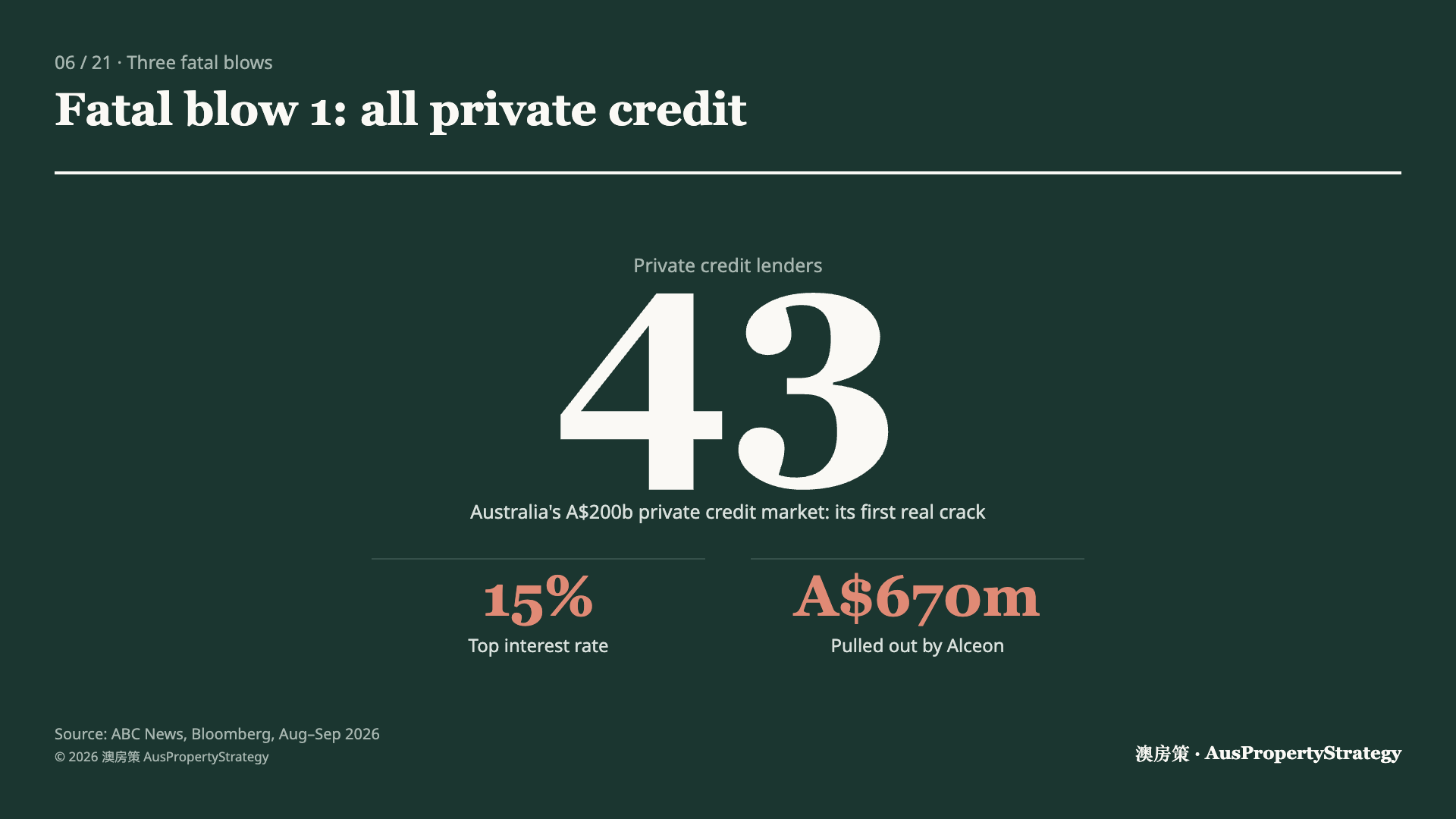
The first blow came from the way Bathla was funded. Its funding was all private credit, with no bank loans. Bathla borrowed from 43 lenders, some charging as much as 15% interest, and its biggest backer, Alceon, pulled out all $670 million at the end of 2025. Sarah Court, Chair of the corporate regulator ASIC, called Bathla’s collapse the first real crack in Australia’s $200 billion private credit market. Think of Bathla as one person building houses on 43 credit cards at once, at 15% a year. Once the homes stopped selling and the caa stopped coming in, it could only end one way. But funding was just the first blow.
Blow Two: 86% Apartments
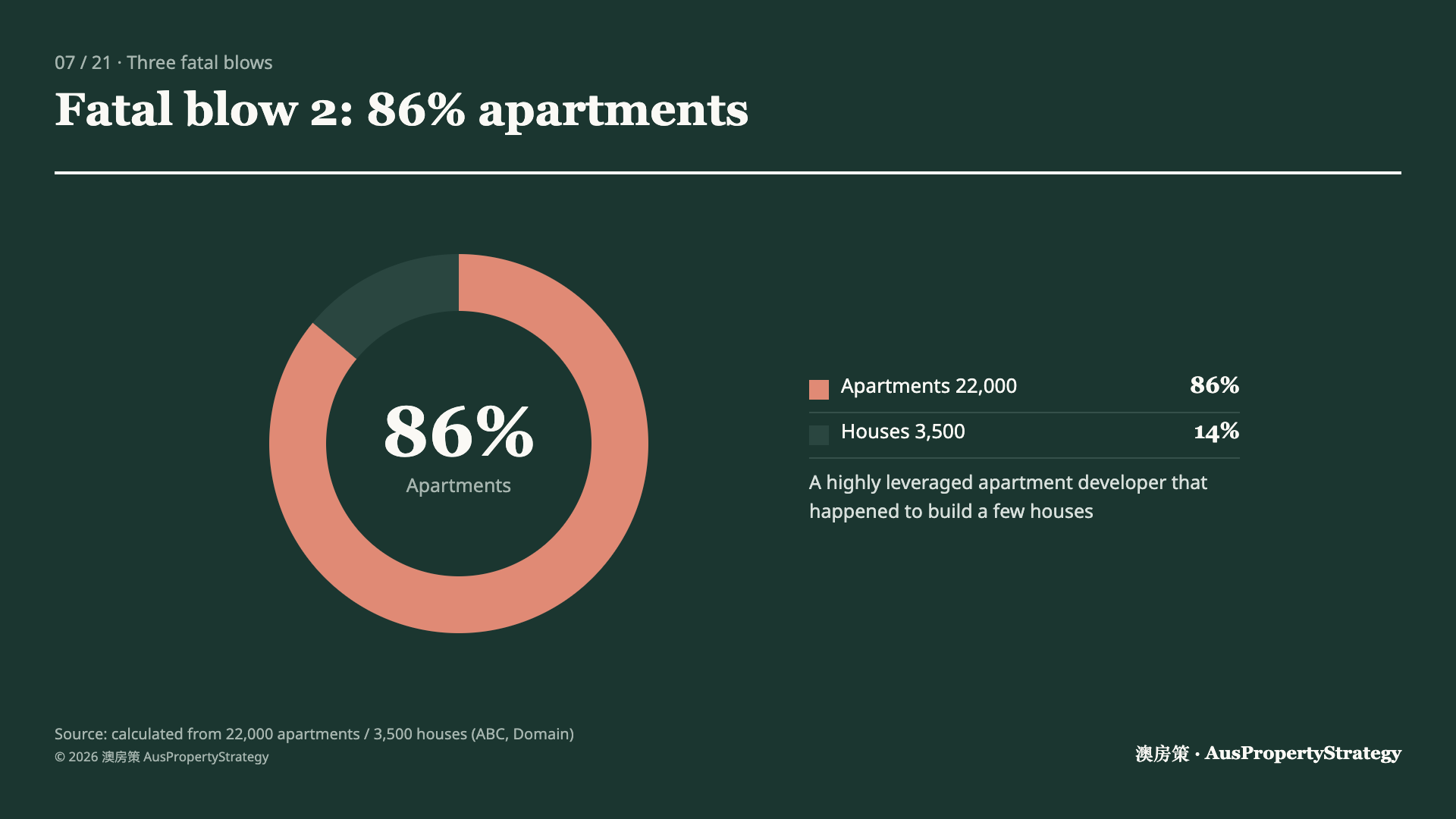
The second blow comes down to a number most people don’t know. Bathla’s pipeline had 22,000 apartments and 3,500 houses, which means 86% of it was apartments. That makes Bathla a highly leveraged apartment developer that happened to build a few houses, and that’s a very different business from building house and land packages. That difference matters, because apartments and house and land packages get completely different legal protection.
Blow Three: Everything Hit at Once
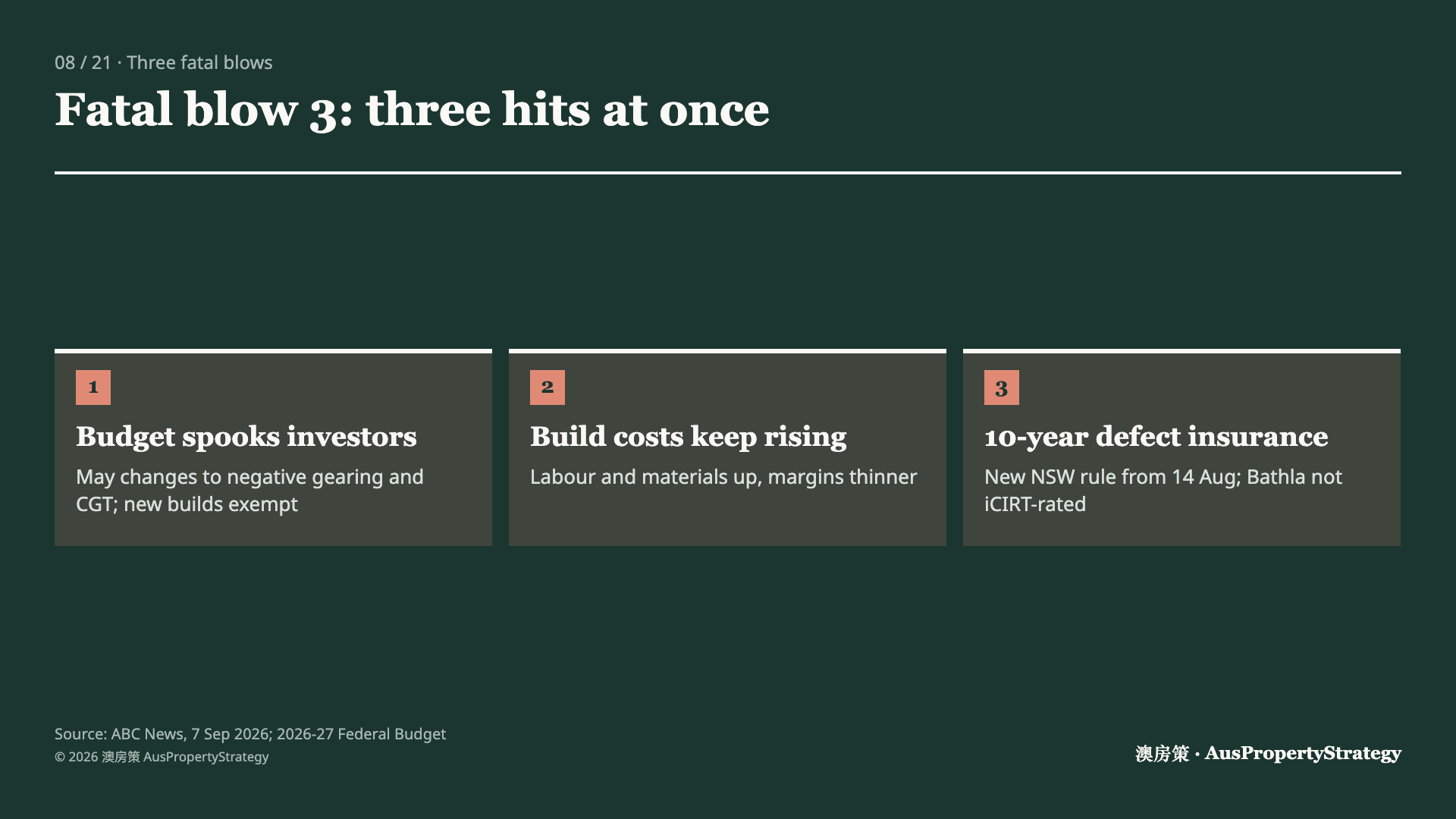
The third blow was timing, because three things hit at once. First, the May Budget changed negative gearing and capital gains tax. New builds are exempt from the changes, but wall-to-wall coverage put investors off and Bathla’s apartments stopped selling. Second, labour and materials got more expensive, so margins kept shrinking. Third, and most serious, on August 14th, NSW brought in a rule requiring developers to hold 10-year building defects insurance. That cover requires an iCIRT rating, an independent score of how reliable a builder or developer is, and only 219 companies across Australia have one. Bathla wasn’t one of them. Its build quality was a problem too, and the NSW Building Commission had been out to its sites more than 40 times before the collapse. Bathla might have survived any one of these hits alone, but all three at once cut off its cash flow.
So that’s how Bathla got here. Now comes the part you probably care about most.
Who Gets Hit Hardest
Who’s hit hardest, and does any of this affect house and land buyers? Apartment buyers have it worst, so let’s start there.
Around 1,000 deposits are stuck. The administrators confirmed that some contracts let the developer use the deposit, and some deposits never went into a trust account. One buyer paid tens of thousands of dollars four years ago and still doesn’t know who’s holding the money. A single mum only found out from social media that work on her half-built home had stopped. If Bathla ends up in liquidation, these buyers go to the back of the queue, behind the lenders, whose secured loans get paid first. By the time it’s the buyers’ turn, there’s usually nothing left.
Worse still, apartment buildings over three storeys aren’t covered by HBCF, the Home Building Compensation Fund, so if the builder goes under, there’s no insurance behind you.
House and land packages work very differently, because the build contract is covered by HBCF, which the builder takes out on your behalf. It kicks in when the builder goes broke, disappears, or loses its licence. If the builder took your deposit and never started work, you get it back. If the build stops halfway, you can claim up to 20% of the contract price, capped at $340,000 per home, so on a $700,000 build contract, that’s up to $140,000. And major defects found after completion are covered for up to 6 years.
The deposit works differently too. With an apartment, you put down 10% and it’s locked up for years, out of your control. A house and land package comes as two separate contracts. You pay the land deposit first, and once the land settles, it’s in your name and nobody can take it away. Then you sign the build contract with a small deposit, and the bank pays the builder in 5 or 6 stages as work progresses.
At every stage, your money has something behind it: the land title, HBCF, or the bank’s progress payments. Apartment buyers hand over the deposit and then wait and hope.
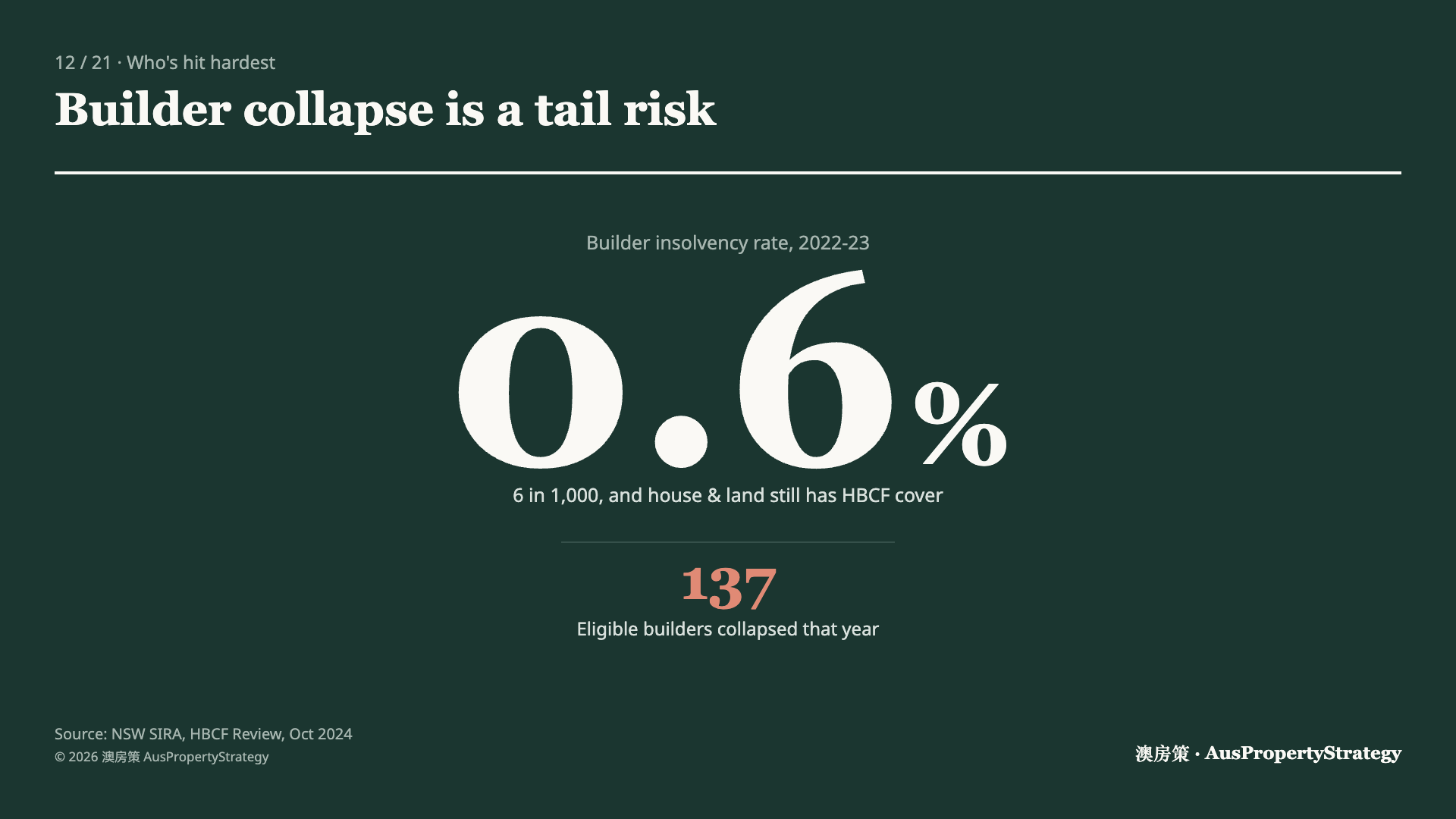
Here’s my view. I’m not saying builder collapses aren’t a risk, but I am saying they’re a tail risk. The NSW government’s review of HBCF found that only 137 building companies went under in 2022-23, or 0.6% of eligible builders, which is six in every thousand. If odds like that, with insurance on top, still scare you off, investing may not be for you, and your money might be better off in the bank. So Bathla going under doesn’t mean house and land packages are unsafe to buy.
Pay close attention to this next part, because some people are using this collapse for their own interest.
Before we keep going — if anything in today's video has you thinking about your own situation, there are two ways to get real answers. A free 15-minute call with one of our property investment strategists — bring your questions, get a straight answer, no strings. Or if you want the full done-for-you path — strategy, lending, property selection, portfolio, tax structure, wealth planning, all of it — book a free 30-minute Discovery Session and see how VISION Gold Membership actually works. Both links are in the description. Alright, let's get back to it.
Who’s Driving the Narrative
So who’s pushing this narrative, and what are they claiming? Since Bathla went under, plenty of buyer’s agents have posted articles and videos, and their most common claims come down to six.
Claim One: “You’ll Lose Everything”
The first claim is that if your builder goes bust, you lose everything. But Bathla’s buyers are in trouble mainly because they bought apartments, and a house and land build contract would have had HBCF behind it.
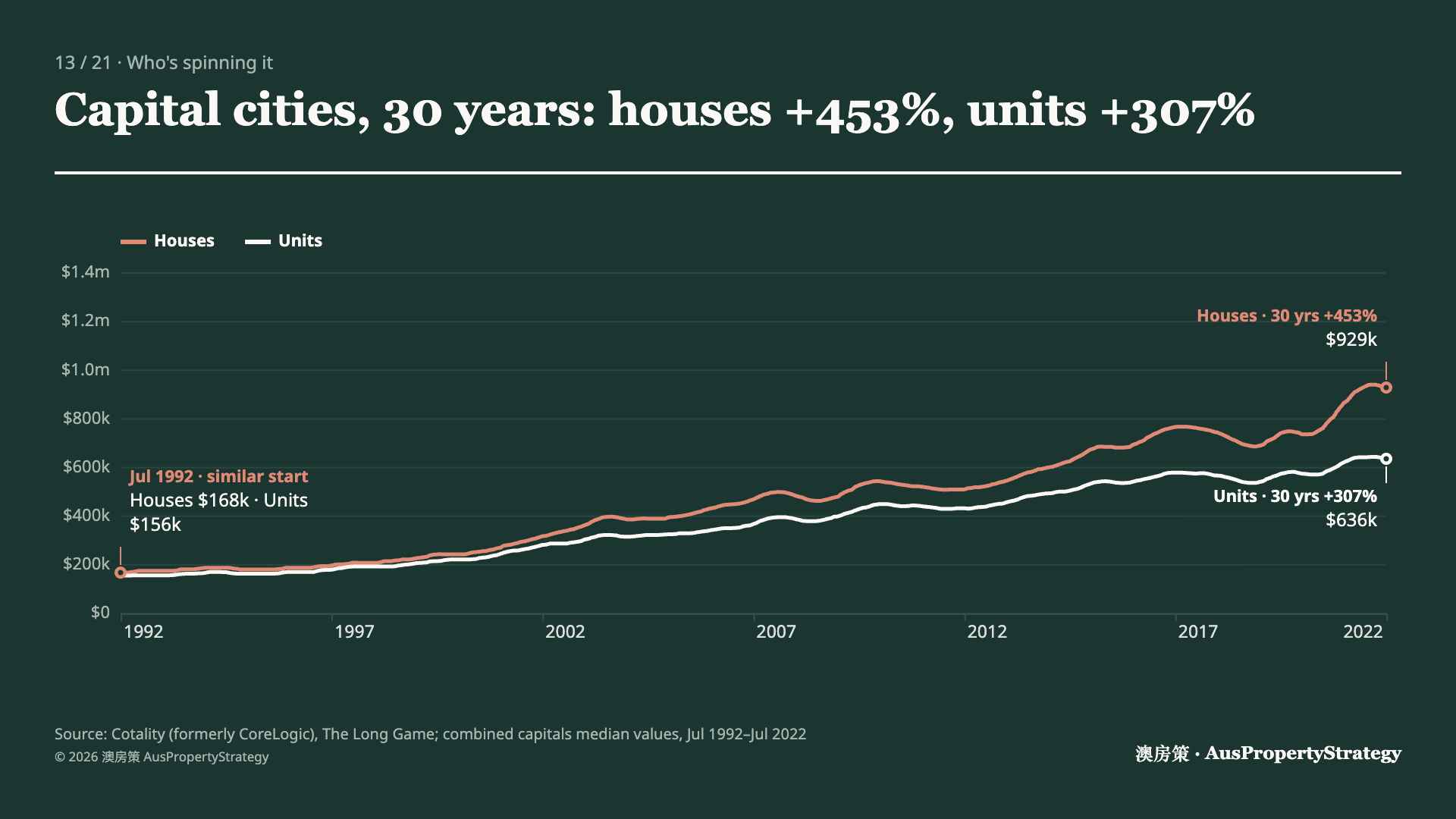
That covers safety. On growth, buyer’s agents like to use Cotality’s 30-year data against house and land packages. It shows capital city house values up 453% and apartment values up 307%, but that’s a gap between houses and apartments. The data says nothing about house and land packages versus established houses, because a finished house and land package counts as an established house. Buyer’s agents are swapping one comparison for another.
Claim Two: “New Builds Are Of Poor
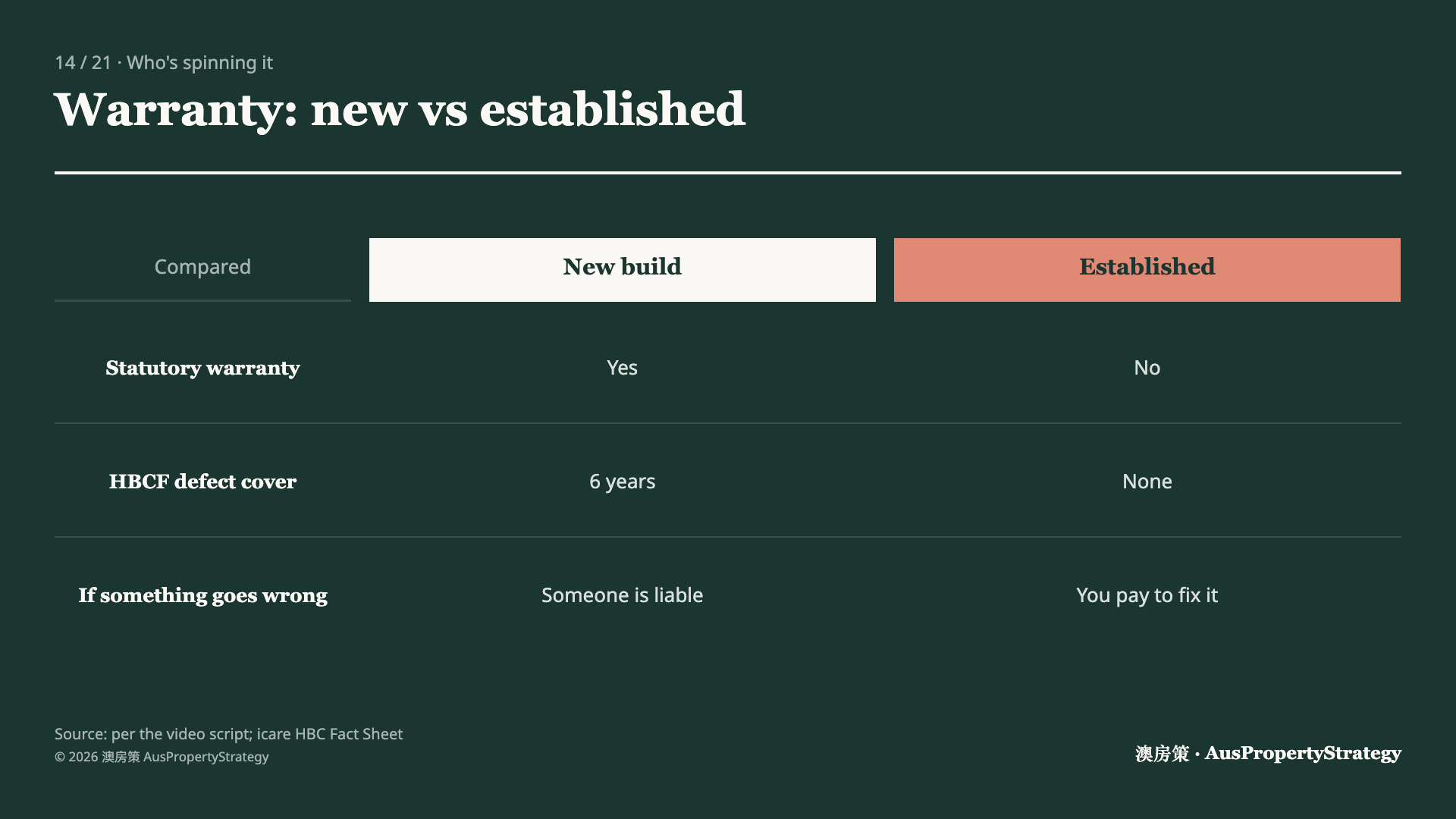
The second claim is that new builds are of poor quality. Quality depends on the builder you choose, and picking the wrong one is no different from picking the wrong buyer’s agent or established home. A new build comes with statutory warranties and HBCF cover for defects. An established home can come with old wiring, leaking pipes, and termites, and none of it is under warranty. When a new build has a problem, someone’s accountable. When an established home has one, you’re paying to fix it yourself.
Claim Three: “Your Deposit Is at Risk”
The third claim is that your deposit is at risk. That’s true of apartment deposits that never went into a trust account or came with a release clause, which lets the developer spend the money before settlement. With a house and land package, as long as the land deposit sits in a trust account the developer can’t touch, you’re safe.
Claim Four: “Too Far Out, No Infrastructure”
The fourth claim is that house and land estates are too far out, with poor infrastructure. Take Western Sydney for example. Western Sydney International Airport has started passenger flights, the M12 Motorway opened toll-free in March, and a Sydney Metro line is under construction. The federal government has put close to $18 billion into the region. Its population is growing 2.8% a year, against 1.2% for Sydney overall, and the rental vacancy rate is 1.1%. In the boom years, house values in Liverpool grew close to 10% a year for a few years.
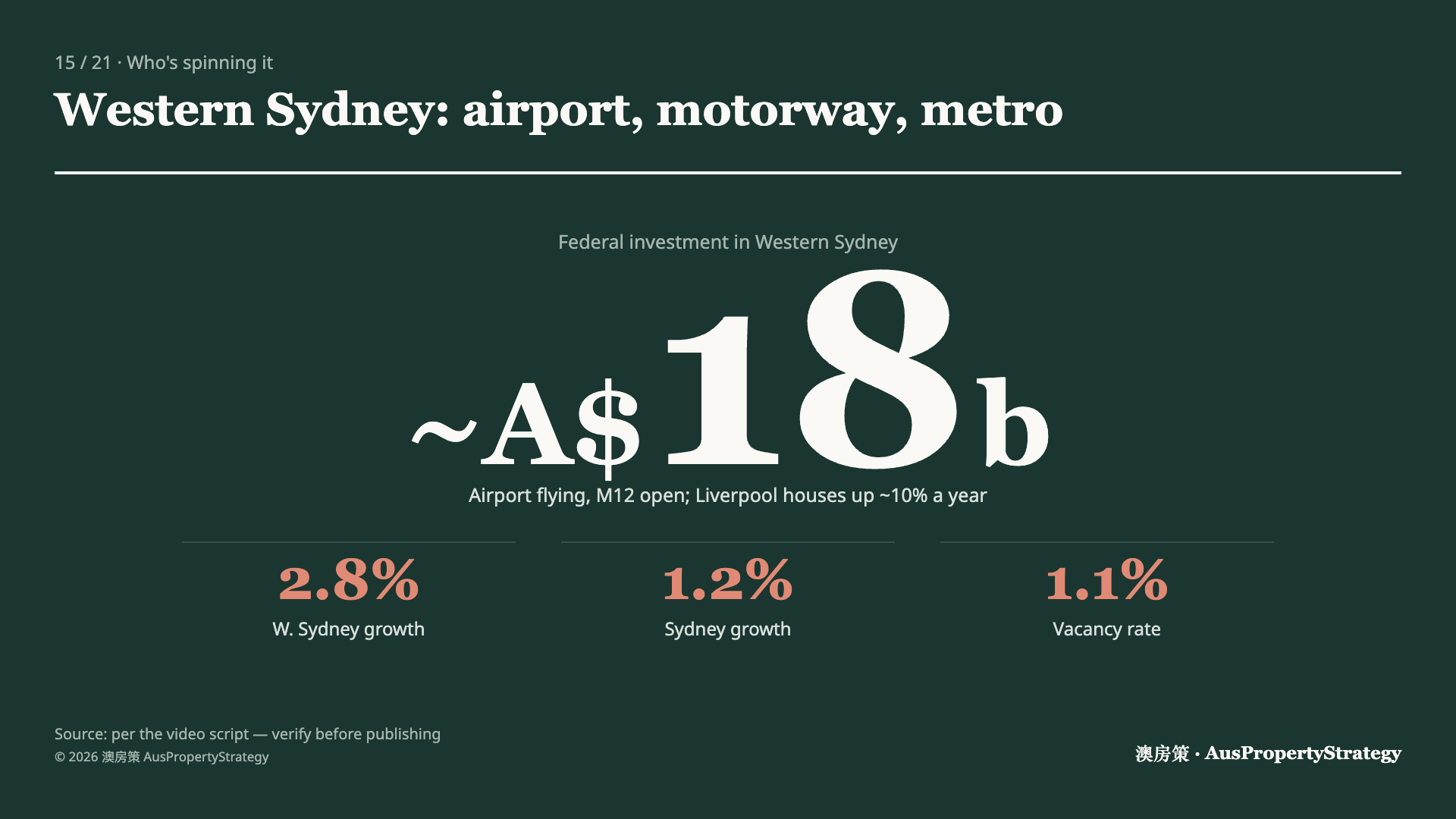
And that’s poor infrastructure? Few places in the world are getting an airport, a motorway, and a metro line at the same time, yet the buyer’s agents never mention the runway or the rail tracks. Location is half the battle when choosing a property, and in a corridor like Western Sydney, population, infrastructure, and supply all point the right way.
Claim Five: “Only Buy Established Homes with a Price History”
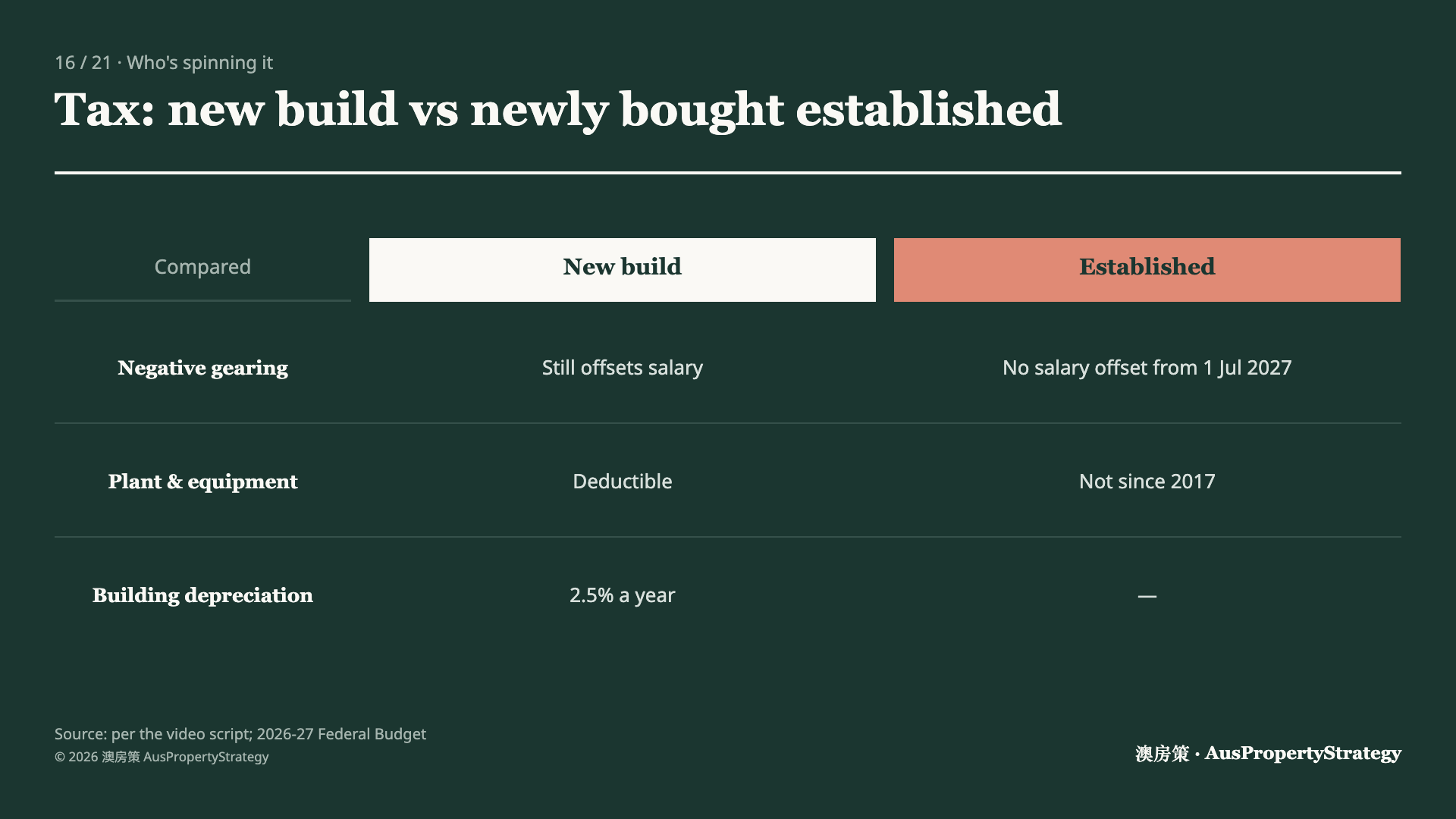
The fifth claim is that you should only buy established homes with a price history. Historical data looks backwards, so it can’t show how new infrastructure will reprice an area. And established homes now carry a new disadvantage, because from July 1st, 2027, negative gearing is restricted on established investment properties bought after the Budget. Losses on those properties can no longer reduce the tax on your salary, only the tax on rent and on the profit when you sell. Properties you owned before the Budget aren’t affected, and new builds are exempt, so their losses still reduce the tax on your salary.
New builds also get two extra depreciation deductions. One is plant and equipment, like air conditioning and hot water systems, which you haven’t been able to claim on established homes since 2017. The other is the building itself, at 2.5% a year. Together, both deductions can save new-build investors anywhere from a few thousand to $15,000 or more a year.
Claim Six: “Buyer’s Agents Protect You”
The sixth claim is that buyer’s agents protect your interests, while developers are out to exploit you. That’s half right. It’s true that a developer’s sales agent isn’t on your side, but buyer’s agents only earn money from established homes. So when they tell you not to buy new, it has nothing to do with whether new builds are any good. Recommending new builds wouldn’t earn buyer’s agents a cent, and it would contradict what they’ve said for years. Both kinds of agent have interests that pull in opposite directions, so a sensible investor hears out both sides.
Some buyer’s agents now also sell a new-build review for a due diligence fee, and in my view, that’s a terrible deal. Most of them have never sold new builds or worked for a developer, so they don’t know how the new-build side works. And what stops these agents from charging you for the review and taking a commission from the developer through a related entity? That’s getting paid by both sides, and it usually ends badly for the buyers who trusted them.
But spotting other people’s conflicts of interest only gets you so far.
Six Steps to Avoid the Next Bathla
When you buy a house and land package yourself, how do you make sure you don’t end up with the next Bathla? Bathla’s real lesson is to do your homework before you sign, so here’s a simplified six-step checklist you can run through without paying a buyer’s agent.
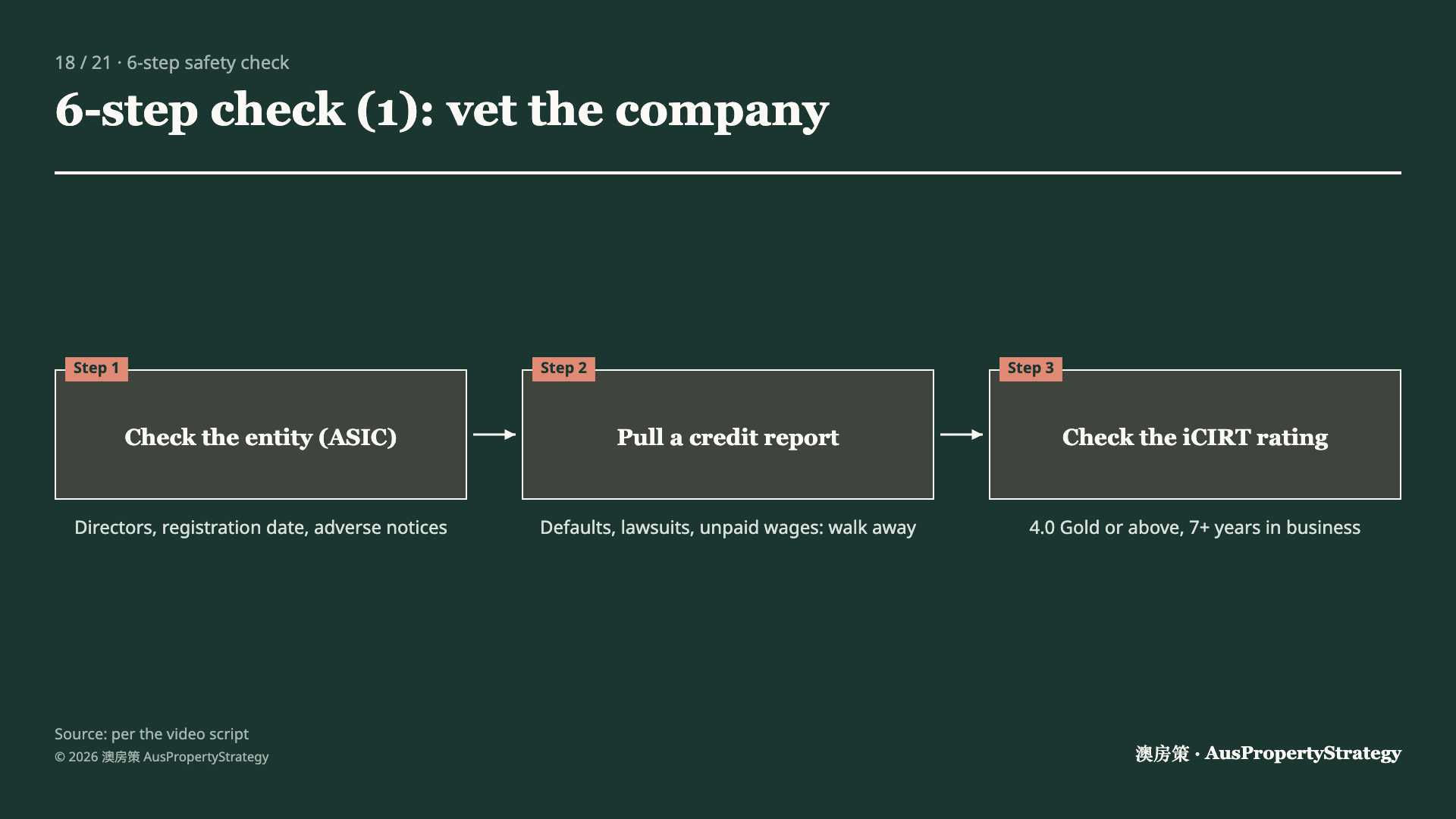
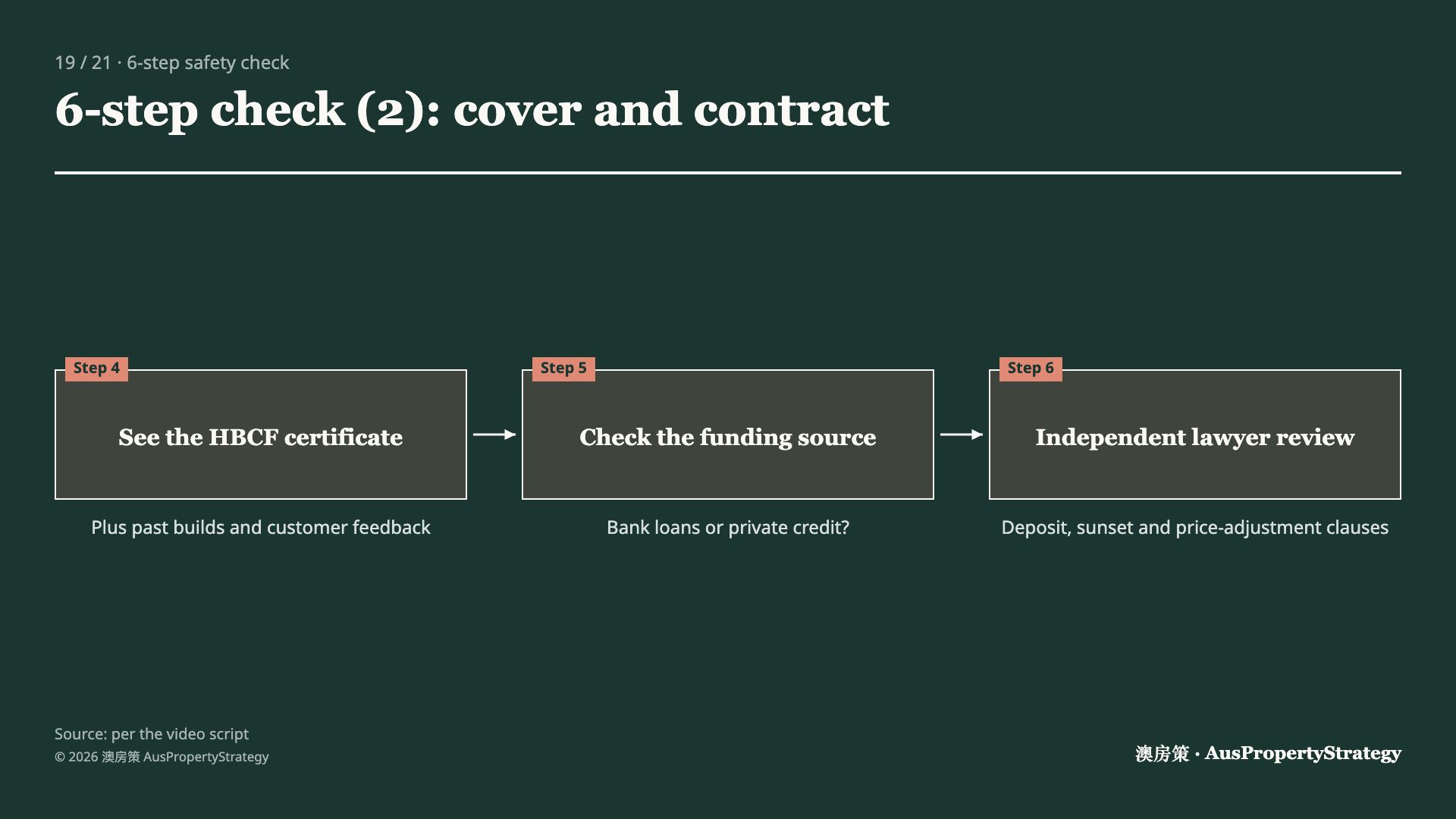
Step one is to search ASIC for the company you’re signing with and check the directors, the registration date, and anything negative on file. Step two is a business credit check, which an AI deep search can mostly handle, and any builder with a history of defaults, legal trouble, or unpaid wages comes off your list. Step three is the iCIRT rating, where you want 4.0 Gold or higher, and the builder should be more than 7 years old, which means it’s been through at least two property cycles. Step four is to see the HBCF certificate before you pay a deposit, and to look at the builder’s finished homes and talk to the owners. Step five is to find out whether the company runs on bank loans or private credit, although that isn’t always public. Step six is to have an independent lawyer check the contract, especially the deposit terms, the sunset clause, and the price adjustment clause.
Altogether, the six steps cost $500 to $2,000, at most 0.4% of a $500,000 building contract. None of it is hard, but each step takes time and some know-how, so if you can’t do it yourself, bring in help.
These are the checks we run for our VISION Gold members at AusPropertyStrategy. Our screening goes further, with referrals from industry veterans, checks on unpaid wages, and research into the conduct and reputation of the builders and developers themselves. A buyer’s agent who has never sold new properties or worked for a developer won’t have the industry connection. Every property also goes through our Golden 21 Rules, and if a property fails 3 or more rules, we won’t recommend it.
Bathla’s collapse is a serious problem, but a serious problem doesn’t justify a careless conclusion. This wasn’t a failure of the house and land model. It was the collapse of a highly leveraged apartment developer running on private credit. What actually protects you is doing your own due diligence, or having a professional team do it.
Watch the video version of the blog on YouTube.
15 Minutes Free Consultation (Limited-Time Free Offer)
If you have any questions about Australian real estate, we invite you to use our 15 Minutes Free Consultation service. Once you have filled in the form, a professional property investment strategist will be in touch with you. They will assess your needs and provide fundamental advice. This service is designed to help answer general property-related queries. BOOK NOW.
VISION Membership
Our Flagship Service: VISION Membership. Your One-Stop Property Investment Manager – Build a Tailored Portfolio and Achieve Financial Freedom
Whether you're an employee, a professional, a business owner or even a new migrant, everyone has a financial goal for the future. The VISION Membership is designed to solve all the pain points in your Australian property investment journey through one single, comprehensive service.
By analysing your current financial situation and long-term goals, we'll tailor a property investment plan just for you. Our team will match you with the ideal mortgage structure, tax strategies, wealth planning, and legal support, empowering you to go further, faster, and smarter on your path to financial freedom.
VISION Membership is perfect for busy individuals who want a professional team to create, expand and manage their Australian investment portfolio. If you're looking for a dedicated team, including real estate investment experts, mortgage brokers, accountants, financial planners, and property solicitors, VISION Membership is your ideal solution.
Start with an obligation-free 30-minute discovery session on Zoom. BOOK NOW.
VISION Buyer’s Agent
No time for inspections? Tired of dealing with pushy selling agents? Unsure how much to offer or feeling nervous about auctions? Worried about buying the wrong property? If any of these sound like you, AusPropertyStrategy's Australia-wide VISION Buyer's Agent Service is here to help.
We provide end-to-end support to help you build an optimised property portfolio and achieve your financial goals—whether you're investing interstate, refinancing, or planning post-settlement leasing or resale. Our services cover everything from suburb research and property selection, to price negotiation, auction bidding, and post-settlement support.
Start with an obligation-free 30-minute discovery session on Zoom. BOOK NOW.
real estate australia,real estate investing,australian property,australian housing market,australian economy,australian property investment,australian property market,buying property,australian real estate,mortgage brokers brisbane,first home buyer,Australian Real Estate,Australian Real Estate Investment,Australian Property Investment,Real Estate Investment,Property Investment,Property Investment Australia,Passive Income,Positive Cash Flow,Australia Real Estate Investing,Australian Real Estate Investors,Australian Property Investors,Vision Wealth Mentors,Vision Real Estate Investors Australia,financial freedom, freedom through property investment,real estate investors,property investment,passive income,positive cash flow,real estate course,real estate courses,real estate training,australian property market,property investment brisbane,property investment sydney,melbourne property market,investing in brisbane,investing in melbourne,how to invest in property,buying properties,start investing in property,property investment strategy,how to buy investment property,property investing tips,best suburbs to invest in sydney,locations real estate,prime location,property growth by suburb,capital growth suburbs


