
Australia’s 10-Quarter Per-Capita Recession — Is It Becoming the Next Argentina? | APS173
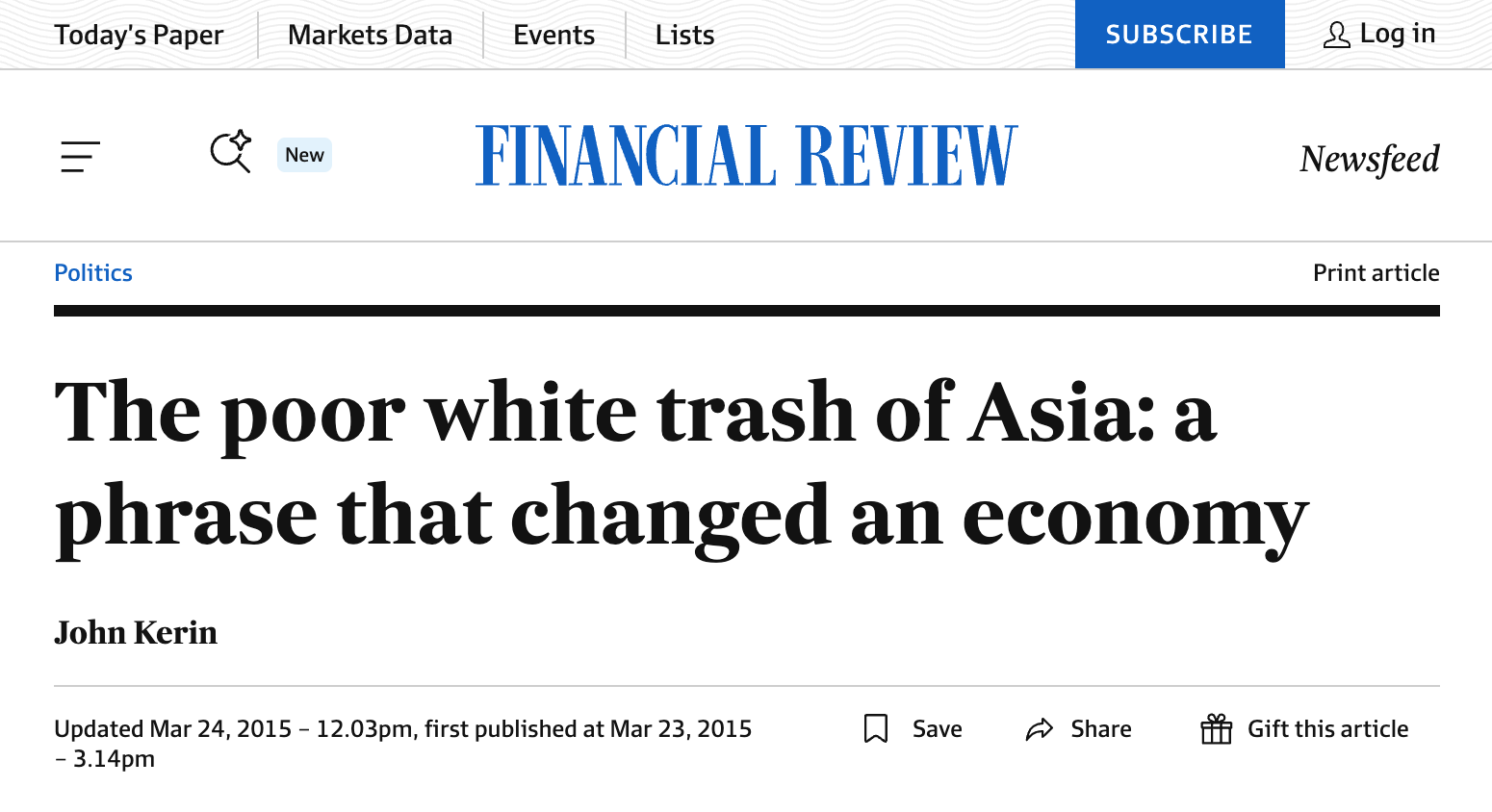
“Australia was destined to become the poor white trash of Asia if it didn’t open up its economy.” Those aren’t my words. That was Lee Kuan Yew, founding Prime Minister of Singapore, 1980, during a visit to Australia. Journalists later asked if he wanted to take it back. He said, “Absolutely not.” That was 46 years ago. I’ve been going through Australia’s economic data recently, and the more I dig into the numbers, the harder it is to sit still. Australia has posted 10 quarters of negative per-capita GDP in the last 15. Wealth and living standards have gone backwards for two straight years. Looking back at what Lee Kuan Yew said, it doesn’t sound like an insult anymore. It sounds like a warning that came true. When an economy runs on what nature gives you instead of what you build, and there’s no drive to get better, where does it end up? History already has the answer.
Rich as an Argentine
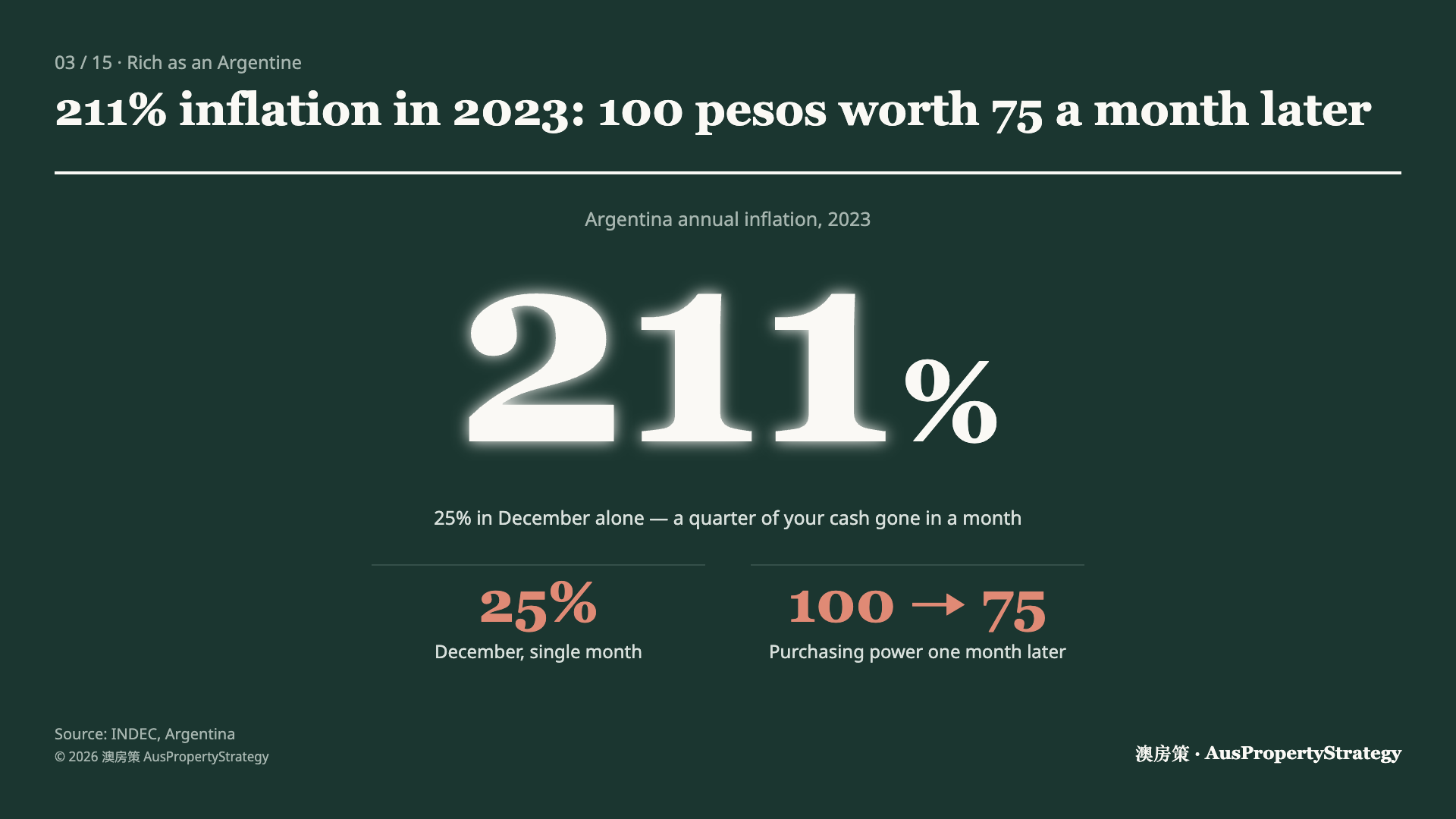
Around 1900, Argentina’s per-capita GDP was in the global top ten, on par with France and Germany. Europeans had a saying: “rich as an Argentine.” By 1930, there were 430,000 cars in Argentina, more than in most countries in Western Europe. Then Perón came to power and went full populist, handing out welfare to win votes. He pushed import-substitution industrialisation, trying to build everything at home. The technology wasn’t there, the products couldn’t compete, and the whole thing fell apart. In 1976, a military government took over and the country collapsed on both the political and economic fronts. By 2001, Argentina defaulted on roughly 82 billion US dollars in sovereign bonds, the largest sovereign default in human history. How many times has this country defaulted since independence? Nine times, from 1827 all the way to 2020. They destroyed their own government’s credit with their own hands. By the end of 2023, annual inflation hit 211%. December alone hit 25%. A hundred dollars in your pocket would be worth 75 a month later.
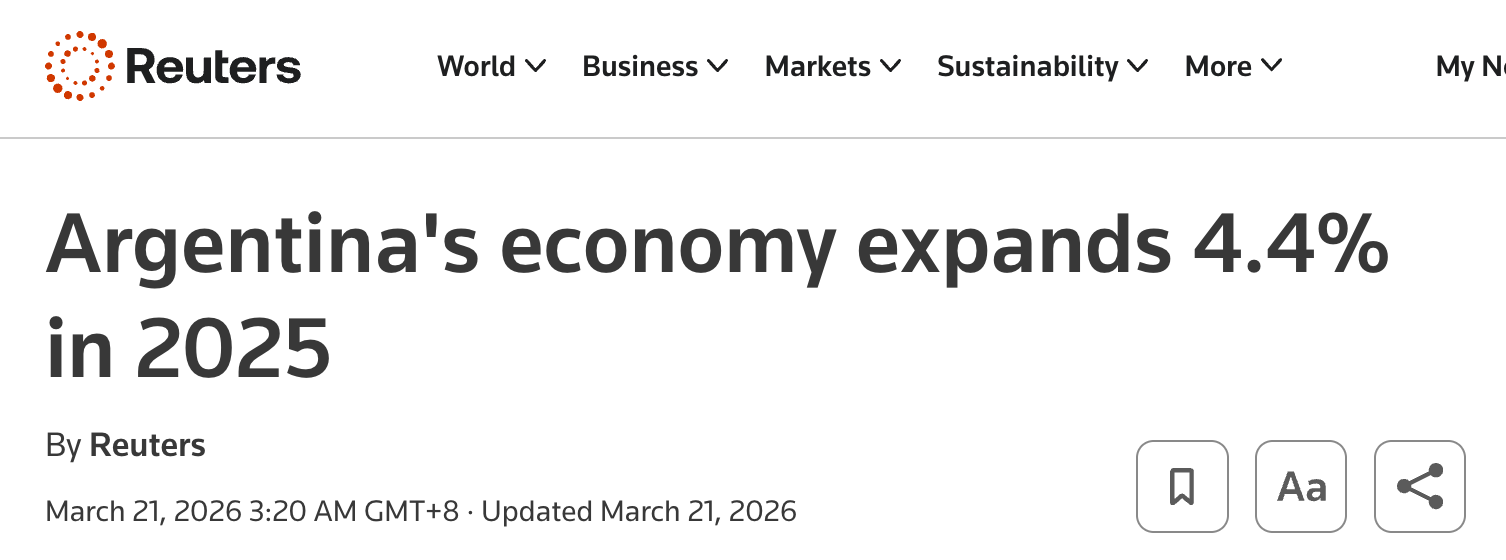
Argentina has started clawing back recently. New president Milei came in at the end of 2023 with shock therapy, slashing government spending across the board. In 2025, GDP grew 4.4%, the government posted its first fiscal surplus in 14 years, and inflation dropped from completely out of control to just over 2% per month. But in the first six months of reform, half the population dropped below the poverty line. The poverty rate later came down to around 28%. As of 2026, Argentina’s economy is fighting to climb back up. And Australia, a traditionally wealthy country? Per-capita GDP is going negative. The roles look reversed. But the core of Argentina’s story isn’t the recovery. The core is that it’s the only country in human history to go from being a developed nation to a developing one. And what Australia is repeating right now looks a lot like the first half of that script.
The Similarities Are Frightening
What made Argentina rich? Vast grasslands, beef, wheat, some of the best agricultural resources in the world. What does Australia run on? Iron ore sitting underground. Different form, same substance: both economies run on what nature hands them. Iron ore alone brought in roughly 117 billion Australian dollars in exports in 2025, with 80% going to China. You don’t need to think too hard. Just pull it out of the ground and the money rolls in.
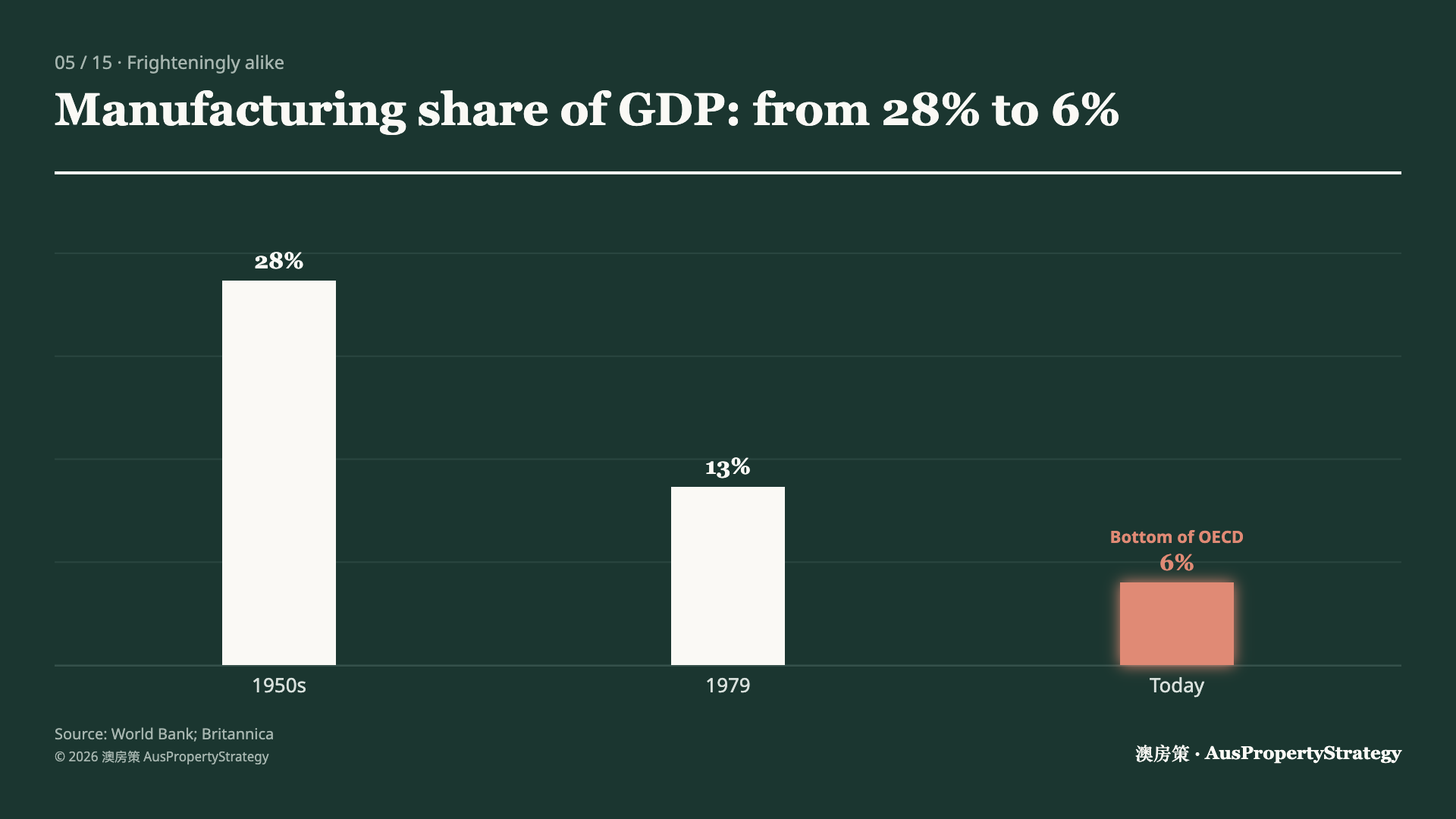
But what’s the price of running on nature? Manufacturing died. In the 1950s, manufacturing made up about 28% of Australia’s GDP. By 1979 it was down to 13%. Today it’s at 6%, dead last among OECD countries. One prominent independent Australian economist put a name to it: Dutch Disease. Mining is too profitable, so the Australian dollar gets too expensive, and factories can’t compete. The result is that Australia doesn’t make things anymore. It buys most of what it needs from overseas.
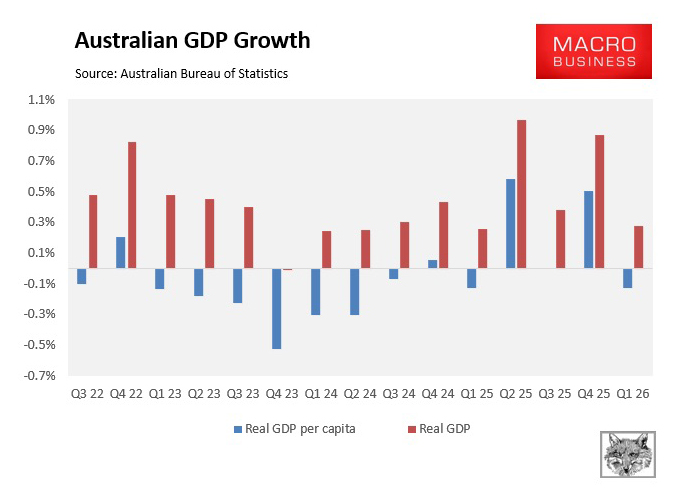
When the structure has a problem, the data shows it. Over the past 15 quarters, 10 have come in with negative per-capita GDP. A positive quarter pops up now and then, but it drops right back down. The trend keeps heading lower. Total GDP is still growing, but that’s propped up by large-scale immigration year after year. What the government is really doing is using mass immigration as a shortcut to keep the headline number from falling, while the slice of the pie each person actually gets keeps shrinking.
And inflation won’t come down either. When Middle East oil prices spiked, the March CPI shot to 4.6%. By July it was back to 3.5%, but still above the RBA’s 2-to-3% target band. The cash rate is already at 4.35%, and with the next meeting set for September 29, all four major banks are pricing in another possible increase.
On one side, people are getting poorer per capita. On the other, interest rates keep climbing. But all of this is just what you can see on the surface. The forces that will really shape where Australia goes from here are buried deeper.
The Engine Is Stalling
People are getting poorer. You can feel it. But the truly frightening part isn’t getting poorer. It’s that the engine driving the economy forward is about to cut out.
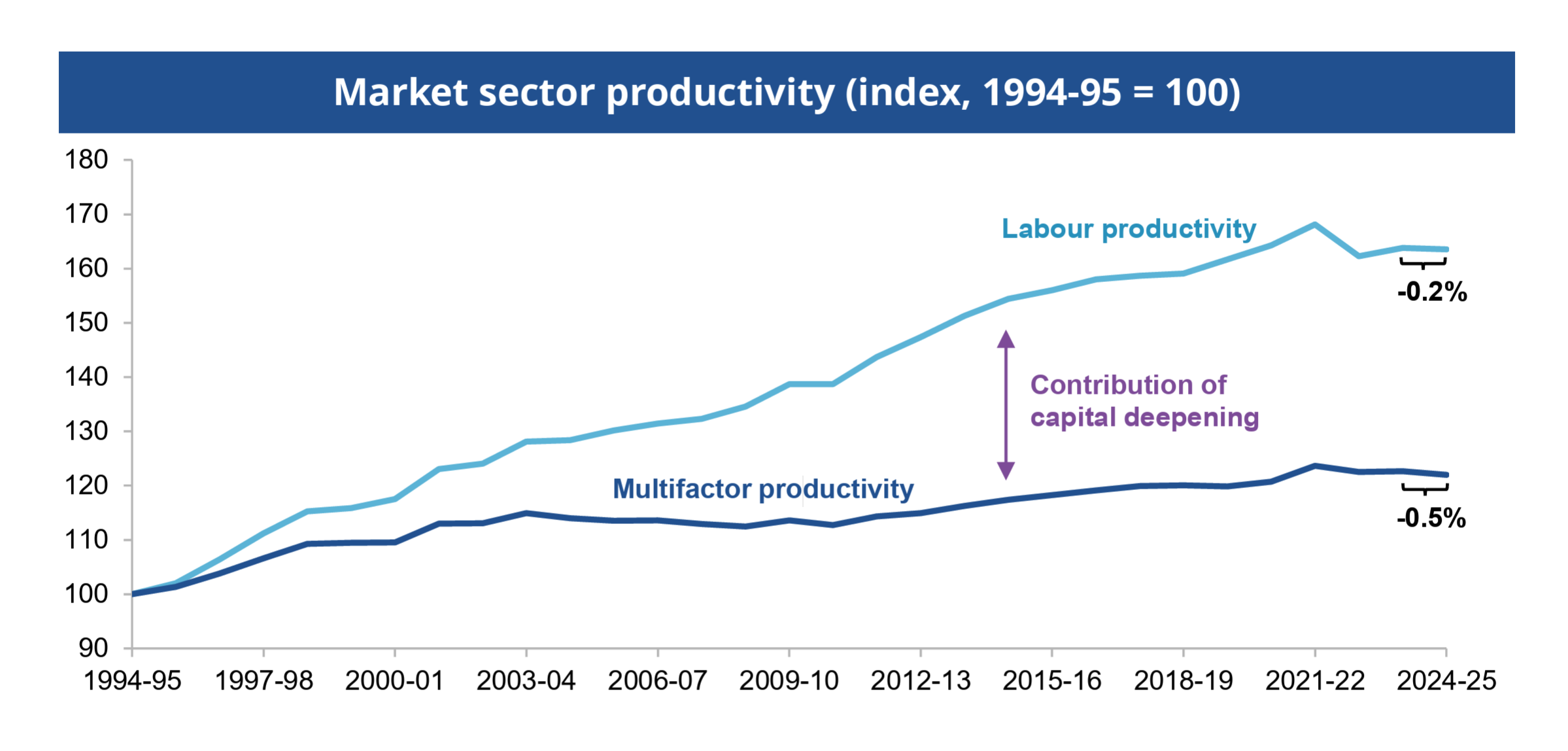
The Productivity Commission’s 2026 annual report just came out. In the 2024-25 financial year, Australia’s productivity fell by 0.5%. The 20-year average was a gain of 0.4% per year. In the 1990s it was 1.6% per year. Now it’s going backwards.
And housing? Cotality data shows the national price-to-income ratio has hit 8.9 times, up from 6.6 just five years ago. That’s a record. How long does it take to save a 20% deposit? 12 years on average. Mortgage repayments eat up 45% of pre-tax income. The national median home price hit 922,000 Australian dollars in February 2026. Young people’s money is all locked up in mortgage payments, consumer spending can’t pick up, and starting a business is out of the question. That alone is dragging productivity down.
So you can’t afford a house. What about work? That’s not great either. July’s unemployment rate came in at 4.5%, with employment falling by more than 15,000 in a single month. First-quarter GDP grew just 0.3%.
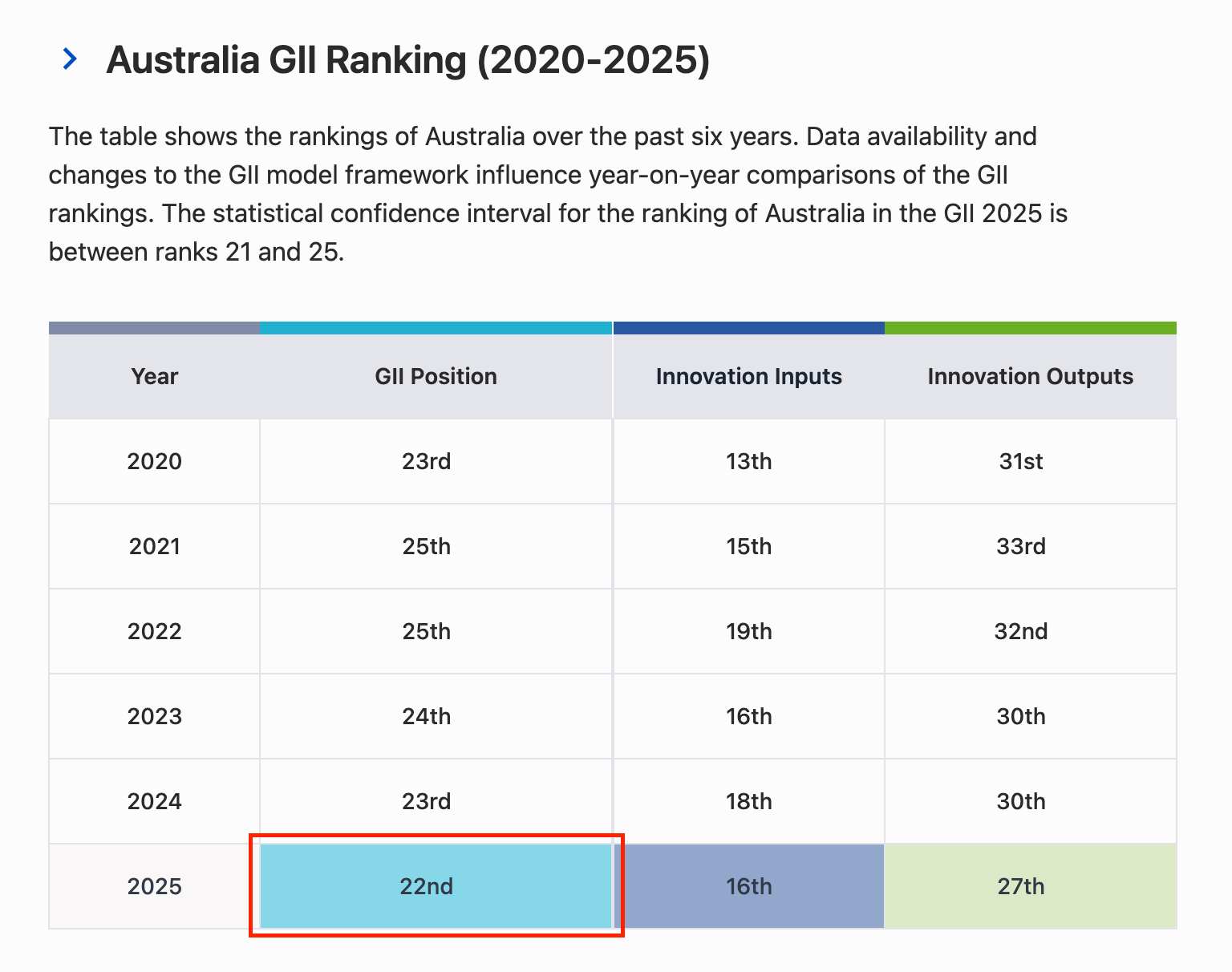
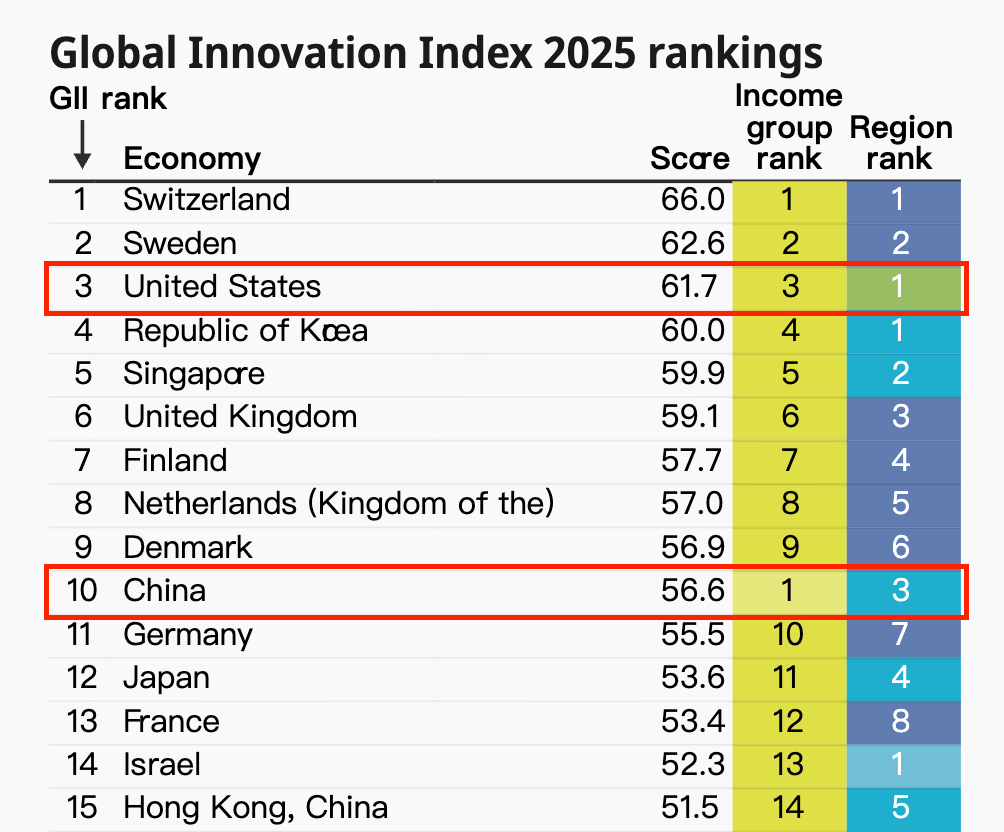
Innovation tells the same story. On the Global Innovation Index, Australia sits at 22nd. The United States is 3rd, and China has cracked the top 10. Over the past decade, Australia’s innovation score dropped from 55 to 48. The ranking isn’t what’s worrying. The direction is.
I’ve been tracking these numbers for a long time. Productivity is going backwards, innovation is falling behind, and housing has become so expensive that young people have given up. If all three are happening at the same time, and that’s not a recession, then what is?
But these are all symptoms. Where’s the root cause? Lee Kuan Yew figured it out 46 years ago.
Before we keep going — if anything in today's video has you thinking about your own situation, there are two ways to get real answers. A free 15-minute call with one of our property investment strategists — bring your questions, get a straight answer, no strings. Or if you want the full done-for-you path — strategy, lending, property selection, portfolio, tax structure, wealth planning, all of it — book a free 30-minute Discovery Session and see how VISION Gold Membership actually works. Both links are in the description. Alright, let's get back to it.
The Elite Engine
Lee Kuan Yew’s diagnosis was dead simple. One sentence covered it all: Australia is sitting on a goldmine and has no drive to improve.
In a Forbes interview, he pointed out that America’s strength comes from its elite engine. What does that mean? The East Coast has the Ivy League, the West Coast has Stanford and Berkeley. The smartest people in the world fight to get in, and once they’re in, nobody cares where you came from. All that matters is whether you can deliver.
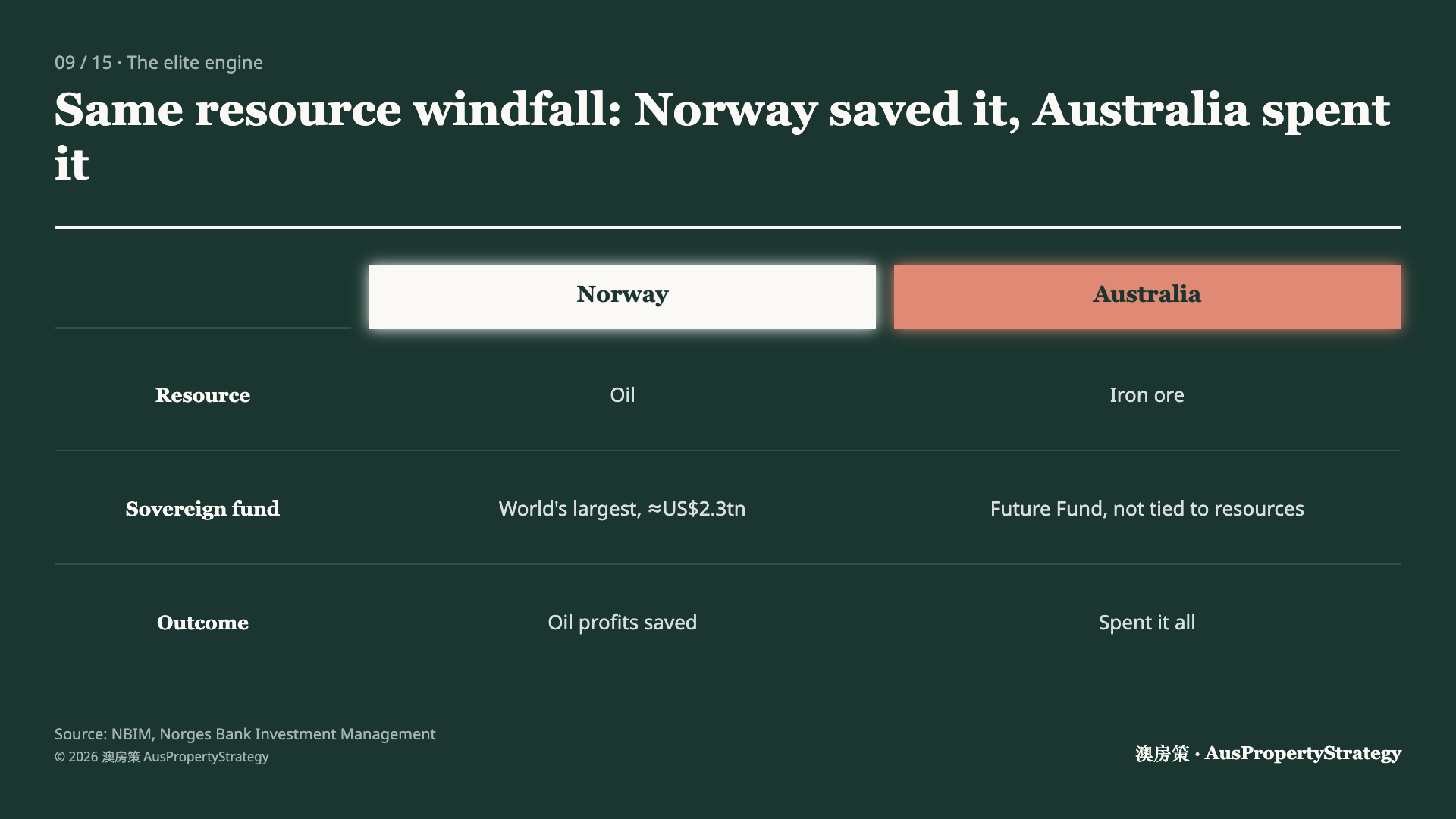
America has that elite engine. What does Australia have? Resources. But Norway also has resources, and Norway did something with its oil profits. It put them into the world’s largest sovereign wealth fund, worth roughly 2.3 trillion US dollars as of mid-2026. Australia has a Future Fund, but it’s not tied to resource revenue. SBS ran a feature asking whether Australia missed its chance at building sovereign wealth. Both started from the same place: resource-rich economies. Norway saved the money. Australia spent it all.
So far, it’s all been bad news. But what I’m about to cover might change how you think about this.
Four Moats
After all that bad news, will Australia actually end up going down the same road as Argentina? My answer: no. Not because I’m optimistic, but because Australia has four things that Argentina never had.
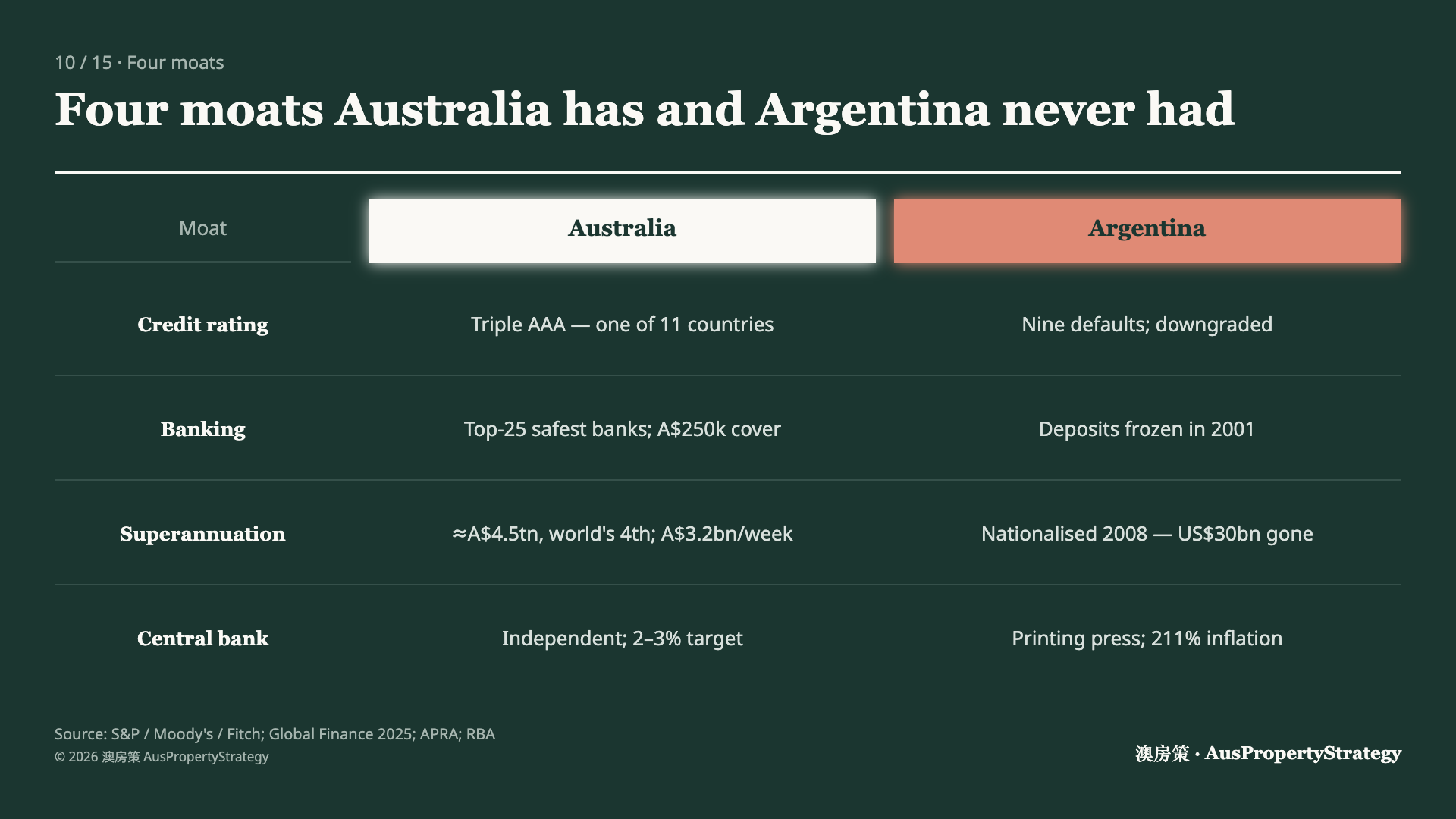
First, a AAA credit rating. Standard & Poor’s, Moody’s, and Fitch have all given Australia their highest score. Only 11 countries in the world have that. Standard & Poor’s warned in 2025 that the Albanese government had over 100 billion Australian dollars in off-budget spending and the rating could be at risk. They confirmed AAA anyway. Argentina has defaulted nine times. The agencies don’t even bother being polite. They just downgrade.
Second, the banking system. Global Finance ranked the world’s safest banks in 2025, and all four of Australia’s majors made the top 25. Your deposits are backed by a 250,000 Australian dollar federal government guarantee. In Argentina in 2001, the government froze people’s savings. You couldn’t take your money out.
Third, superannuation. By the end of 2025, Australia’s super pool was close to 4.5 trillion Australian dollars, the fourth largest in the world, and bigger than Norway’s sovereign wealth fund. Every week, 3.2 billion dollars flows in. This money doesn’t belong to the government. It belongs to you. In 2008, the Argentine government nationalised private pension funds, and 30 billion US dollars was wiped out overnight.
Fourth, an independent central bank. The RBA has been raising rates, and 4.35% is uncomfortable for everyone. But it operates independently, with an inflation target of 2 to 3%. Argentina’s central bank? Politicians used it as a money printer for decades. That’s how you end up with 211% inflation.
These four things are the real difference between Argentina and Australia. With them in place, Australia won’t collapse. But “won’t collapse” and “your property will go up” are two very different things. And what comes next is the most important part of this entire video.
Property Is the Real Story
I run a property channel, so every piece of macro analysis has to come back to property. In a country where the system collapsed the way Argentina’s did, what’s it actually like to buy a home?
In Argentina, you buy a house by showing up with a briefcase full of US dollar cash. Nearly 100% of resale transactions are done in US dollar cash, not pesos. Sellers won’t take pesos. Why? Because people have been burned by their own government and banks too many times. In 2001, banks froze deposits. Your money was in there and you couldn’t get it out. The peso devalues whenever it wants, and capital controls come and go. After all of that, Argentines don’t trust banks, and they don’t trust the peso. They only trust what they can hold in their hands: a property and a stack of US dollars.
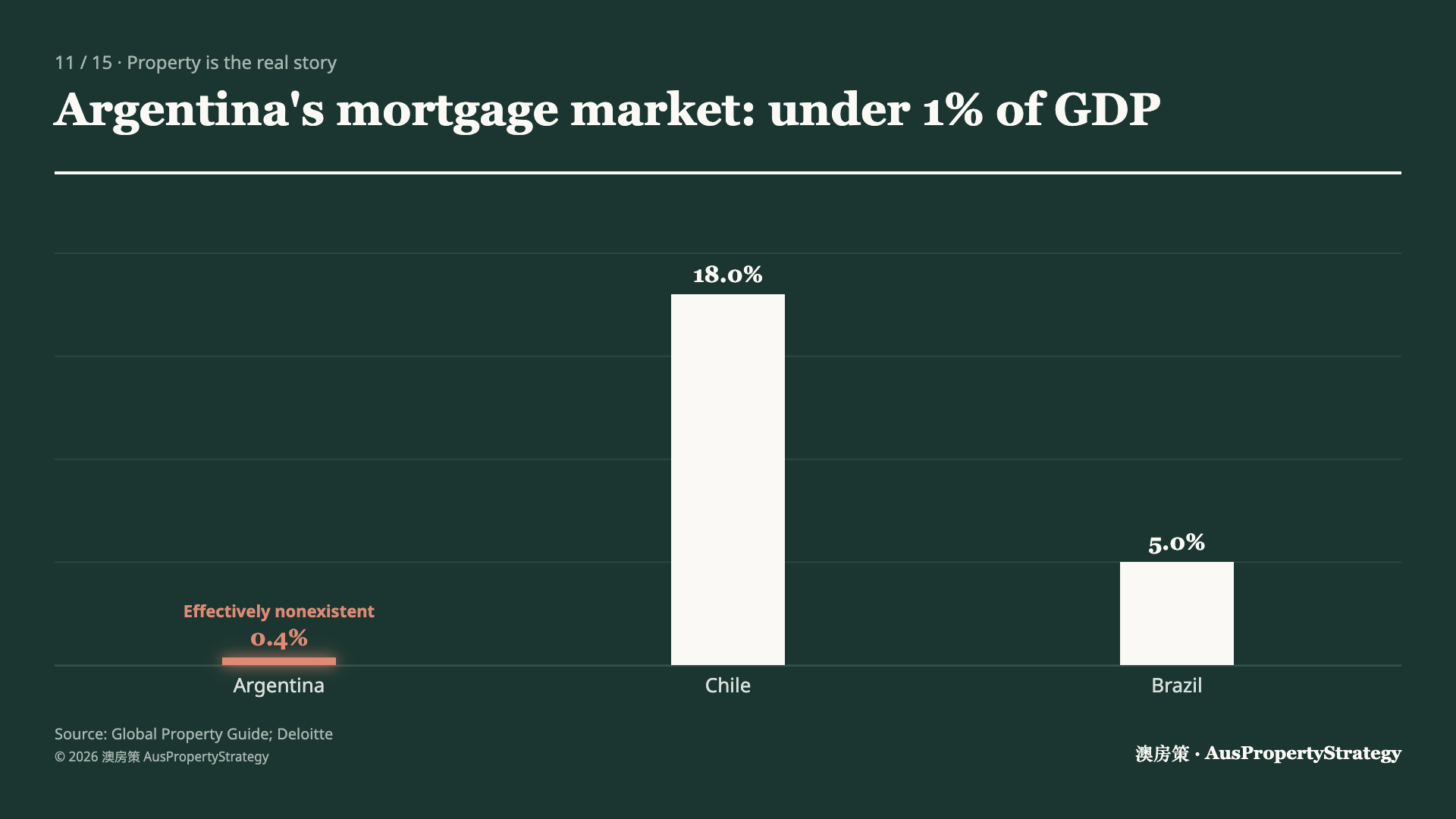
That’s why Argentina’s mortgage market sits at just 0.36 to 1% of GDP. It basically doesn’t exist. Chile is at 18%, Brazil at 5%. Argentina is one to two orders of magnitude behind.
Now look at prices. During the 2001 crisis, property prices in Buenos Aires dropped 30 to 40% in US dollar terms. In the north, two-to-three-bedroom apartments fell to just over 1,000 US dollars per square metre, a decades-low point. Prices briefly came back around 2018, then mortgage financing dried up again and they slid right back down. By 2025, dollar-denominated prices were down roughly a third from the peak. If you bought property in that market and held it for 55 years, you wouldn’t just have made nothing. You might have lost money.
Now look at Australia and its 55 years of data. A median-priced home in Sydney went from 18,700 Australian dollars in 1970 to where it sits today, roughly 80 times higher. Over the past 30 years, annualised growth has been around 7%. It survived oil crises, double-digit interest rates, the Asian Financial Crisis, the GFC, and COVID. Since 1991, there has never been more than two consecutive years of annual price declines.
Now here’s the comparison that really matters. Australian household debt sits at about 112% of GDP, with mortgage balances around 2.3 trillion Australian dollars. Argentina’s mortgage market is about 0.36% of GDP. The size of the mortgage market relative to each economy differs by roughly 300 times.
Put it this way: Australians buy property with loans. Banks trust you and they’re willing to lend. Argentines buy property with US dollar cash from their own pockets. That’s the gap that institutional trust creates.
The lesson from Argentina isn’t that property became worthless. What collapsed was the currency and the institutions behind it. Once the institutions fell apart, banks stopped lending, the mortgage market disappeared, and the only way to buy property was with US dollar cash. In Australia, none of that happened. The institutions stayed intact, the banks kept lending, and the mortgage system has run for decades without a major breakdown. That's why property prices in Sydney went up 80 times in 55 years.
Wrapping Up
Back to the question we started with. Will Australia go down Argentina’s path? My view: it won’t be a collapse-style decline. The four moats are real. But a collapse isn't the only way a country declines. Sometimes it happens so gradually that nobody notices until it's too late. And that kind of decline is already under way.
Per-capita GDP keeps shrinking, productivity is going backwards, and housing has hit levels where young people have lost hope. The RBA is set to continue its rate-hiking cycle in 2026, adding another layer of holding costs. But if you have to stay in Australia, property investment is still your best shot at building real wealth over time.
In an economic downturn, the cost of getting it wrong is extremely high for ordinary people. The money you have either gets converted into genuinely scarce, cycle-proof core assets, or it slowly loses value to inflation.
What kind of asset actually survives a full cycle? That’s not something you work out by guessing. At AusPropertyStrategy, we’ve been doing this for years. We’ve helped clients avoid mistakes. What we’ve built is a filtering system: where rates are heading, how supply and demand are shifting, which areas have real demand behind them, and which property types hold up in a downturn. We update it every week. If keeping track of all that data on your own is getting overwhelming, check the description for details on VISION Gold Membership.
Watch the video version of the blog on YouTube.
15 Minutes Free Consultation (Limited-Time Free Offer)
If you have any questions about Australian real estate, we invite you to use our 15 Minutes Free Consultation service. Once you have filled in the form, a professional property investment strategist will be in touch with you. They will assess your needs and provide fundamental advice. This service is designed to help answer general property-related queries. BOOK NOW.
VISION Membership
Our Flagship Service: VISION Membership. Your One-Stop Property Investment Manager – Build a Tailored Portfolio and Achieve Financial Freedom
Whether you're an employee, a professional, a business owner or even a new migrant, everyone has a financial goal for the future. The VISION Membership is designed to solve all the pain points in your Australian property investment journey through one single, comprehensive service.
By analysing your current financial situation and long-term goals, we'll tailor a property investment plan just for you. Our team will match you with the ideal mortgage structure, tax strategies, wealth planning, and legal support, empowering you to go further, faster, and smarter on your path to financial freedom.
VISION Membership is perfect for busy individuals who want a professional team to create, expand and manage their Australian investment portfolio. If you're looking for a dedicated team, including real estate investment experts, mortgage brokers, accountants, financial planners, and property solicitors, VISION Membership is your ideal solution.
Start with an obligation-free 30-minute discovery session on Zoom. BOOK NOW.
VISION Buyer’s Agent
No time for inspections? Tired of dealing with pushy selling agents? Unsure how much to offer or feeling nervous about auctions? Worried about buying the wrong property? If any of these sound like you, AusPropertyStrategy's Australia-wide VISION Buyer's Agent Service is here to help.
We provide end-to-end support to help you build an optimised property portfolio and achieve your financial goals—whether you're investing interstate, refinancing, or planning post-settlement leasing or resale. Our services cover everything from suburb research and property selection, to price negotiation, auction bidding, and post-settlement support.
Start with an obligation-free 30-minute discovery session on Zoom. BOOK NOW.
real estate australia,real estate investing,australian property,australian housing market,australian economy,australian property investment,australian property market,buying property,australian real estate,mortgage brokers brisbane,first home buyer,Australian Real Estate,Australian Real Estate Investment,Australian Property Investment,Real Estate Investment,Property Investment,Property Investment Australia,Passive Income,Positive Cash Flow,Australia Real Estate Investing,Australian Real Estate Investors,Australian Property Investors,Vision Wealth Mentors,Vision Real Estate Investors Australia,financial freedom, freedom through property investment,real estate investors,property investment,passive income,positive cash flow,real estate course,real estate courses,real estate training,australian property market,property investment brisbane,property investment sydney,melbourne property market,investing in brisbane,investing in melbourne,how to invest in property,buying properties,start investing in property,property investment strategy,how to buy investment property,property investing tips,best suburbs to invest in sydney,locations real estate,prime location,property growth by suburb,capital growth suburbs


