

15-Year Interest Only and 95% LVR Explained — Why This Changes Everything |APS134
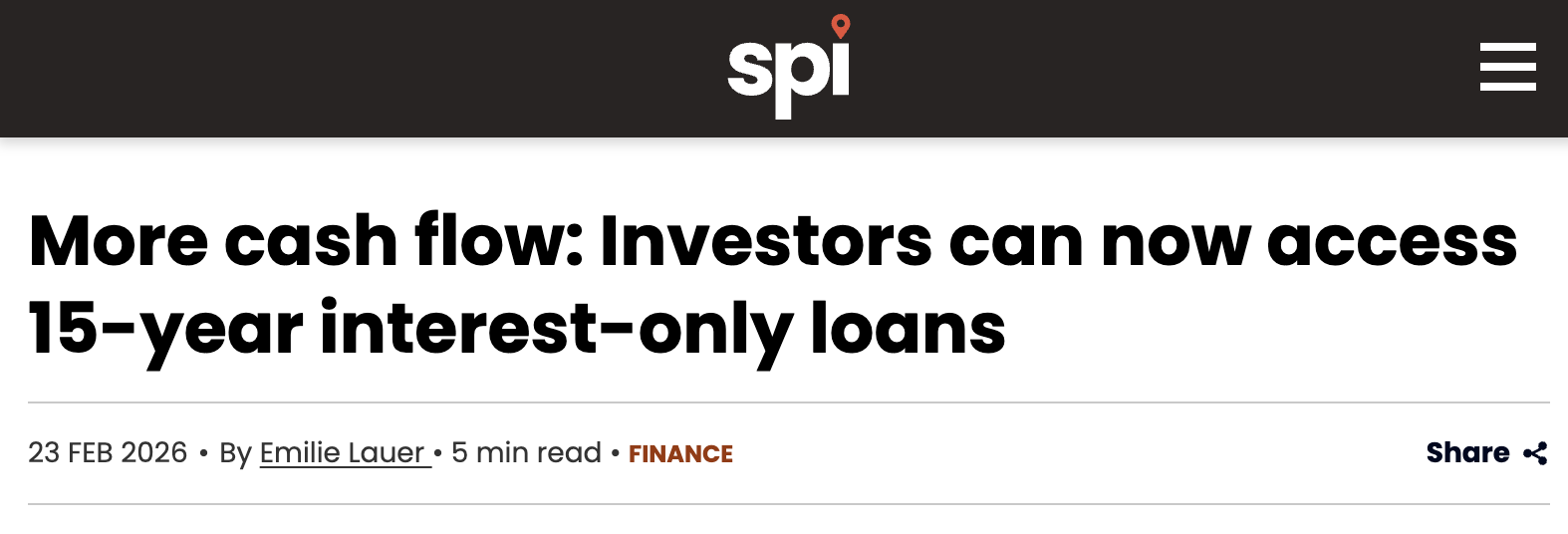
Westpac just did something no Australian bank has touched in over a decade. Investment home loans — fifteen years, interest only, no principal. And at the same time, you can now get in with just a 5% deposit. Not the government scheme — this is the bank itself saying 5% is enough for investors. So your first thought is probably: has the bank lost its mind? Or did we just hit the jackpot? I went through every clause of this policy, and I found three traps that almost nobody is talking about. Especially the third one — it decides whether you’ll be able to borrow from any bank over the next five years.

The Truth Isn’t That Pretty
Let’s start with the 15-year interest-only policy. It kicked in on the 23rd of February. New and existing customers can apply. Fifteen years, you only pay interest — no principal at all. What does that look like in real numbers? Borrow $800,000 at 6.5%. On a normal P&I loan — that’s Principal and Interest, where you’re paying both — your monthly repayment is about $5,050. On a 15-year IO? Just $4,333. That’s over $700 less every month, roughly $8,600 a year in your pocket. Sounds great, right? Hold that thought.
Here’s what the clickbait headlines left out — the LVR is capped at 80%. That means on a million-dollar property, you need $200,000 as a deposit. Not fifty grand. Two hundred thousand dollars. For a lot of people who’ve been saving for years, that number alone shuts the door.
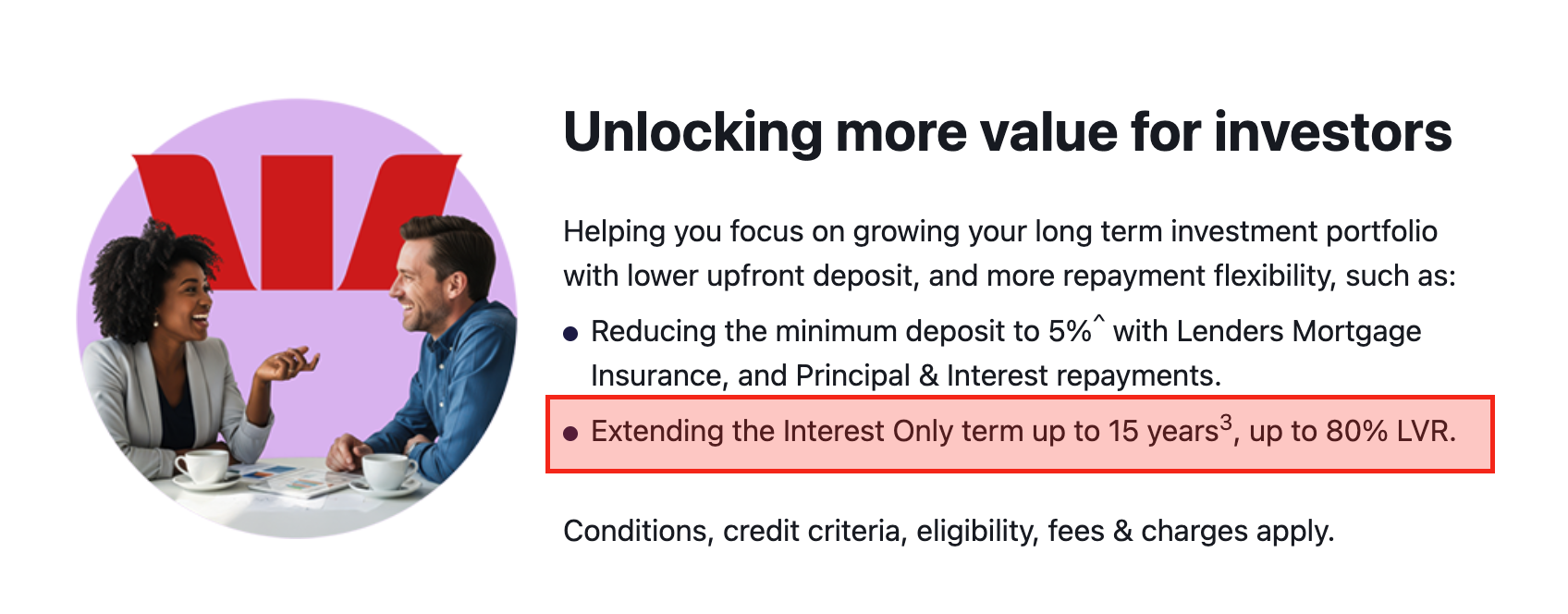
Now the 95% LVR policy. Westpac does let you buy an investment property with just 5% down. But — 95% LVR only comes with P&I. You’re paying principal every single month. Put these two policies next to each other and the picture is clear: 15-year IO and 95% LVR are two separate roads. Pick one. Want fifteen years without touching the principal? Put down 20%. Want 5% to get started? You pay principal from day one. Both? Not happening.
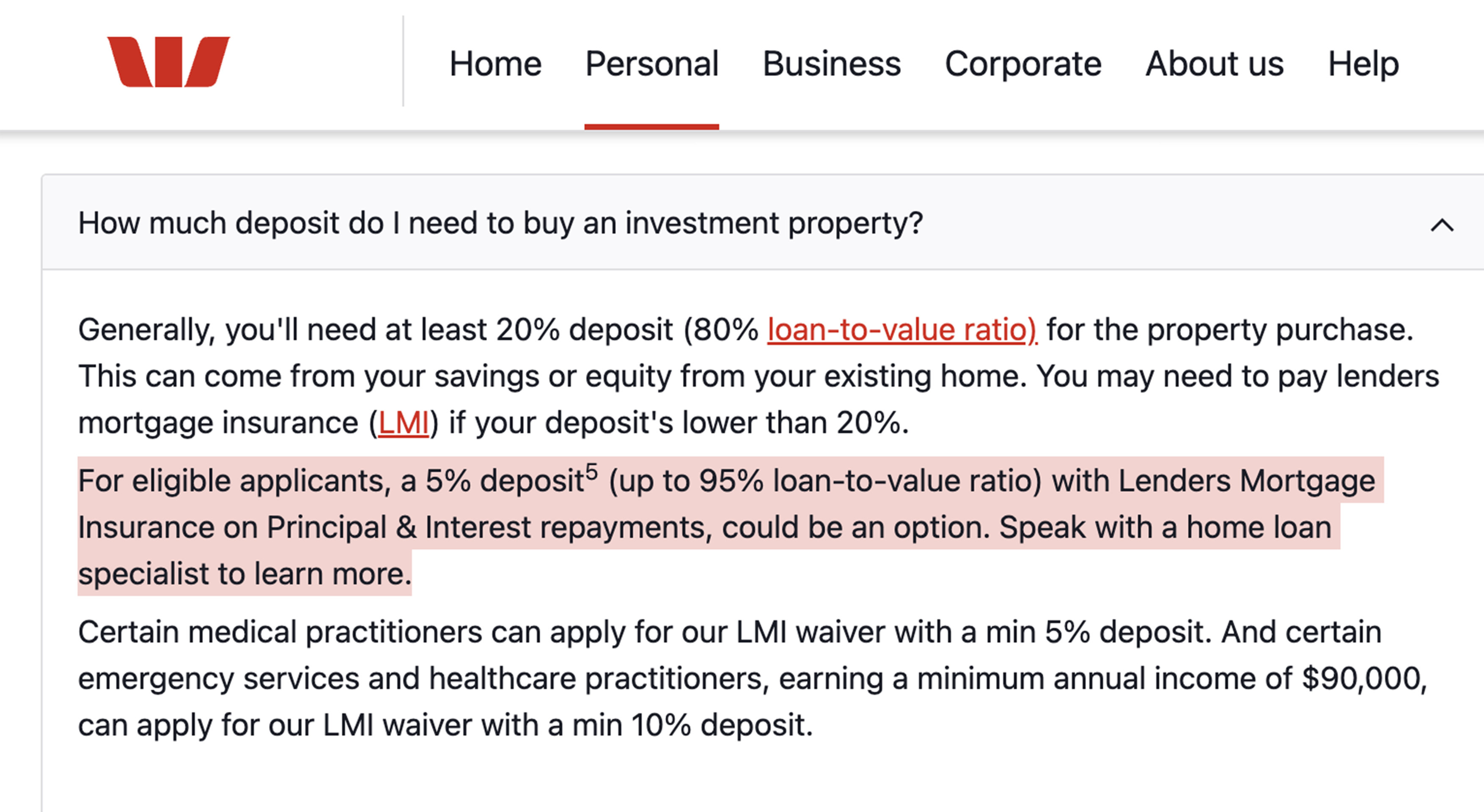
You might think — fine, I’ll go with 95% LVR. Less deposit is always better, right? Let me run the numbers. A $500,000 investment property at 90% LVR: $50,000 deposit, $450,000 loan, and LMI — that’s Lenders Mortgage Insurance, and just so we’re clear, it protects the bank, not you, but you pay for it — runs about $9,000 to $12,000. Now at 95% LVR: deposit drops to $25,000, loan jumps to $475,000, and LMI rockets to $20,000–$24,000. You saved $25,000 on the deposit but paid an extra $10,000 to $15,000 in insurance. And if that LMI rolls into your loan at 6% over 30 years, the extra interest alone is about $30,000. You save $25,000 upfront, you end up paying over $50,000 more down the road. You do the maths on that one.
The good news: investment property LMI can be spread over five years for tax. But even after the deduction, you’re still well behind. So Westpac’s policy, when you strip it back, is not the dream deal some commentators are selling. The 15-year IO has a high entry bar. 95% LVR has a heavy price tag. And you can’t stack them together.
Now that we’ve unpacked the policy, there’s a bigger question — if there are this many strings attached, what’s in it for Westpac? Are they doing charity work? Of course not. The answer is simple — they had no choice.
The Battle for Customers
Back on the 2nd of December 2024, CBA — Commonwealth Bank — became the first to launch a 15-year IO for investors. Fourteen months before Westpac. CBA is the country's biggest retail bank, and once it moved, investors voted with their feet. Westpac watched the market share bleed for over a year before finally matching it on February 23rd.
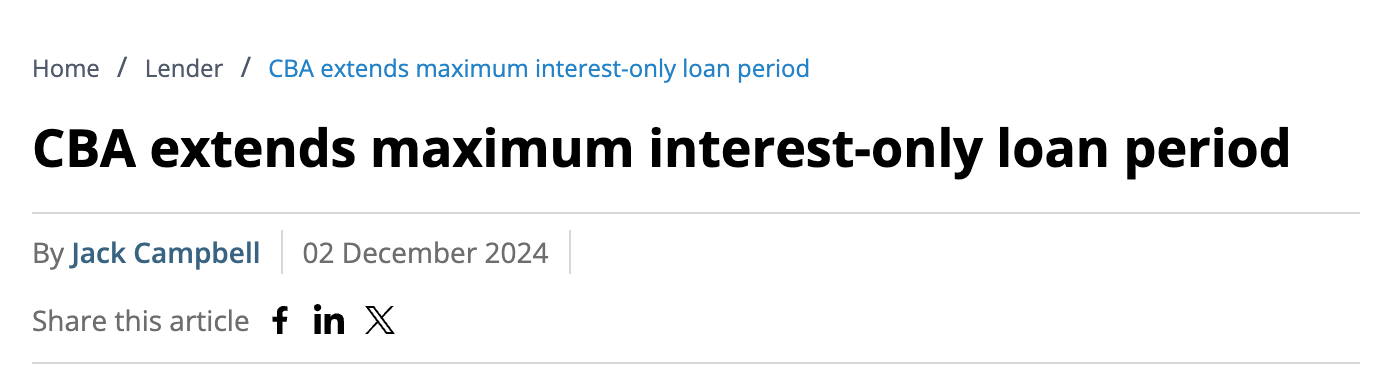
Look at the rest, though. NAB and ANZ still cap IO at ten years. Macquarie starts at five, extends to ten max. So only two banks in the entire country offer a 15-year IO: CBA and Westpac. This is far from being the new normal.
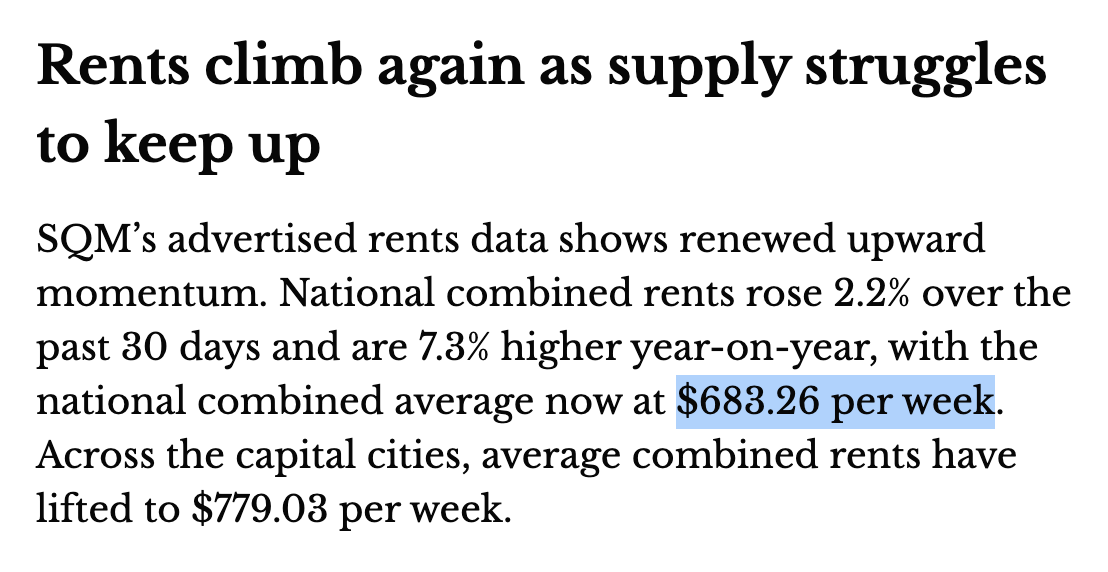
Why are banks fighting over investors instead of owner-occupiers? Two reasons. First, investor loan rates are higher — 30 to 50 basis points above owner-occupier rates, which means fatter margins. Second, through 2025 and 2026, first-home buyer demand is shrinking. Rates are high, wages can’t keep up, and a lot of people have simply stopped trying. But investors are different. They look at rental yields and long-term growth. National vacancy is just 1.2% — way below the 3% plus we saw before the pandemic. Median weekly rent nationwide: $683, up 5.4% year on year. Rents have jumped 42% over five years — that’s an extra $204 a week. In a market like this, the numbers still work for investors. And the banks know you’re not going anywhere. You’re not just a customer — you’re the target.
But here’s the thing that doesn’t add up. At the exact same time Westpac was loosening things up, Macquarie quietly froze all new loans to trust and corporate borrowers in late October. CBA followed in November, tightening trust lending through brokers. One hand opens the front door for individual investors. The other slams the back door on complex structures. And the thing that decides how wide that front door actually swings? It’s never the bank. It’s the regulators. This next part — I’ll say it straight — matters ten times more than Westpac’s policy.
If you have any questions about property investment, please book a free discovery call on our website. If you want a team offering one-stop service to help you build a property investment portfolio, achieve financial freedom and retire early, join our VISION Gold Membership starting with a 30-minute discovery session. Or to keep it simple, our data-driven buyer's agency service can help. We buy and manage properties for our clients anywhere in Australia. If you have an international view, talk to us about the UAE VISION Gold Membership. We help you invest in the UAE property market, plan your tax residency, reduce your taxes to almost 0 and handle CRS/AML auditing. Links to the service are in the description below.
Opening the Door, Closing the Window
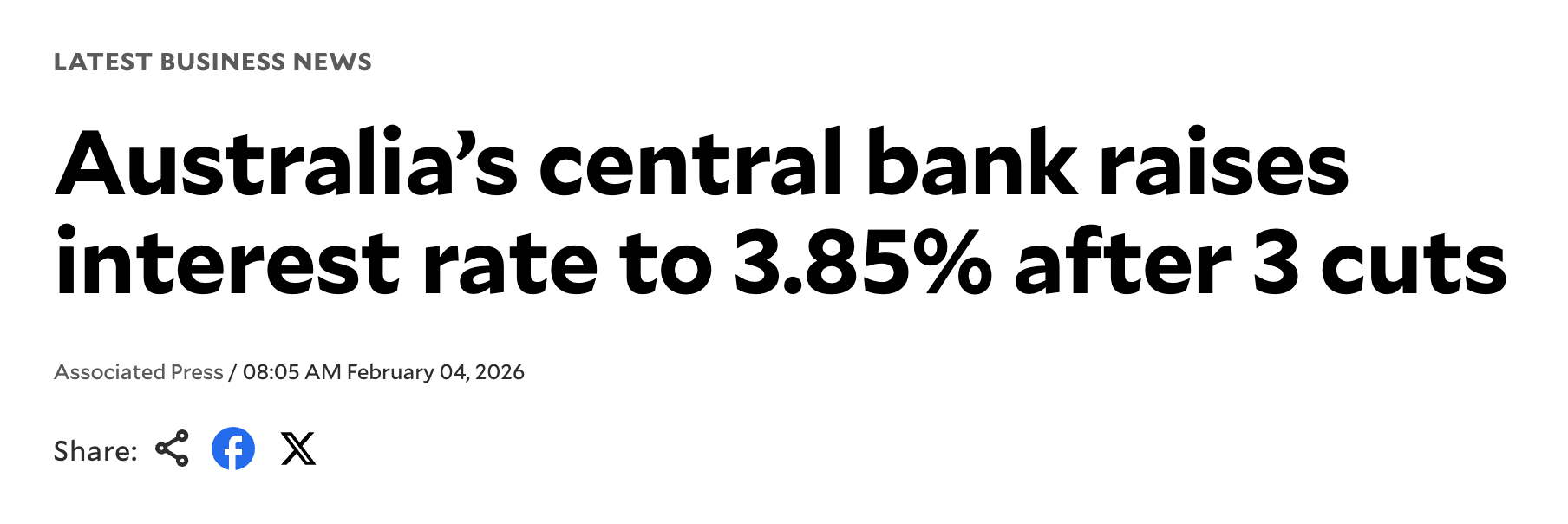
On February 3rd, the RBA — Reserve Bank of Australia — raised the cash rate by 25 basis points, from 3.6% to 3.85%. Last year, they cut three times, a total of 75 basis points. Everyone was thinking that the pressure was finally easing. Then they turned around and hiked. Some called it one of the shortest easing cycles in Australian history. That dream about rates dropping below 3%? Just a dream.
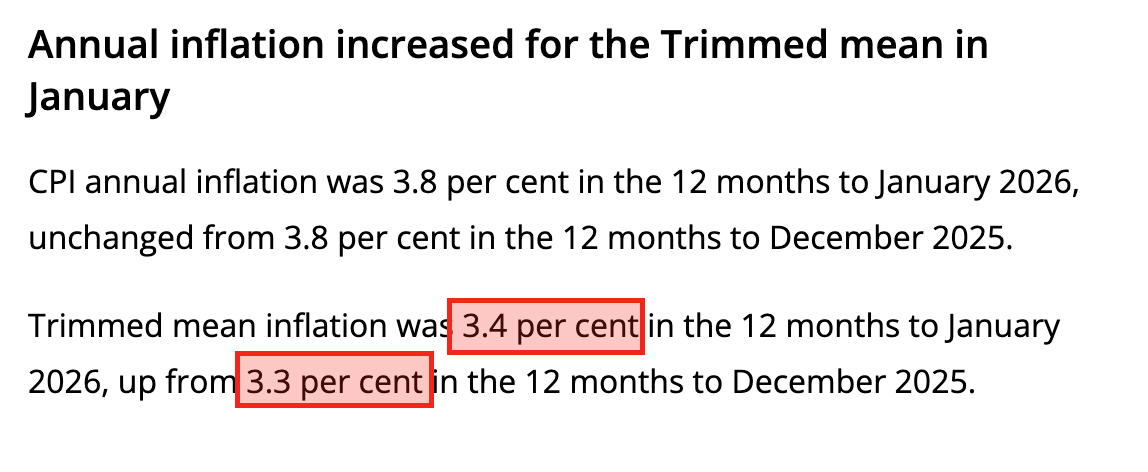
Now all four major bank economists are predicting another hike at the May 4th–5th RBA meeting, pushing it to 4.1%. March will likely be a hold; there’s no April meeting, so May is the one to watch. Why are they so sure? January’s trimmed mean inflation — that’s core inflation after you strip out the volatile stuff — went from 3.3% to 3.4%. The RBA’s target is 2–3%, and we are a bit far from it.
Here’s what this means for your borrowing power. Banks add a 3% serviceability buffer on top of actual rates when they assess you. Cash rate at 3.85%, plus the bank’s margin of about 2.5%, plus 3% buffer — your assessment rate is 9.35%. If May brings a hike to 4.1%, that goes to 9.6%. So the bank’s left hand is offering you 15-year IO and 95% LVR — looks like the door is opening. But the central bank’s right hand is hiking rates and shrinking what you can borrow. What one hand gives, the other quietly takes back.
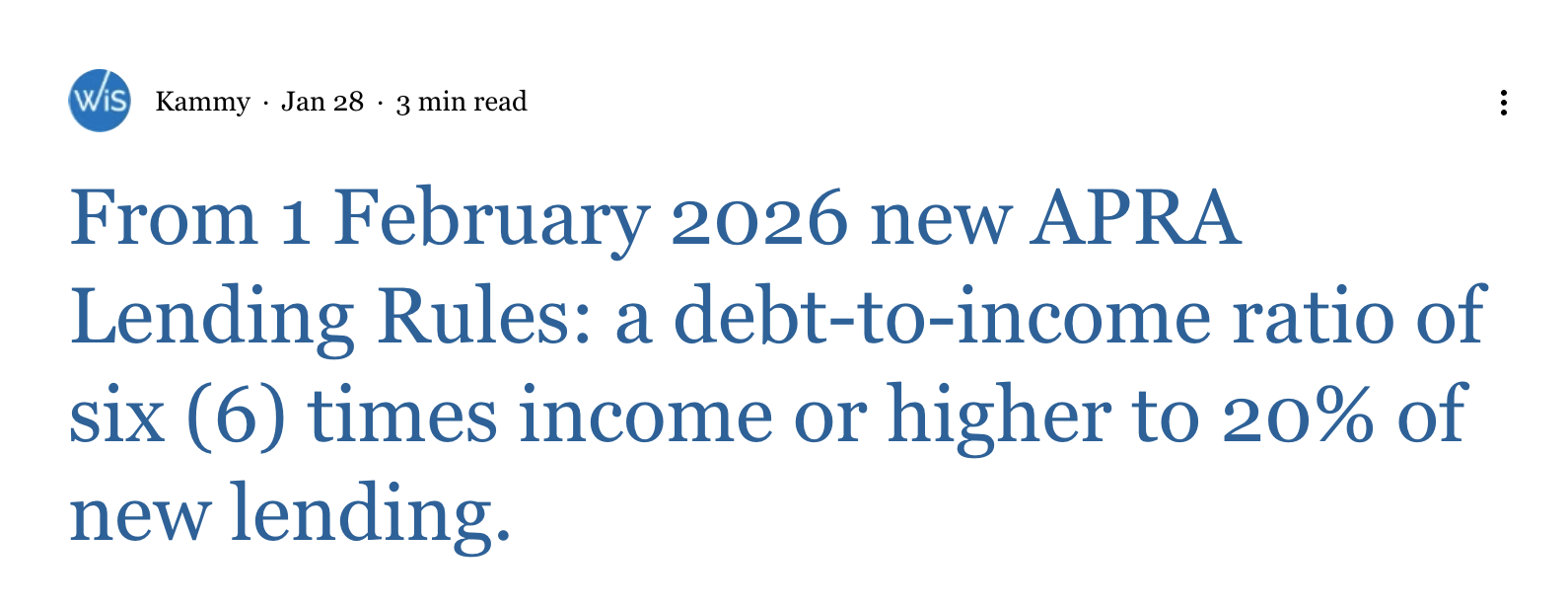
But that’s still not what worries me most. The real signal came from APRA — the Australian Prudential Regulation Authority. On February 1st, three weeks before Westpac’s announcement, APRA put limits on high-leverage lending. DTI — Debt-to-Income Ratio — is now capped: each bank can’t have more than 20% of its new lending at six times income or above.
This doesn’t mean you personally can’t borrow over six times your income. It means the bank’s high-risk bucket now has a ceiling, and spots are limited. Right now, only 5.5% of new loans breach that six-times mark. Sounds safe, right? That’s exactly why APRA is smart — they check the roof while the sun’s still shining. Among investor loans, it’s already 10% — more than double the 4% for owner-occupiers. And in late 2021, 24% of new lending exceeded 6x DTI. If this cap had existed, then the market would’ve slammed into a wall.
APRA Chair said something I think is more important than the DTI rule itself — APRA won’t wait for housing risks to build up before acting. They’ve got the cards, and they’ll play them whenever they want. In 2017, APRA told banks IO lending couldn’t exceed 30% of new loans. Result? The industry’s IO share dropped from 40% to 11%. Overnight. Investors who’d been approved for IO got phone calls saying the rules had changed — switch to P&I. Monthly repayments jumped by hundreds. Cash flow for some people just collapsed. History doesn’t repeat, but it rhymes.
So here’s the picture. Banks are loosening — longer IO, lower deposits. The central bank is tightening — rate hikes are squeezing your borrowing power. APRA is drawing lines — DTI acts as a brake today, but could become a handbrake tomorrow. Three forces, three directions. Who should you listen to? My answer — none of them. Listen to the market.
Listen to the Market
Bank products change. Rates shift. Rules tighten. But supply and demand never lie. And right now, Australia’s property market has split into two different worlds.
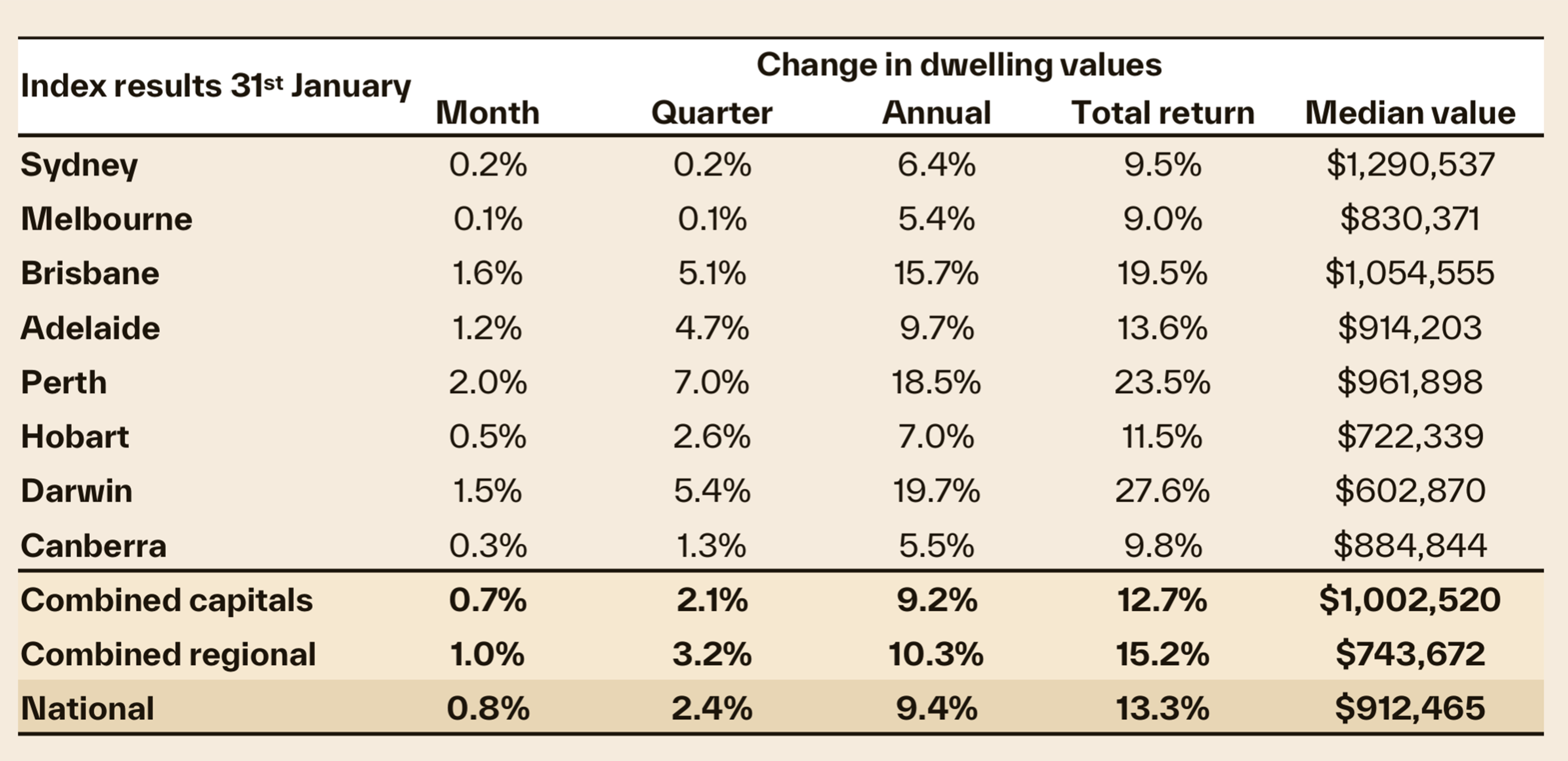
World one: Perth — up 2% in January alone, annualised 18.5%, median dwelling price pushing $960,000. Brisbane rose 1.6%. Adelaide added 1.2%. Listings in these cities sit 30–48% below their five-year averages. Not enough properties to go around, so prices go up.
World two: Sydney and Melbourne. February monthly growth — basically zero. Cotality’s head of research Tim Lawless put it in two words: two-speed market. Same country, two completely different realities. Perth’s yearly gain is more than many people earn in a year. Melbourne? You buy it and it flatlines. That 15-year IO from earlier? Same product, used in Perth versus Melbourne, and you get totally different results.
Through our AusPropertyStrategy “Golden 11 Rules” framework, rates are tightening and borrowing capacity is deteriorating nationally. But population inflows, supply-demand gaps, and infrastructure spending are working in favour of Perth, Brisbane, and Adelaide, while Sydney and Melbourne trend neutral to negative. That’s why we push the VISION all-weather approach — compare across the whole country, use cycle differences between states to build your portfolio. Don’t put all your eggs in one basket, but make sure every basket holds a good egg.
And the hard logic that matters more than any bank product — supply. The federal government’s National Housing Accord targets 1.2 million new homes over five years. Reality? The 2025 financial year delivered just 174,000, a 27% miss. At this pace, we’ll end up around 940,000 — 260,000 short. That gap is bigger than the entire city of Canberra. High-rise apartment approvals are 48% below their decade peak. Average build time has blown out to 9.6 quarters—nearly 2.5 years per building. Construction materials up 53% in a decade, labour in short supply. Building faster in the short term? Physically impossible.
So, how do you use this gap? Fifty per cent of the outcome is location — pick a city with serious undersupply and strong population growth, and you’re halfway there. Forty per cent is holding time — this shortage is a 5-to-10-year structural problem, and the longer you hold, the more time is on your side. The remaining 10% is entry timing. Where you buy and how long you hold matter far more than when you buy.
Wrap-Up
First, don’t let a shiny new product from the bank lead you by the nose. The 15-year IO is a tool, not a gift. Know your DTI, check if you can handle the serviceability buffer, and calculate what happens when IO rolls to P&I. An $800,000 IO loan at $4,333 a month becomes over $6,800 when it converts to P&I with 15 years left. Have you planned for that jump?
Second, the direction of rates matters more than today’s number. Stress-test every property at 9.5%. If you can still breathe, you’ve got room to grow. If you can’t, no IO product will save you.
Third — picking the right city beats picking the right product, every single time. Perth is growing at 18.5% while Melbourne sits near zero — no bank offer closes that gap. Use our “Golden 11 Rules” for the big picture and the “Golden 21 Rules” to lock in a specific suburb and property. That framework beats chasing any single bank deal.
Back to where we started — Westpac opened a door, but APRA and the RBA are closing two windows. After years in property investment, I’ve watched too many people chase bank promotions and end up realising: the product changed, the policy changed, but their own judgment never got any sharper. Smart investors don’t ask who’s got the best deal. They read the whole board first, then move into the right city, with the right structure, and the right product.
If you’re still watching, you’re past the point of watching for fun — you want a framework you can use again and again. Inside our VISION Gold Membership, we’ve built rates, supply, rents, and policy into one decision system. City selection, product choice, loan structure, tax planning — all in one place. Links are in the description.
Watch the video version of the blog on YouTube.
15 Minutes Free Consultation (Limited-Time Free Offer)
If you have any questions about Australian real estate, we invite you to use our 15 Minutes Free Consultation service. Once you have filled in the form, a professional property investment strategist will be in touch with you. They will assess your needs and provide fundamental advice. This service is designed to help answer general property-related queries. BOOK NOW.
VISION Membership
Our Flagship Service: VISION Membership. Your One-Stop Property Investment Manager – Build a Tailored Portfolio and Achieve Financial Freedom
Whether you're an employee, a professional, a business owner or even a new migrant, everyone has a financial goal for the future. The VISION Membership is designed to solve all the pain points in your Australian property investment journey through one single, comprehensive service.
By analysing your current financial situation and long-term goals, we'll tailor a property investment plan just for you. Our team will match you with the ideal mortgage structure, tax strategies, wealth planning, and legal support, empowering you to go further, faster, and smarter on your path to financial freedom.
VISION Membership is perfect for busy individuals who want a professional team to create, expand and manage their Australian investment portfolio. If you're looking for a dedicated team, including real estate investment experts, mortgage brokers, accountants, financial planners, and property solicitors, VISION Membership is your ideal solution.
Start with an obligation-free 30-minute discovery session on Zoom. BOOK NOW.
VISION Buyer’s Agent
No time for inspections? Tired of dealing with pushy selling agents? Unsure how much to offer or feeling nervous about auctions? Worried about buying the wrong property? If any of these sound like you, AusPropertyStrategy's Australia-wide VISION Buyer's Agent Service is here to help.
We provide end-to-end support to help you build an optimised property portfolio and achieve your financial goals—whether you're investing interstate, refinancing, or planning post-settlement leasing or resale. Our services cover everything from suburb research and property selection, to price negotiation, auction bidding, and post-settlement support.
Start with an obligation-free 30-minute discovery session on Zoom. BOOK NOW.
real estate australia,real estate investing,australian property,australian housing market,australian economy,australian property investment,australian property market,buying property,australian real estate,mortgage brokers brisbane,first home buyer,Australian Real Estate,Australian Real Estate Investment,Australian Property Investment,Real Estate Investment,Property Investment,Property Investment Australia,Passive Income,Positive Cash Flow,Australia Real Estate Investing,Australian Real Estate Investors,Australian Property Investors,Vision Wealth Mentors,Vision Real Estate Investors Australia,financial freedom, freedom through property investment,real estate investors,property investment,passive income,positive cash flow,real estate course,real estate courses,real estate training,australian property market,property investment brisbane,property investment sydney,melbourne property market,investing in brisbane,investing in melbourne,how to invest in property,buying properties,start investing in property,property investment strategy,how to buy investment property,property investing tips,best suburbs to invest in sydney,locations real estate,prime location,property growth by suburb,capital growth suburbs


